

The aquarium is in its usual place. The filter is humming. The plants are doing their slow underwater weather report. But the fish who normally appears at the front has vanished behind the woodwork, and suddenly the whole room is searching one tank with its eyebrows.
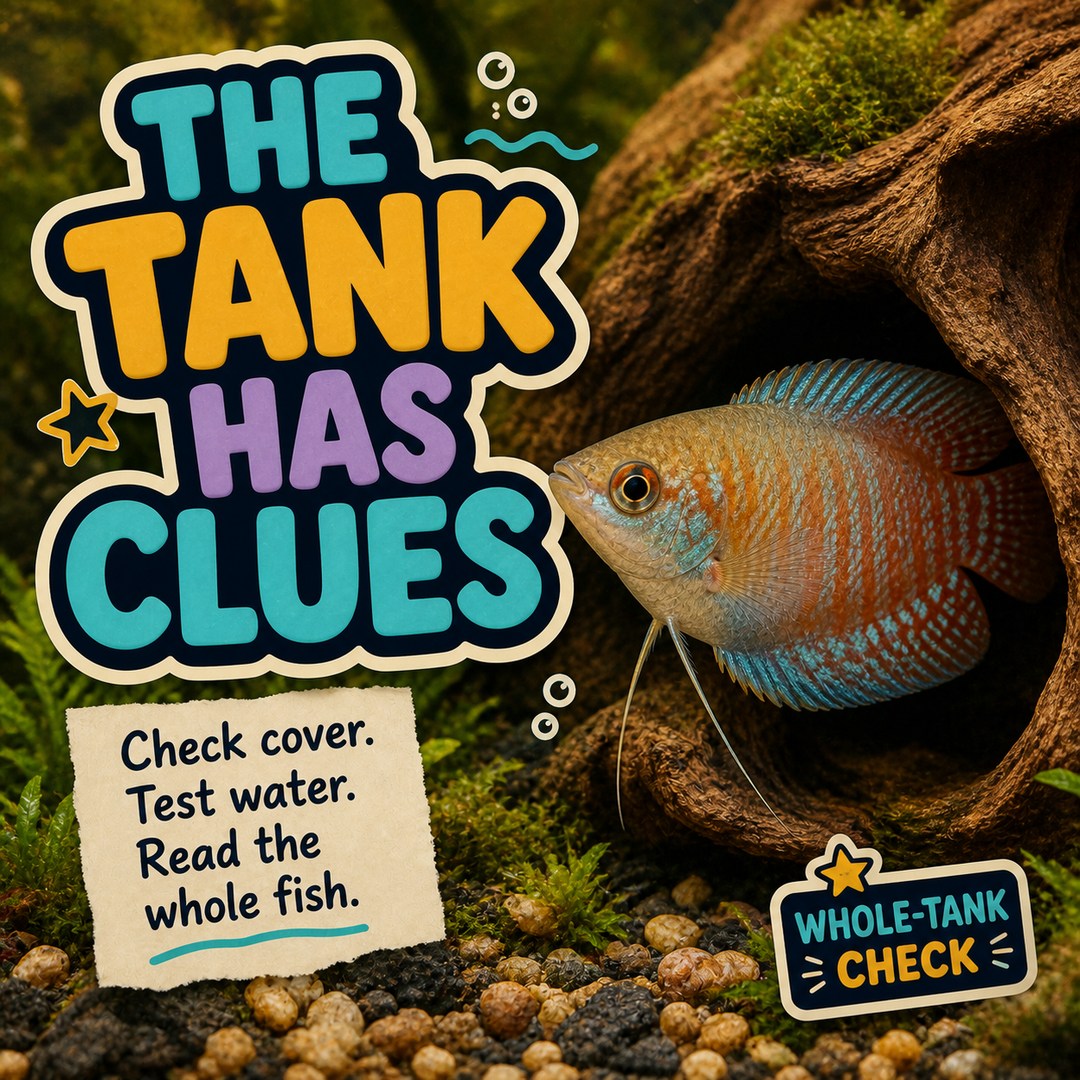
Hiding is not automatically a problem. Many fish use plants, caves, shaded areas and visual barriers as normal shelter. Species, time of day, social position and recent changes all affect where a fish chooses to be.
A sudden or persistent change still deserves attention. The useful response is to check the whole tank: cover, companions, water, temperature, breathing, appetite and the fish’s normal pattern.
Some Fish Are Supposed to Use Cover
Shelter is part of a good aquarium, not evidence that the setup has failed. The Royal Society for the Prevention of Cruelty to Animals recommends providing shelter, hiding places and shade for freshwater fish.
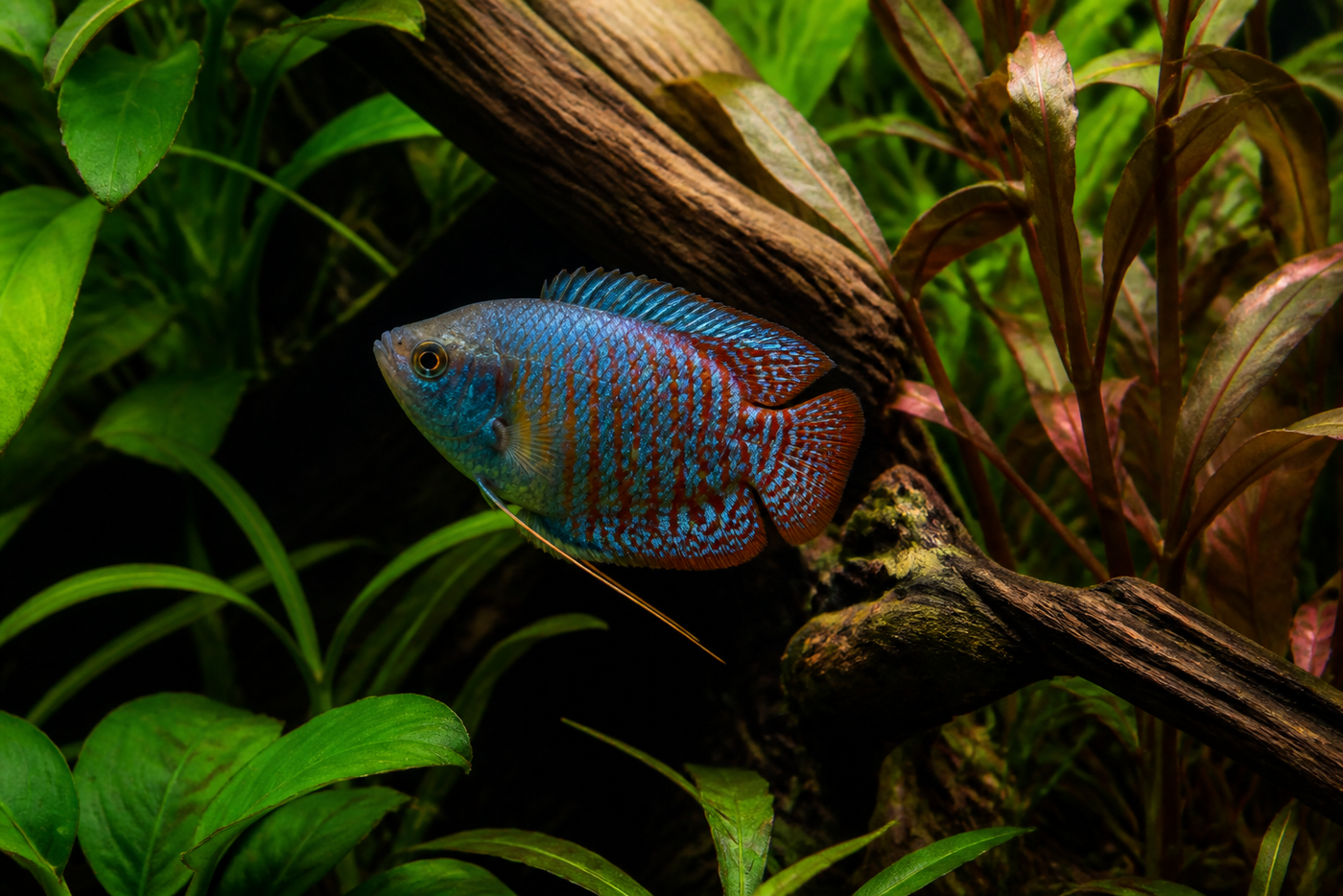
Some species spend more time in caves, under plants or near the bottom. Others rest in cover at particular times and return to open water later. Learn the normal rhythm for the actual species you keep rather than expecting every fish to perform at the glass.
Baseline Beats a Single Sighting
Ask what has changed. Is this fish normally visible at feeding time? Do they usually swim with a group? Is the hiding new, longer-lasting or paired with a change in appetite or movement?
A fish choosing the same shaded retreat overnight may be following a normal day-night pattern. A normally active fish suddenly remaining isolated all day is a different observation.
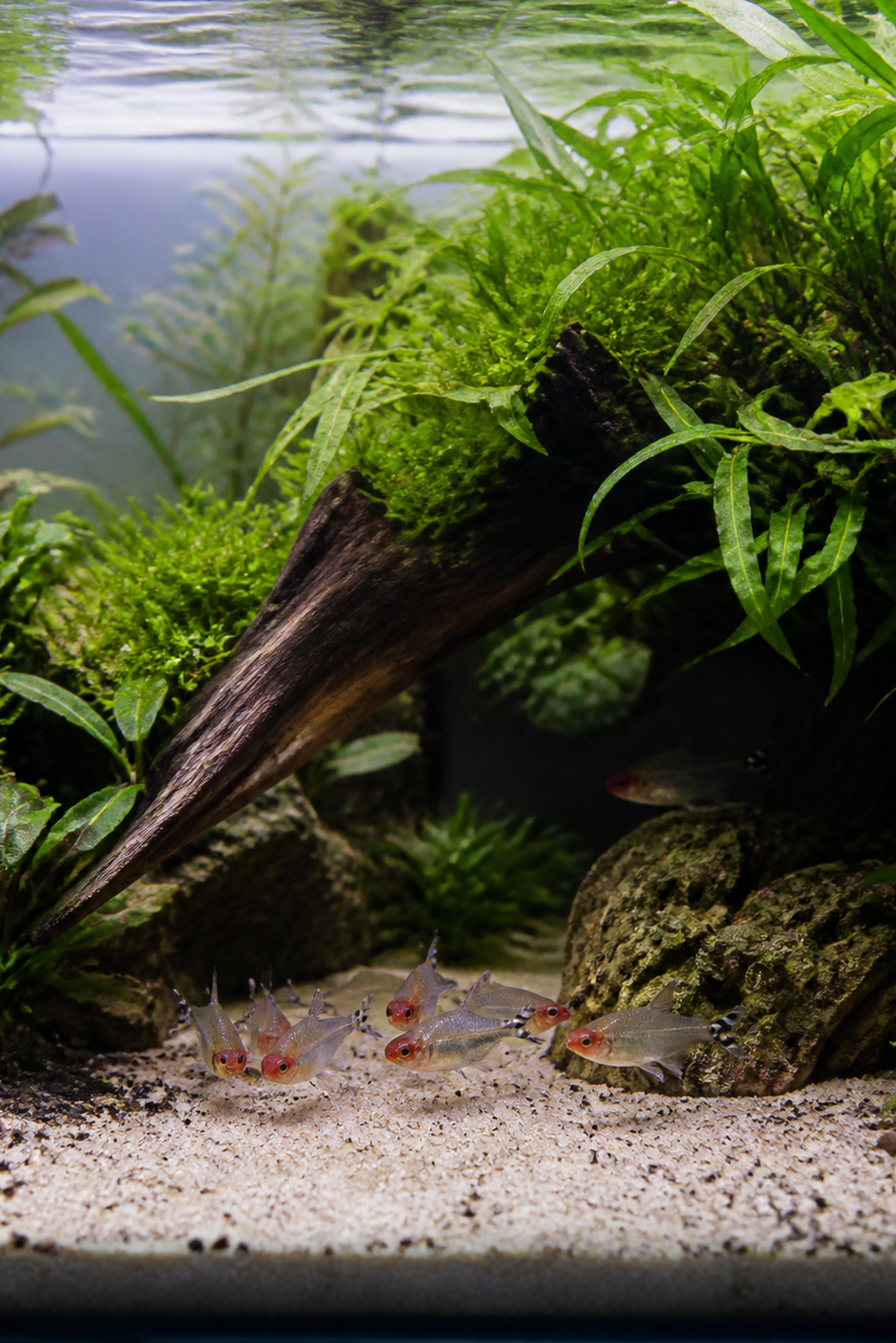
Write down the timing and the rest of the behaviour. Aquariums move slowly enough that a small log can be more useful than one worried glance.
Test the Water Before Guessing
Poor water quality is a major cause of environmental disease in aquarium fish. Merck Veterinary Manual guidance emphasises regular monitoring and identifies ammonia, nitrite, pH, temperature, salinity where relevant and other parameters as essential parts of the picture.
Use a suitable liquid test kit or another reliable method for the species and system. Compare results with the established safe range for that fish—not a universal number copied from a different aquarium.
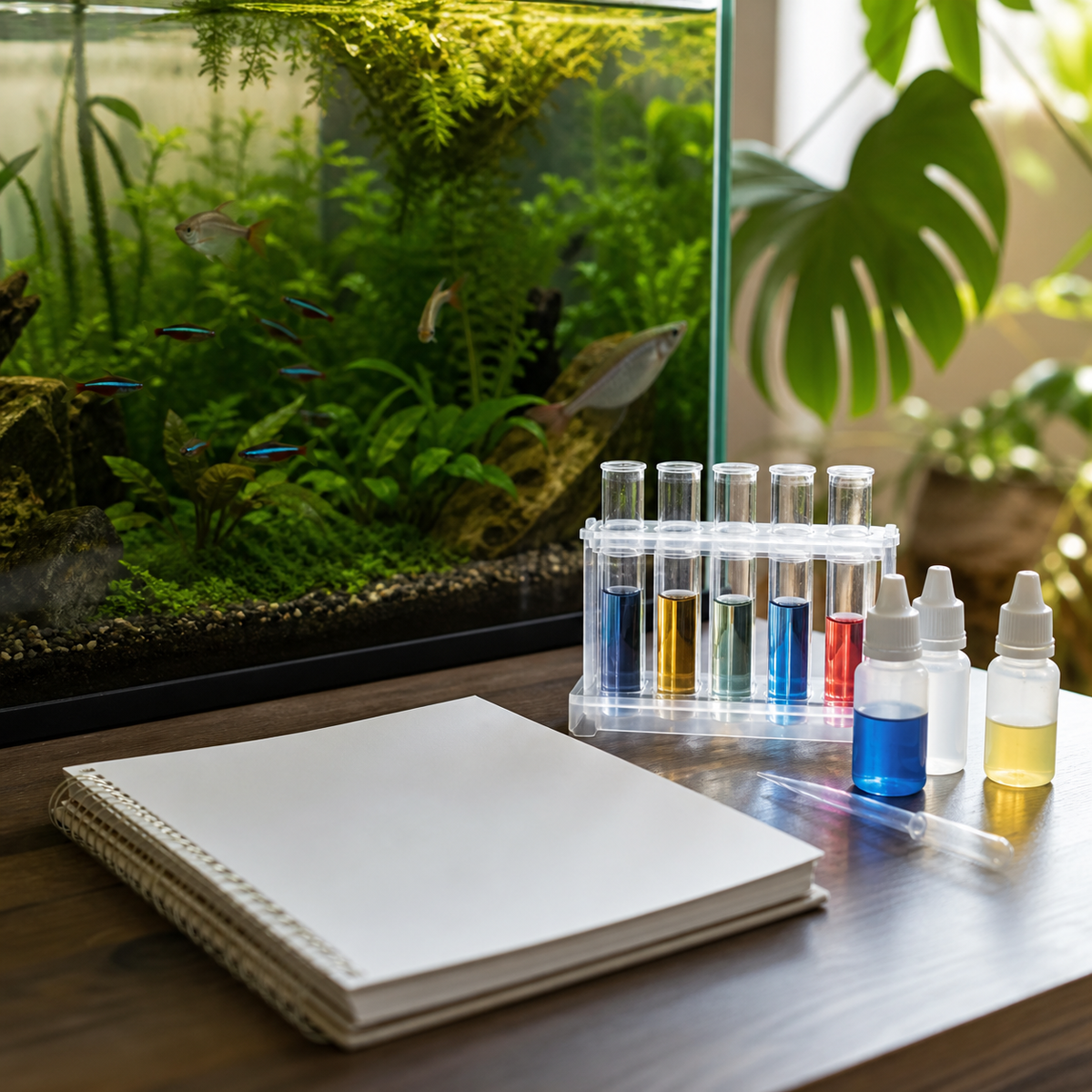
If ammonia or nitrite is detectable, oxygen appears low, temperature has shifted or pH has changed sharply, respond using species-appropriate guidance and contact an aquatic veterinarian or experienced qualified professional. Do not make several large chemical corrections at once without understanding the cause; sudden changes can add another layer of stress.
Check Oxygen and Breathing
Watch from a distance. Is the fish breathing faster than usual, holding near the surface, gathering by the filter return, gasping, clamping the fins or losing balance?
Warm water holds less oxygen. Overstocking, equipment failure, decaying material and water-quality problems can all affect the system. Confirm that the filter and aeration are working and that no intake, outlet or heater has failed.
Breathing difficulty, rolling, collapse or inability to remain upright needs urgent expert help.
Read the Social Map
A fish may hide because another fish controls the open space, food or a preferred territory. Look for chasing, fin damage, repeated displacement, one-sided guarding or a newcomer being pinned to a corner.
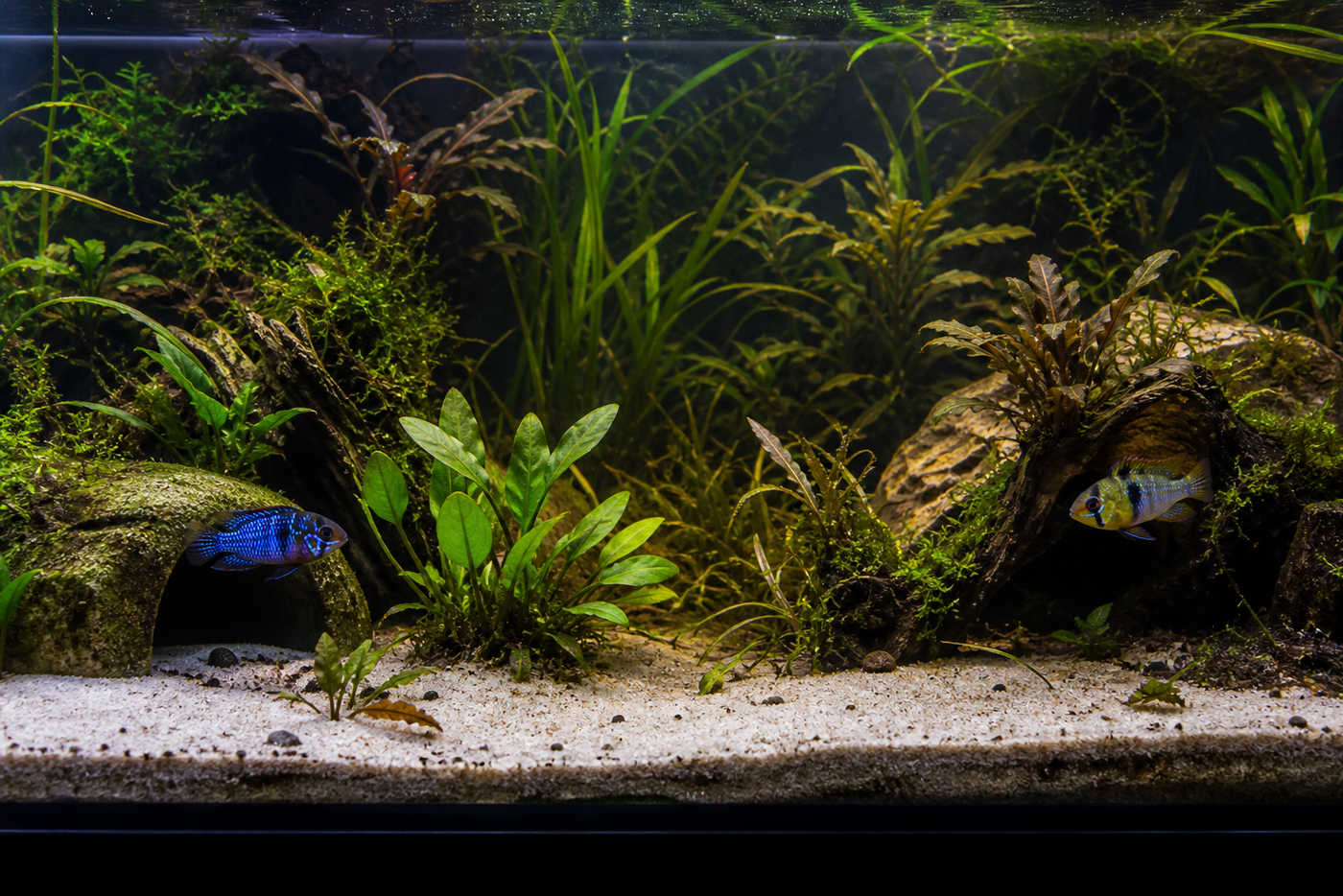
Compatibility depends on species, sex, group size, tank dimensions and the arrangement of territory. More fish do not automatically create security, and adding one companion to solve hiding can make the pressure worse.
Use plants, wood, rockwork or safe species-appropriate structures to break long sightlines and create more than one usable shelter. Every retreat needs an exit that is not controlled by the same dominant fish.
Recent Changes Leave Clues
Think through the previous few days. Was a fish added? Was decor rearranged? Did maintenance disturb the substrate? Did the room become brighter, louder or busier? Was a filter changed, a heater unplugged or a new product used nearby?
Even a well-intended deep clean can remove familiar cover or disrupt biological filtration if filter media is replaced or cleaned incorrectly. A stable aquarium is a living system, not a glass ornament that benefits from weekly reinvention.
Make Shelter Useful, Not Trapping
Provide appropriately sized caves, dense planting, shaded zones and visual barriers without creating sharp edges, unstable stacks or holes where a fish can become stuck.
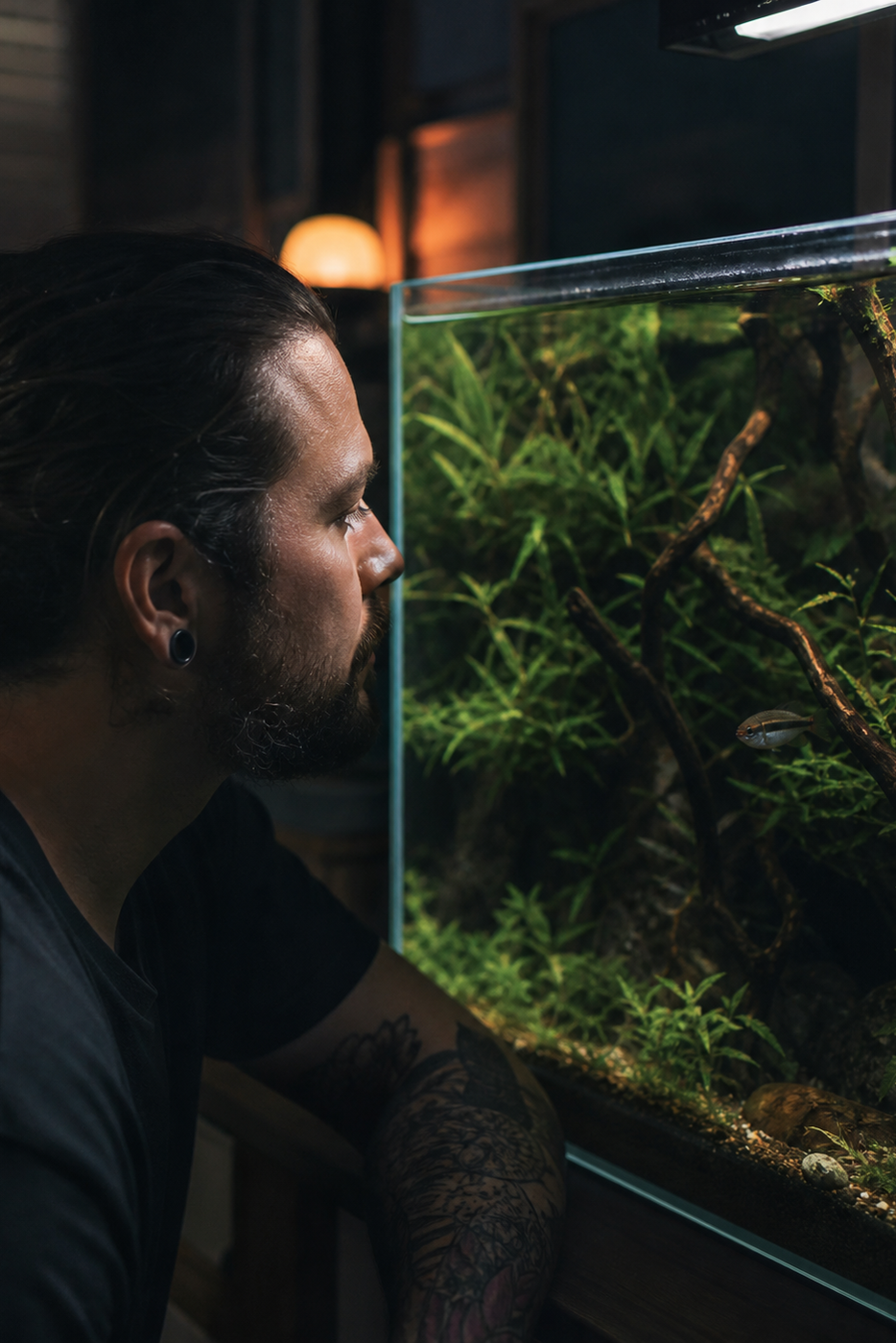
Keep enough open water for normal movement. A tank packed solid with decoration can reduce swimming space and create dead zones where waste collects. The aim is choice: visible route, sheltered route and room to turn comfortably.
Watch Feeding Without Starting a Stampede
At the normal feeding time, offer the usual appropriate food and observe from a distance. Does the fish emerge, take food and return to cover? Are tank mates intercepting everything? Is food reaching bottom-dwelling or shy individuals?
Do not keep adding food to tempt a hidden fish. Uneaten food can worsen water quality. If appetite is reduced or the fish cannot compete safely, seek species-specific advice promptly.
When to Call an Aquatic Vet
Contact a veterinarian experienced with fish when hiding is accompanied by reduced appetite, abnormal breathing, spots, sores, swelling, ragged fins, colour change, rubbing, loss of balance, unusual buoyancy, repeated isolation or deaths in the tank.
Bring a clear history and recent water-test results. Photographs or a short video can help show breathing, swimming and social behaviour, but they do not replace examination and testing.
The Whole-Tank Hiding Check
- Normal: Is cover use typical for this species and individual?
- Water: Are temperature and tested parameters in the correct range?
- Breathing: Is respiration normal, with no gasping or surface distress?
- Social: Can the fish reach food and leave shelter without being chased?
- Change: Did equipment, stocking, decor, light or maintenance recently change?
- Health: Are appetite, balance, skin, fins and movement unchanged?
Hiding can be a sensible fish using a sensible shelter. It can also be the first visible clue that the tank needs attention. Start with observation, test the environment, and let the whole system answer before you decide what the hiding means.
For more gentle pet-world explainers, browse Aww Articles or watch the tiny negotiations unfolding in Daily Awws.
Trusted Sources
- RSPCA: Guide to caring for freshwater fish
- Merck Veterinary Manual: Providing a home for fish
- Merck Veterinary Manual: Management of aquarium fish
- Merck Veterinary Manual: Environmental diseases of aquatic animals