The floor was calm until the tiny launch sequence began.
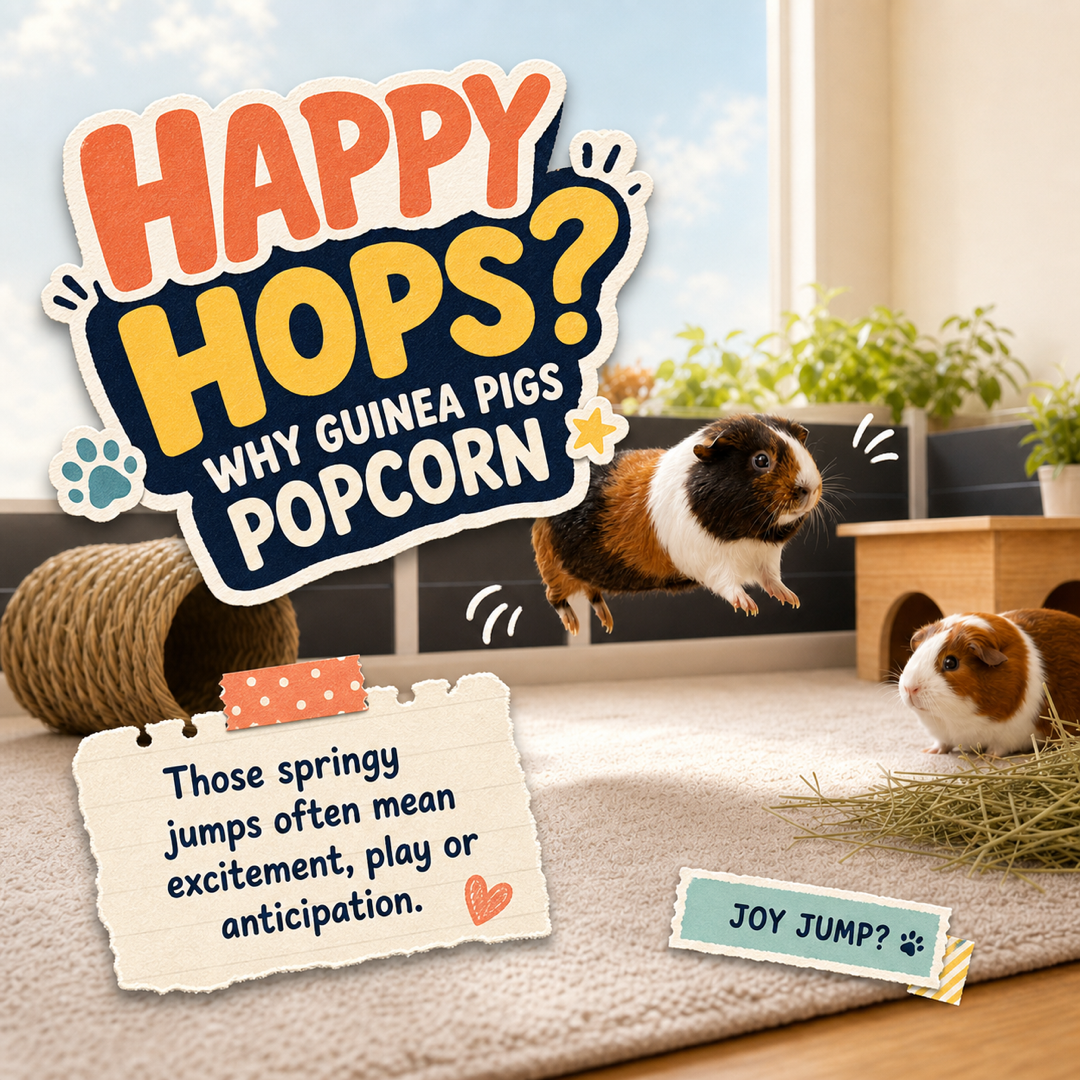
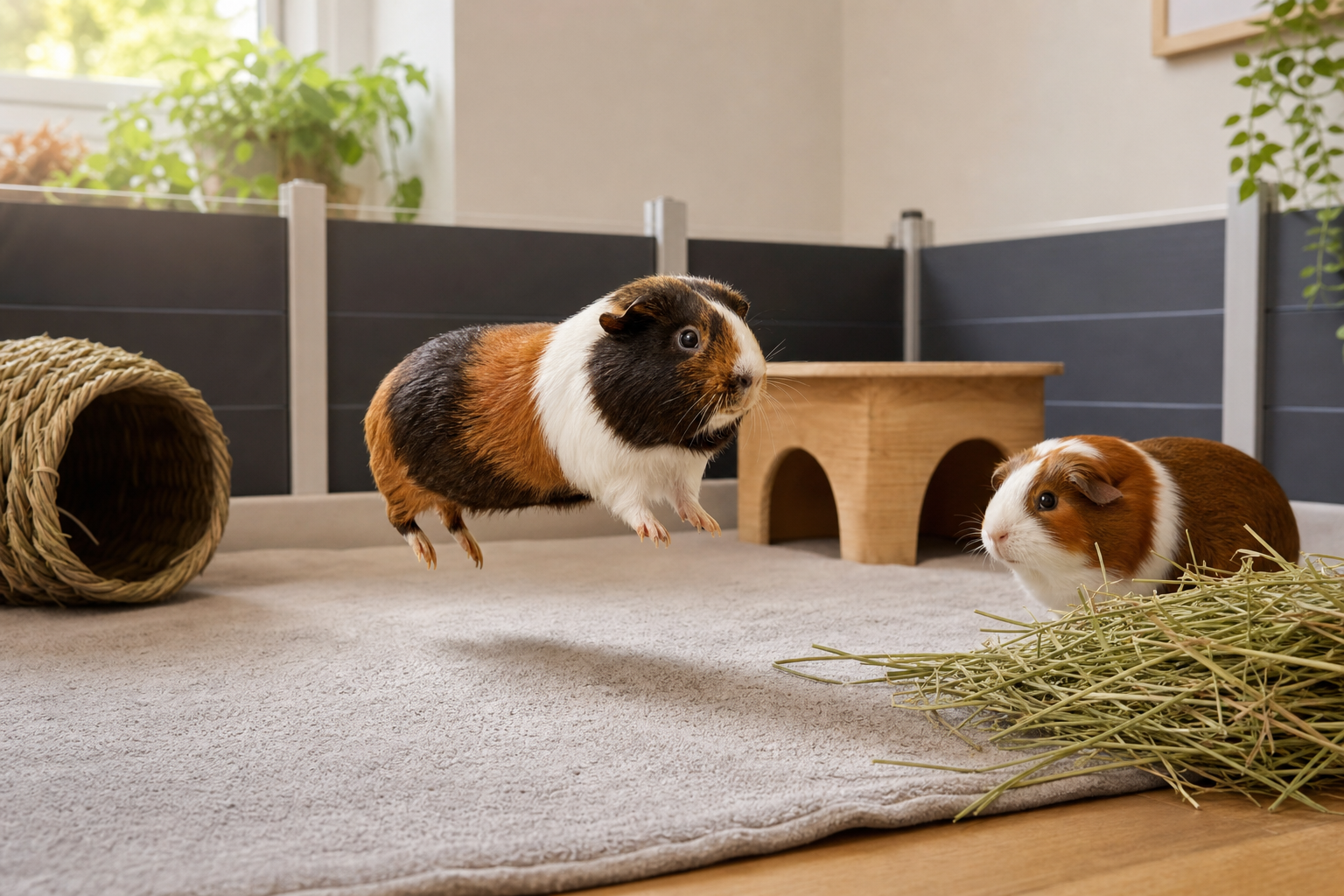
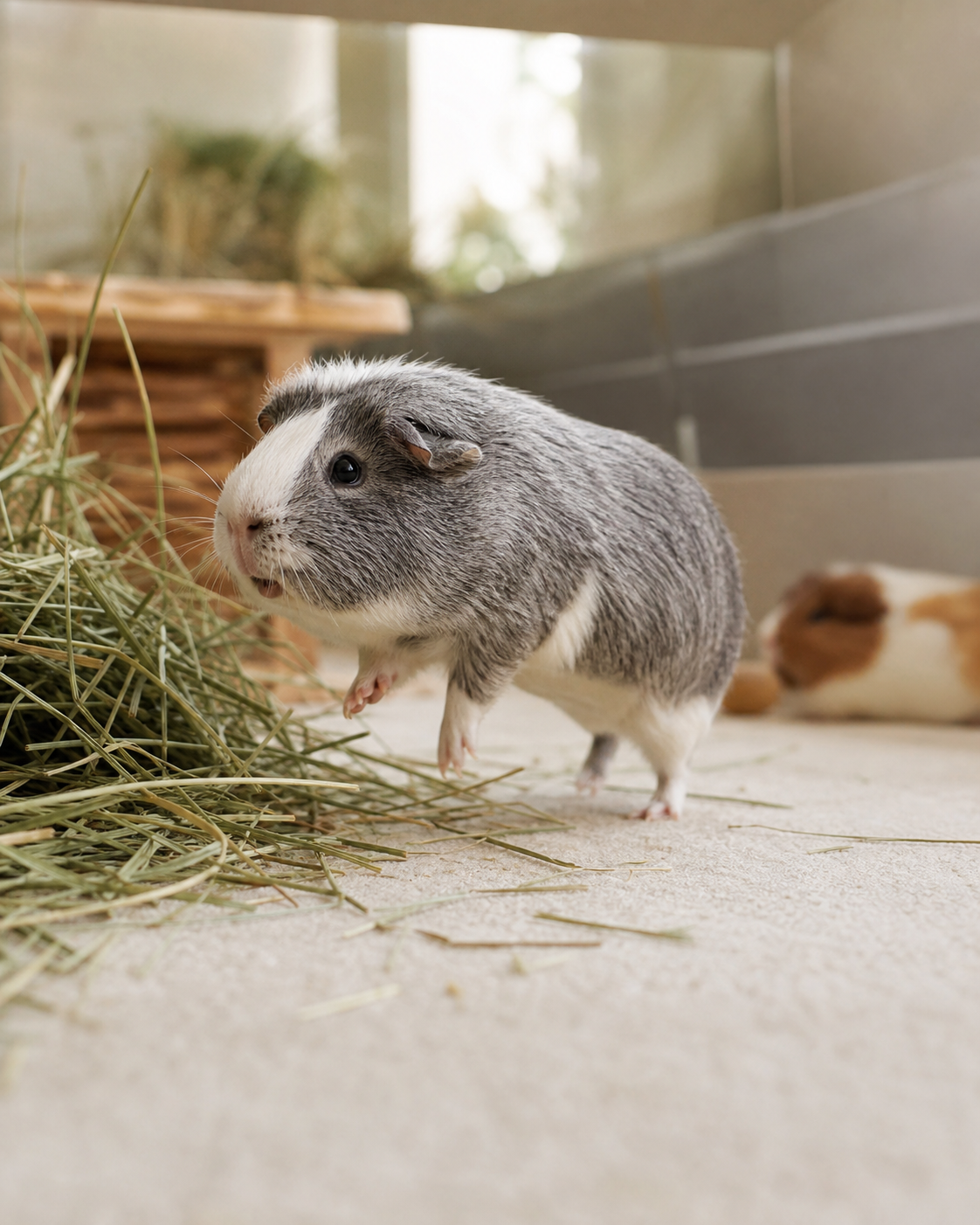
One moment, the guinea pig is standing beside the hay like a perfectly ordinary potato with legs. The next, all four feet leave the ground, the body twists, and the room has briefly acquired its own popcorn machine.
This sudden little jump is commonly called popcorning. It is usually seen during moments of excitement, play, or positive anticipation. The movement can be quick enough to look surprising, especially the first time you see it.
The useful answer is not simply “happy guinea pig.” Popcorning is a positive clue, but the whole moment still matters: what happened just before it, how the guinea pig lands, whether they recover normally, and what the rest of their behaviour looks like.
The Jump Has a Name
Popcorning is the name people use for a sudden spring into the air, often with a small twist, kick, or change of direction. RSPCA guidance describes guinea pigs lifting all four paws from the ground, while Merck’s veterinary manual lists repeated bouncing, or popcorning, as a sign of excitement.
It may happen when fresh hay arrives, a familiar person enters, floor time begins, or another guinea pig starts moving. Sometimes there is an obvious event. Sometimes the guinea pig appears to have received excellent private news.
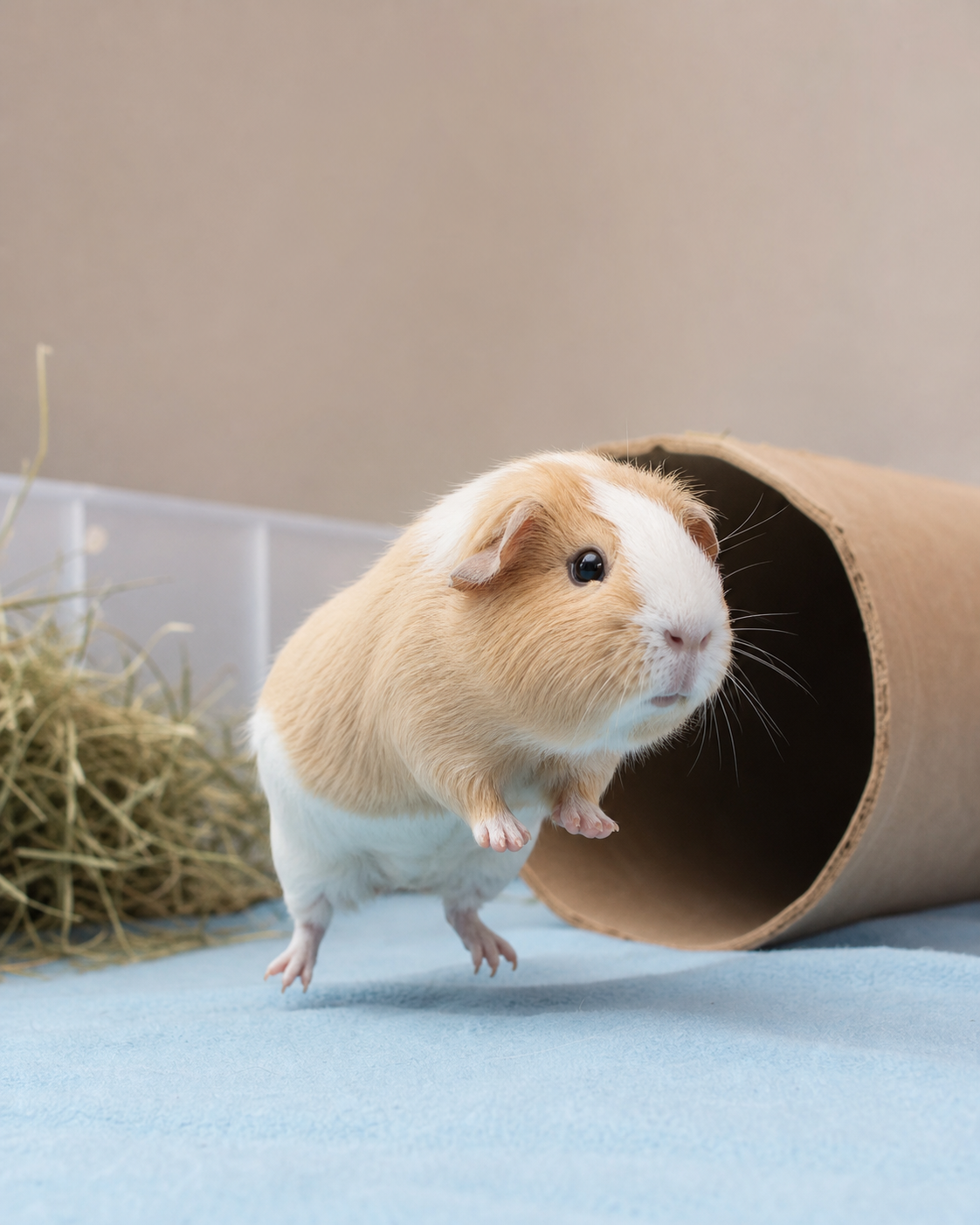
The movement is generally brief and voluntary. The guinea pig lands, keeps moving, sniffs, eats, explores, or returns to normal social behaviour. That smooth recovery is part of what makes the moment look like play rather than distress.
The CloudyAww read: the body had one happy thought and submitted it at full speed.
Read the Whole Moment

One jump is not a complete welfare report. It is one useful piece of information.
Look at the setting around it. A relaxed guinea pig may popcorn, investigate, eat hay, interact with a companion, and settle again without difficulty. Their movement remains coordinated. They can stop, choose another activity, and continue behaving like themselves.
Research on pet guinea pig welfare classifies popcorning as locomotor play and has found it associated with positive situations such as food enrichment and friendly interactions. That supports the everyday observation that these jumps often appear in good moments. It does not mean every guinea pig must perform them on schedule to prove they are content.
Also notice the difference between a quick, controlled hop and movement that looks involuntary. Loss of balance, repeated falling, circling, a persistent head tilt, collapse, or difficulty using a leg belongs in a different category and deserves veterinary attention.
Young Pigs May Go Higher

Young guinea pigs often have the most dramatic version of the move. They may jump higher, twist more sharply, and combine the whole event with a short burst of zooming. Adult guinea pigs can popcorn too, but the movement may become smaller or less frequent with age.
That variation is normal. Some guinea pigs are enthusiastic launchers. Others offer one modest hop that could be missed if you blinked. Personality, age, confidence, physical comfort, and the situation all influence what you see.
Do not worry simply because an otherwise healthy guinea pig rarely popcorns. Happiness is not a trick they owe the room. Appetite, normal droppings, comfortable movement, curiosity, social behaviour, rest, and body condition give a much fuller picture.
If an older guinea pig suddenly stops moving as they usually do, seems stiff, limps, struggles to rise, or becomes quieter alongside appetite or weight changes, speak to a guinea-pig-savvy vet. The change matters more than comparing them with a younger animal online.
Make Room for Safe Zooms

A guinea pig cannot choose a safe landing if the floor is crowded with hazards.
Give them a secure, level space with good grip and enough open room to move. Keep deep drops, unstable platforms, trailing cables, sharp edges, and slippery flooring out of the route. Guinea pigs are not natural climbers, and a setup does not become enriching just because it has more height.
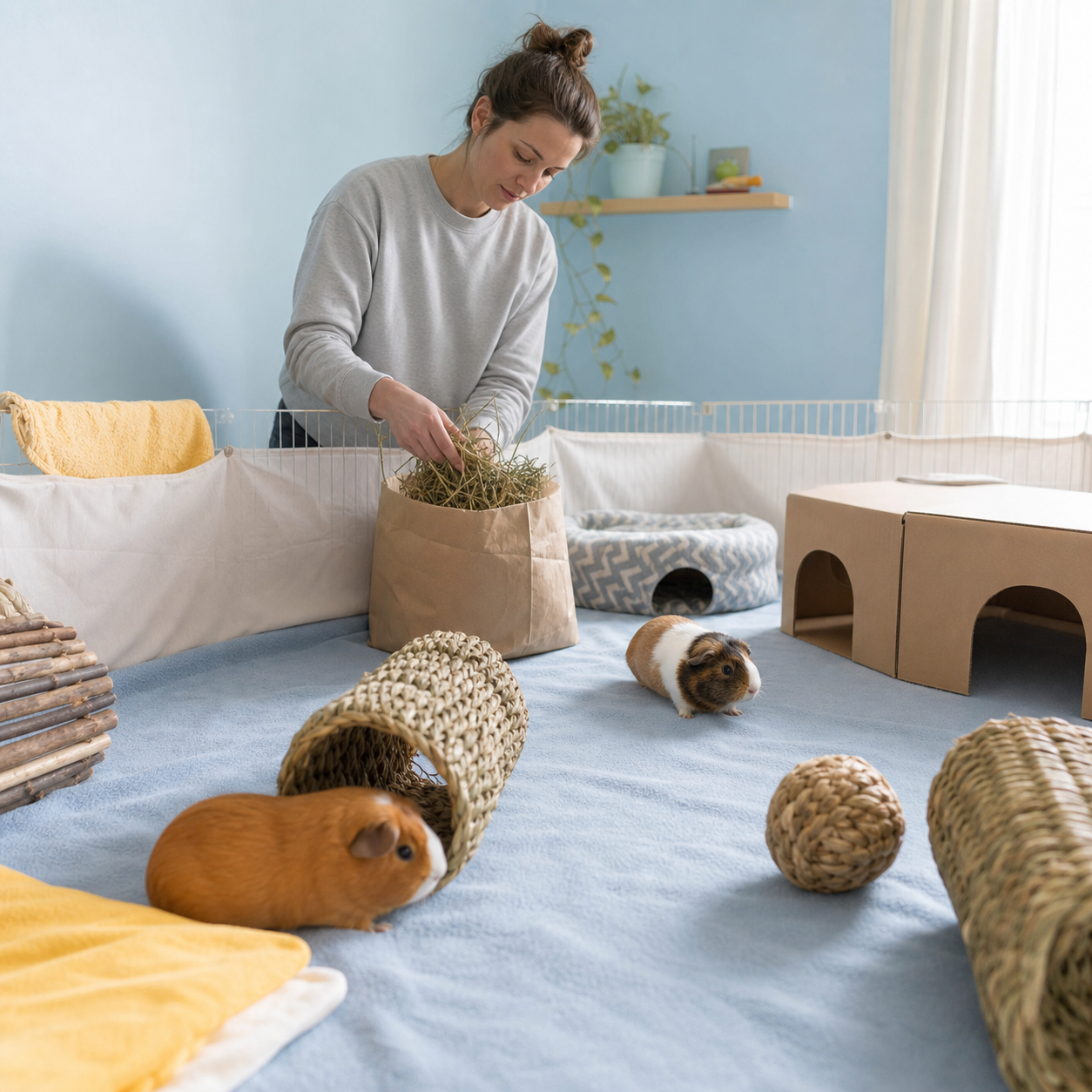
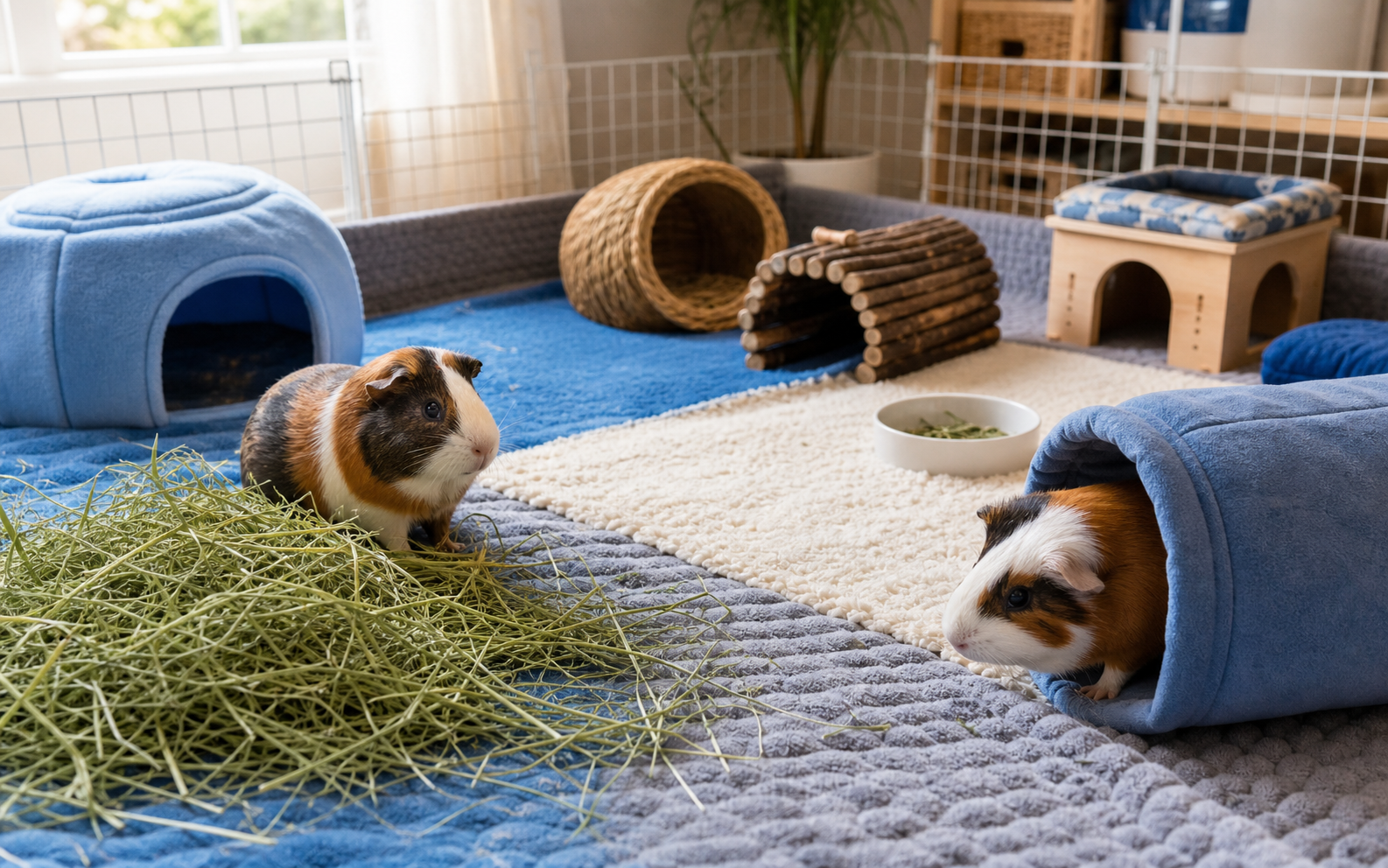
Open-ended tunnels and hides are useful because a guinea pig can move through without feeling trapped. Fresh hay, scattered food, paper bags filled safely with hay, cardboard tunnels, and changed routes can encourage investigation without turning the enclosure into an obstacle course.
Companionship matters too. Guinea pigs are social animals and should normally live with a compatible guinea pig companion. A well-designed space needs enough resources and hiding places for both animals, including options with more than one exit so nobody guards the only doorway.
The best enrichment gives a guinea pig choices. It does not chase them toward an outcome.
Happy Is Not a Performance
Popcorning is delightful because it happens naturally. It stops being delightful when a guinea pig is frightened into moving for a video.
Do not clap, poke, chase, lift, startle, or remove hiding places to make the jump happen. A sudden movement caused by fear is not the same thing as voluntary play, even if the camera captures all four feet in the air.
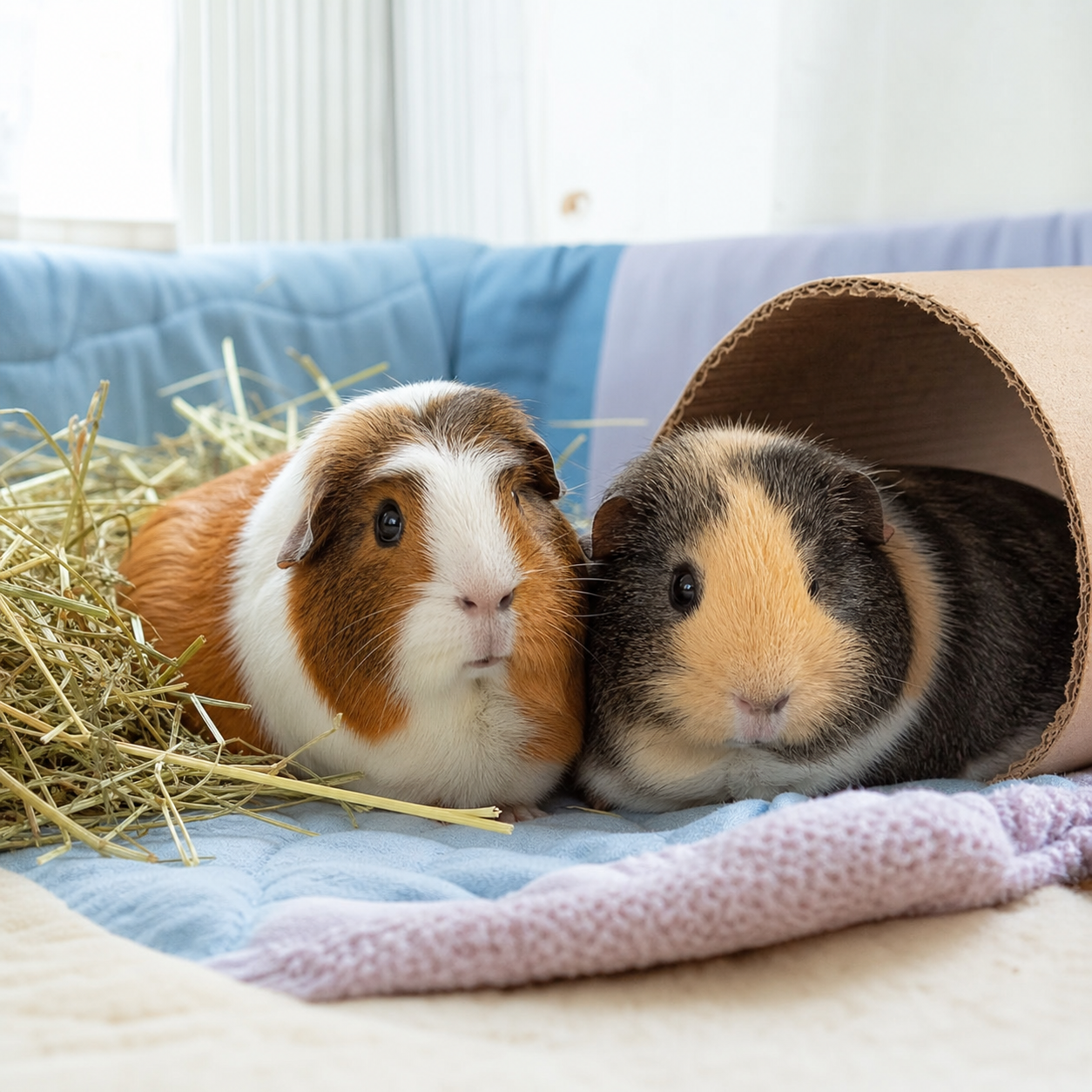
Instead, make ordinary life better. Offer fresh hay, safe floor time, familiar routines, varied but gentle enrichment, and calm interaction. Sit nearby and let the guinea pig decide whether to explore. If a popcorn appears, enjoy the moment. If it does not, the session has not failed.
This is also a good reason to keep filming low-pressure. Hold the phone at a distance, keep escape routes open, and stop if the guinea pig freezes, hides, chatters their teeth, becomes frantic, or repeatedly tries to get away.
When a Jump Looks Different

Normal popcorning is quick, coordinated, and attached to a recognisable moment of activity. The guinea pig lands and carries on.
Ask a vet for advice if the movement comes with falling, rolling, circling, a persistent head tilt, weakness, tremors, repeated uncontrolled jerking, limping, pain, breathing changes, or difficulty staying upright. A short video may help the veterinary team see what happened, but do not delay urgent care if the guinea pig is collapsing, struggling to breathe, or unable to move normally.
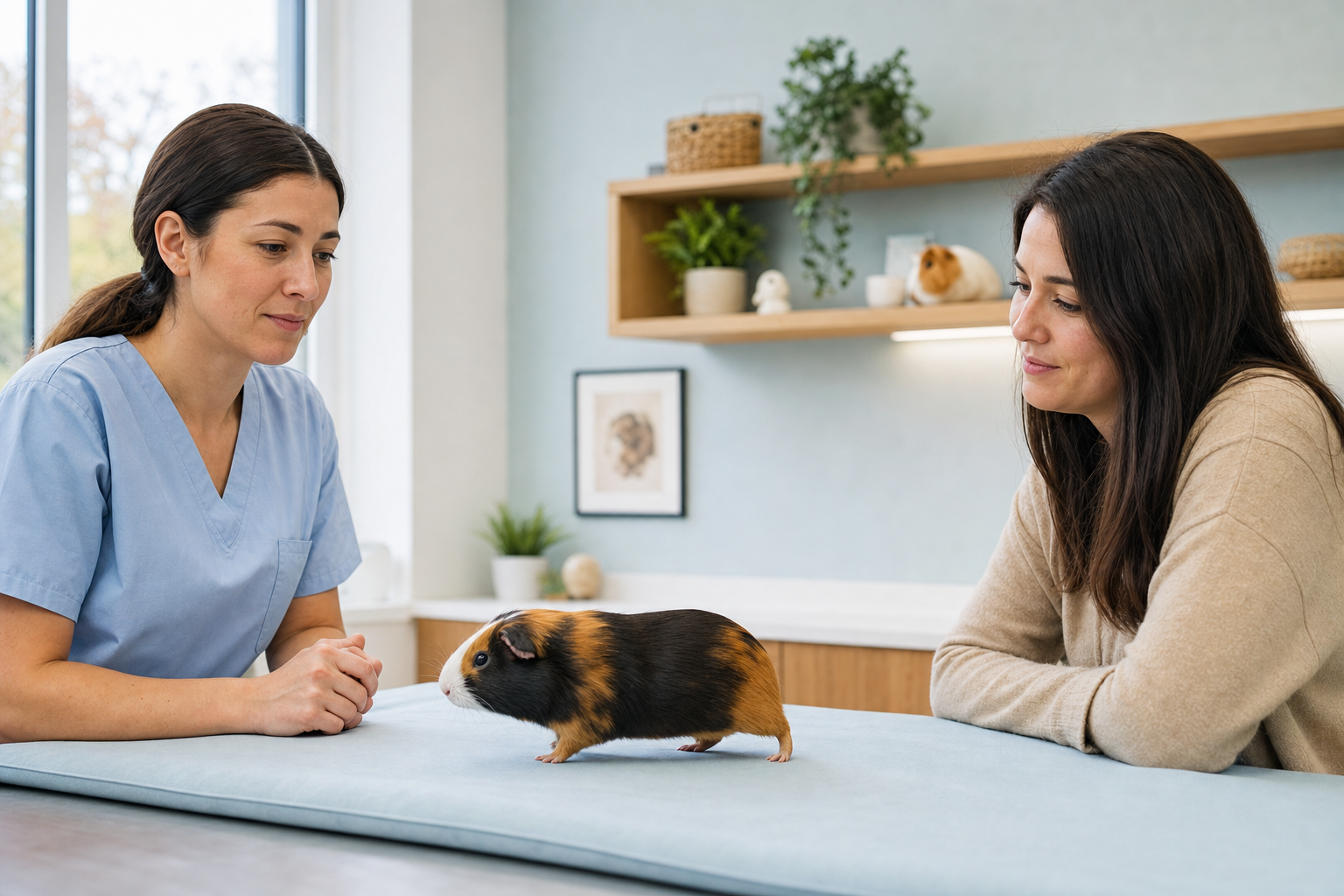
Changes in eating and droppings are especially important. Guinea pigs need food moving through the digestive system. PDSA and RSPCA guidance both treat reduced appetite, fewer droppings, unusual quietness, and hiding more than normal as reasons to seek veterinary help promptly.
The distinction is not “funny jump” versus “serious jump” based on one frozen frame. It is control, context, recovery, and the rest of the guinea pig.
The Tiny Popcorn Read

Popcorning is usually a little burst of excitement: all four paws leave the floor, the body may twist, and normal guinea pig business resumes immediately afterward.
Read it as a positive clue rather than a guaranteed translation. Watch the whole animal. Notice the trigger, landing, recovery, appetite, movement, social behaviour, and what happens next. Give them a level, secure space with grip, hay, open-ended hides, enrichment, and a compatible companion. Never frighten them into performing.
When the movement is uncontrolled, happens with loss of balance or pain, or appears beside changes in eating, droppings, breathing, or usual behaviour, call a guinea-pig-savvy vet.
Most of the time, though, the tiny launch sequence is exactly what it looks like: one small animal experiencing a feeling too energetic to keep all four feet on the floor.
More tiny pet logic lives across CloudyAww, where the funniest animal moments usually have a small real reason hiding underneath them.
Keep exploring small-animal logic with why rabbits seem determined to chew everything and why pet birds copy familiar household sounds. More warm, practical pet explainers live in Aww Articles.
Sources and Further Reading
- PDSA: Introducing guinea pigs
- RSPCA: Ten facts about guinea pigs
- Merck Veterinary Manual: Guinea pig anatomy, physiology and behaviour
- RSPCA: Understanding guinea pig behaviour
- PDSA: Guinea pig health
- Merck Veterinary Manual: Common health problems of guinea pigs