

Ageing can arrive as a collection of tiny negotiations. The favourite sofa is still favourite, but the jump now requires a committee meeting. The kitchen floor has become suspiciously shiny. A midnight walk to the water bowl feels longer than it did last year.
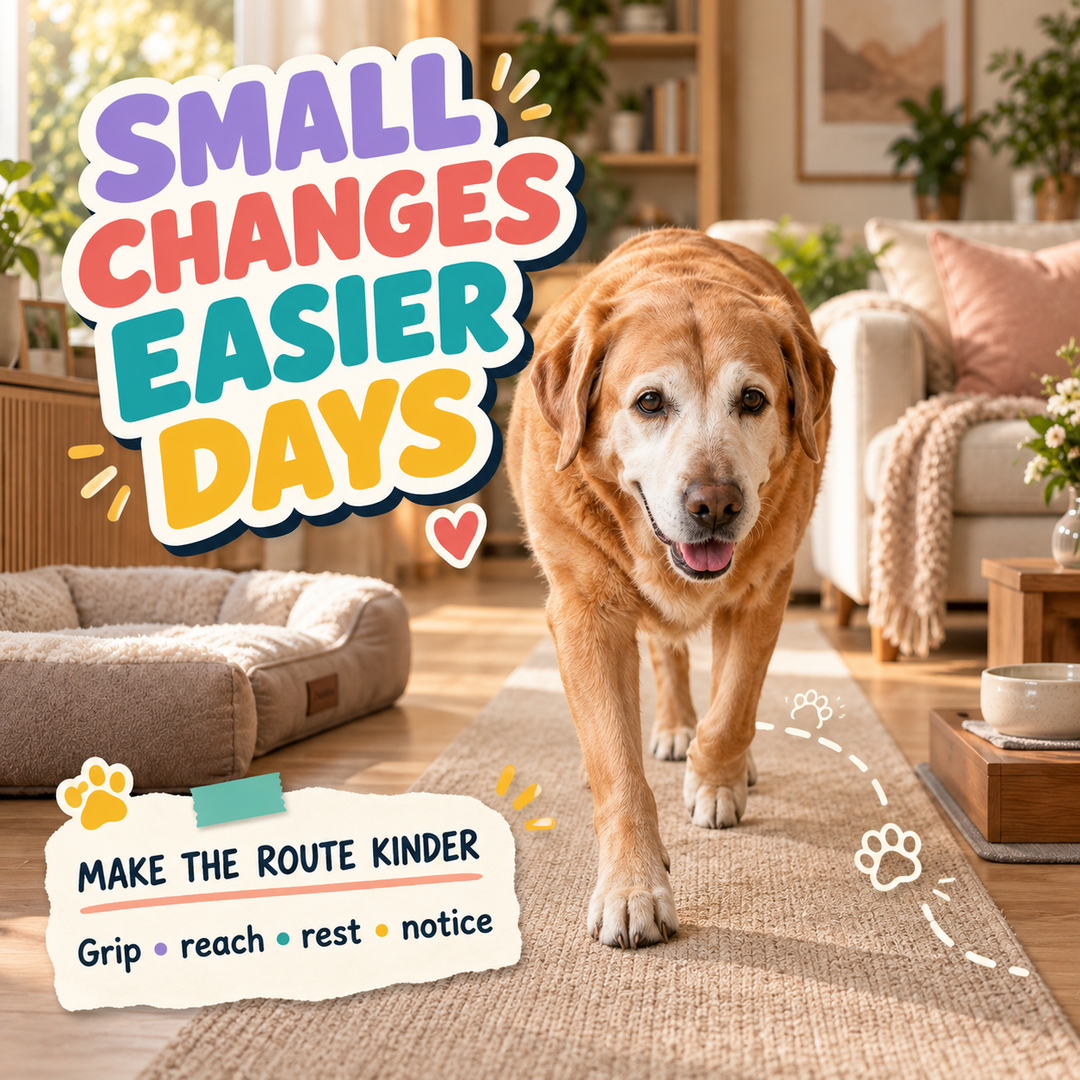
Older dogs and cats can benefit from practical changes that improve grip, shorten routes and make everyday resources easier to reach. The useful goal is not to redesign the home into a clinical obstacle course. It is to notice where effort has increased and remove avoidable difficulty while preserving familiar places and choices.
This guide is about supportive home setup, not diagnosing pain or treating disease. Age is not an explanation for every change. A veterinarian should assess new stiffness, weakness, confusion, altered sleep, toileting trouble or reduced interest in normal life.
Watch One Ordinary Day
Start with the moments your pet repeats: getting out of bed, crossing the floor, eating, drinking, using the litter tray, climbing a step, settling near the family and going outside. Watch without testing them or repeatedly asking for movements they have begun to avoid.
Look for hesitation, slipping, shortened steps, a changed route, repeated repositioning, reluctance to lower the head, missed jumps or a longer recovery after activity. Note time of day and surface. A dog who moves comfortably on carpet but stalls at tile is giving you a different clue from a dog who struggles everywhere.
Take a short video when useful. Movement seen at home can help a veterinarian understand a problem that becomes less obvious in the excitement of a clinic visit.
Build a Path With Grip
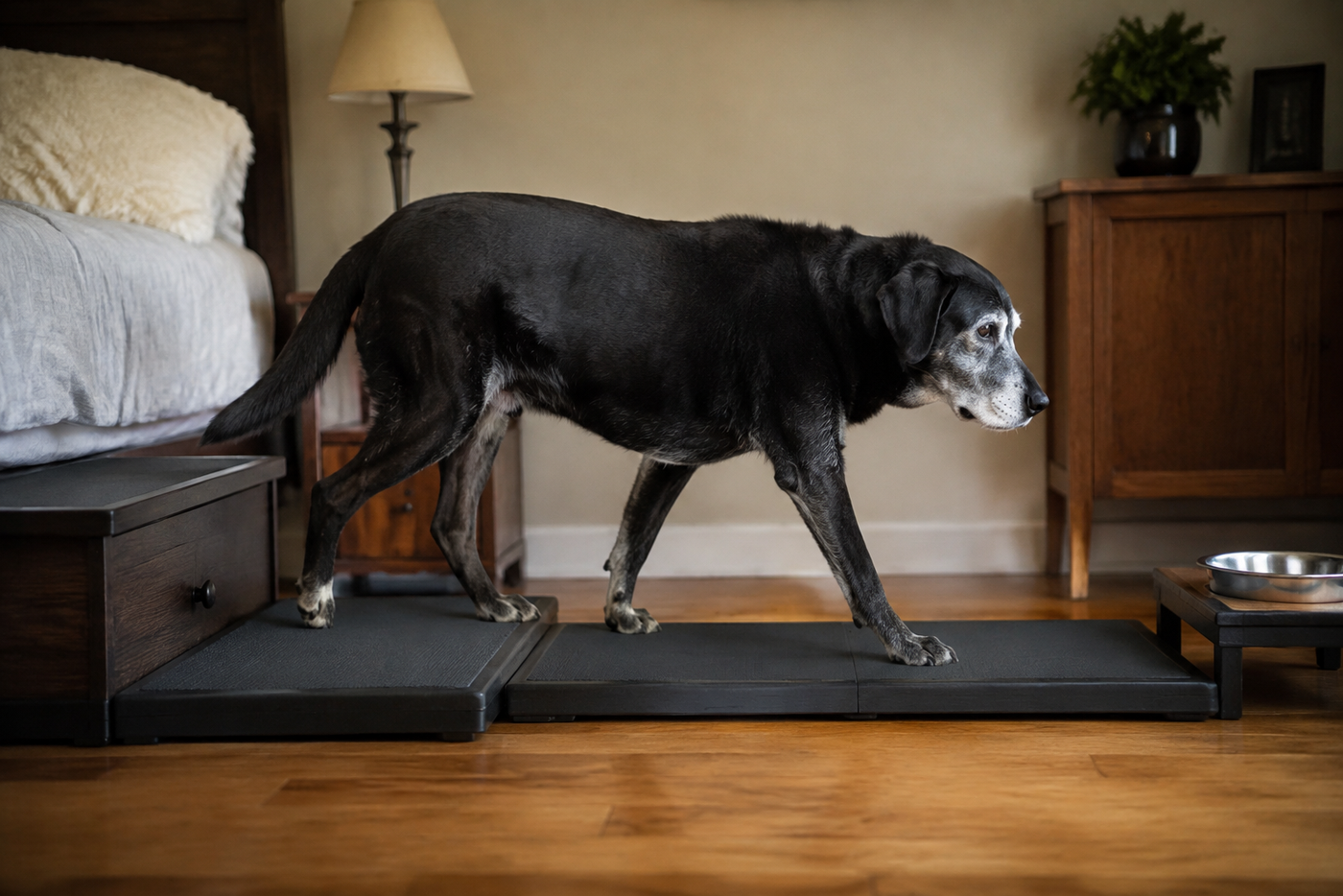
Slippery flooring can turn a short walk into a balance exercise. Connect important areas with secured non-slip runners or mats: bed to water, resting place to door, favourite room to feeding area. The path should be wide enough for the pet to turn and should not curl, slide or create raised edges.
Test every surface with your own foot and hand. A decorative rug that shoots forward when pressed has joined the hazard department. Use pads or products designed to keep it flat, and replace anything frayed or difficult to clean.
Keep nails and paw fur maintained with professional guidance, because overgrown nails or excess fur can affect traction. Do not force a sore pet into grooming positions; ask the vet or groomer for a safe plan.
Make Heights Optional
An older pet should not have to make one ambitious jump to reach every valued place. A broad, stable step or appropriately designed ramp can preserve access to a sofa, bed, vehicle or window perch.
The equipment must suit the animal and space. It needs non-slip footing, secure placement and enough width. A steep narrow ramp may look accessible while asking for considerable strength and confidence.
Introduce it when the pet is calm. Reward looking, approaching and placing one foot. Never push or pull them up. If the route remains difficult, stop and ask for veterinary or rehabilitation advice.
Keep Favourite Views Within Reach
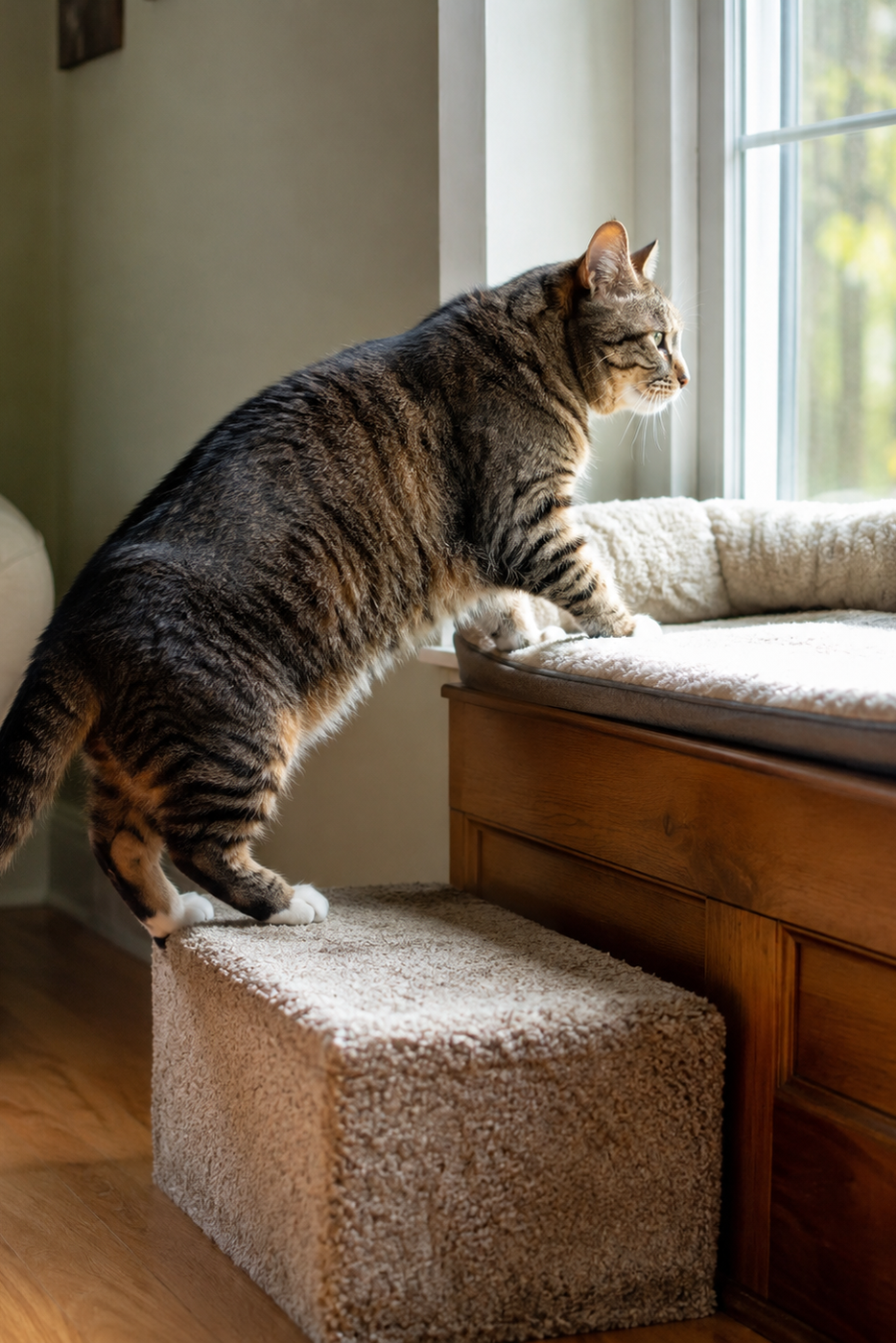
Older cats may still want the warm window, just not the launch sequence. Place a low stable step, piece of secure furniture or accessible bed nearby while keeping escape routes clear. Our guide to building a better window spot for your cat explains how warmth, route, stability and retreat all shape a useful perch.
For dogs, bring resting places closer to family activity so companionship does not require crossing the busiest floor repeatedly. Preserve at least one quiet option where nobody climbs over the pet or startles them awake.
The best adaptation protects something the animal already values. Accessibility without choice is just furniture with excellent intentions.
Bring Daily Resources Closer
Place fresh water where it is easy to reach, and consider additional stations on each level the pet uses. Food and bowls may need a stable mat. Ask your vet whether bowl height or feeding position should change for the individual rather than assuming raised is always better.
For cats, choose a litter tray with an entry low enough to manage while still containing litter. Put it in a quiet, accessible location and provide enough trays across the home. Watch whether stairs, doors or another pet stand between the cat and the toilet.
For dogs, offer more frequent outdoor opportunities if needed. Keep the path well lit and secure, and do not wait for an older dog to perform an urgent sprint because the old timetable says they should.
Make Rest Easier to Begin and End
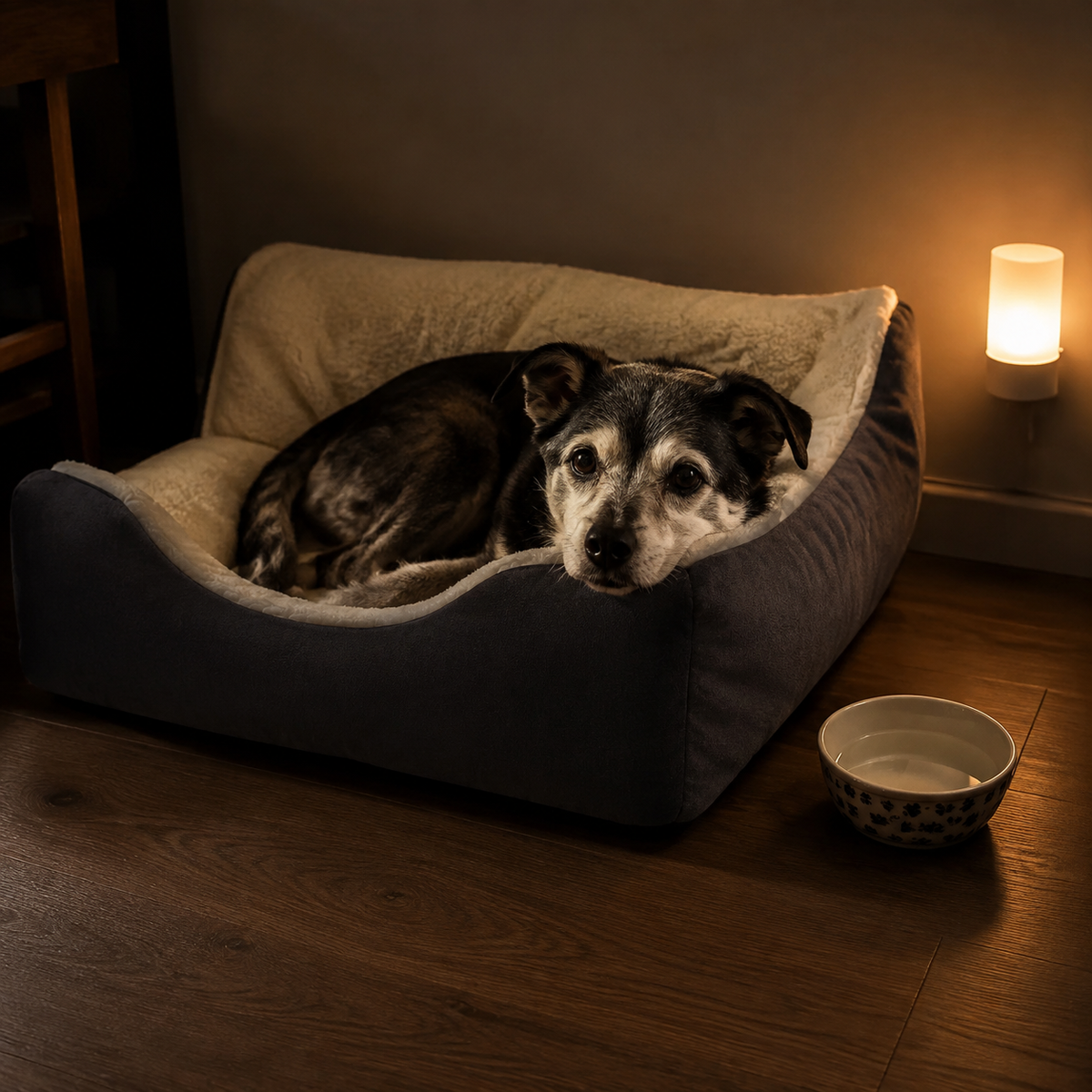
A supportive bed should be large enough for the pet to change position and low enough to enter without climbing a wall of padding. Put it on a non-slip surface, away from draughts and household traffic, with warmth appropriate to the animal and season.
Some older pets seek softer warmth; others become uncomfortable when too hot. Offer options and watch where they choose to settle. Wash covers regularly and check for dampness, bunching seams or compressed areas.
Night lights can help along familiar routes, especially if vision or orientation has changed. Keep cables inaccessible and the light soft. If sleep itself looks unfamiliar, our guide to why dogs twitch in their sleep explains how to read movement in context and when a veterinary call makes sense.
Change the Home Gently
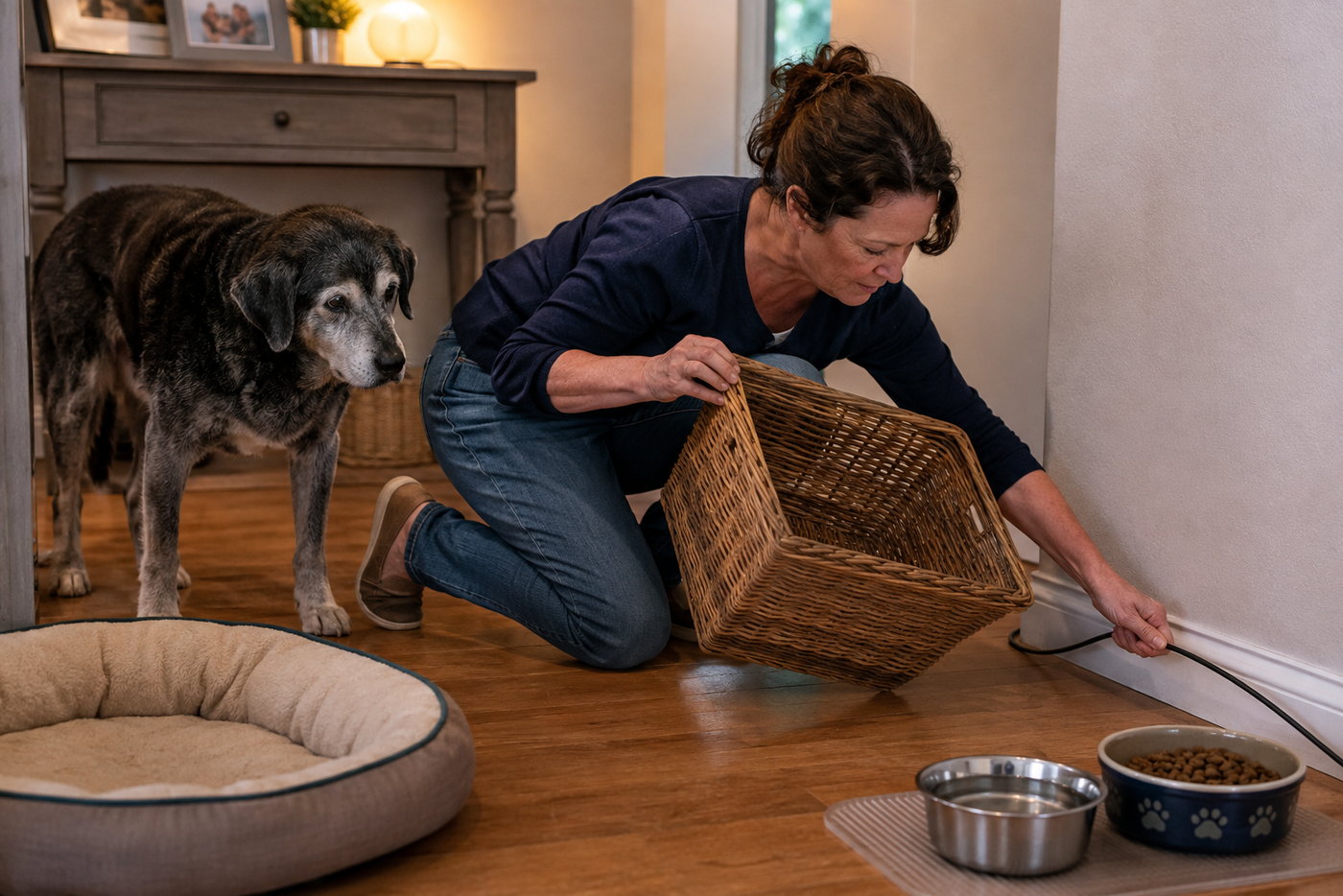
Large overnight rearrangements can be confusing. Remove obvious hazards first—loose cables, unstable stacks, blocked paths—while keeping beds, bowls and toilets in recognisable places where possible.
Make one useful change, observe it and adjust. If a runner improves the route, extend the path. If a new step is avoided, check its stability, height and position before adding more equipment.
Keep active enrichment available in an achievable form. Short sniffing opportunities, gentle play, food searches and social time may remain valuable when adapted to stamina and health. Let the pet stop. More support should create more choice, not a longer compulsory programme.
Record the Changes That Matter
A simple weekly note can include appetite, water, toileting, sleep, mobility, social interest and activities the pet still enjoys. AAHA’s senior-care guidance encourages attention to changes across physical, cognitive, emotional and social wellbeing.
Record specifics: “paused before the three back steps twice this week” is more useful than “getting old.” Include short videos and a list of medications or supplements. Do not start a new supplement because a label says senior; ask the veterinarian about safety and interaction.
Quality of life is the whole pattern. One slow morning does not decide it, and one enthusiastic biscuit does not erase persistent discomfort.
When a Vet Should Join the Plan
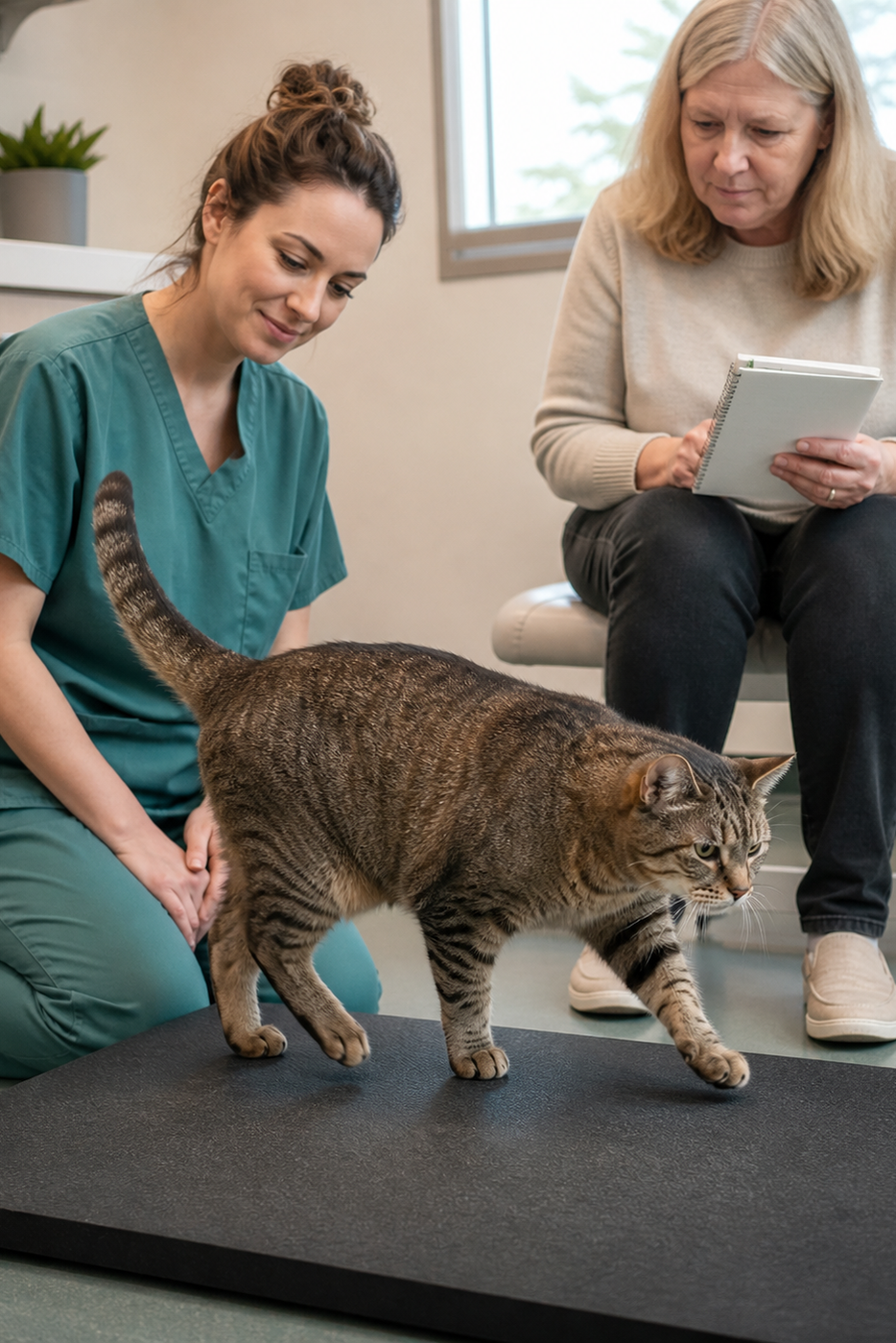
Book veterinary advice for new or worsening stiffness, limping, weakness, slipping, reluctance to rise, changed jumping, pain when touched, altered sleep, house-soiling, confusion, appetite or weight change, increased thirst, breathing changes or withdrawal from normal activity.
Seek urgent help for collapse, breathing difficulty, inability to stand, severe pain, sudden paralysis, repeated unproductive straining to urinate, major injury or another rapidly serious change.
Do not give human pain medicine. Many common products are dangerous to pets. Keep the animal on a secure comfortable surface, limit unnecessary movement after an injury and call the clinic for instructions.
The Ten-Minute Comfort Audit
Walk the home and ask:
- Grip: Are the important routes stable and non-slip?
- Reach: Can the pet access water, food, rest and toilets without a difficult jump or staircase?
- Rest: Is there a supportive low-entry bed near family life and a quiet option?
- Light: Can the pet navigate familiar night routes safely?
- Choice: Can they still choose activities and stop when ready?
- Change: Have you recorded anything new for the veterinarian?
Choose the single change most likely to remove repeated effort. A useful runner can improve twenty journeys a day. That is excellent work for one rectangle of fabric.
Keep the Life, Reduce the Friction
A kinder senior setup does not announce that a pet’s interesting days are over. It protects the interesting parts: the sunny window, the family room, the garden smells, the good bed and the ability to get a drink without crossing an indoor ice rink.
Watch the ordinary routes. Add grip. Lower the difficult step. Bring essential resources closer. Share meaningful changes with the vet.
Small adjustments can return a great deal of choice—and leave the household accessibility committee pleasantly underemployed.
Trusted Sources
- AAHA: 2023 Senior Care Guidelines for Dogs and Cats
- AAHA: Supporting Your Senior Pet
- AAHA: How to Assess Your Senior Pet’s Quality of Life
- Cats Protection: Elderly Cats