

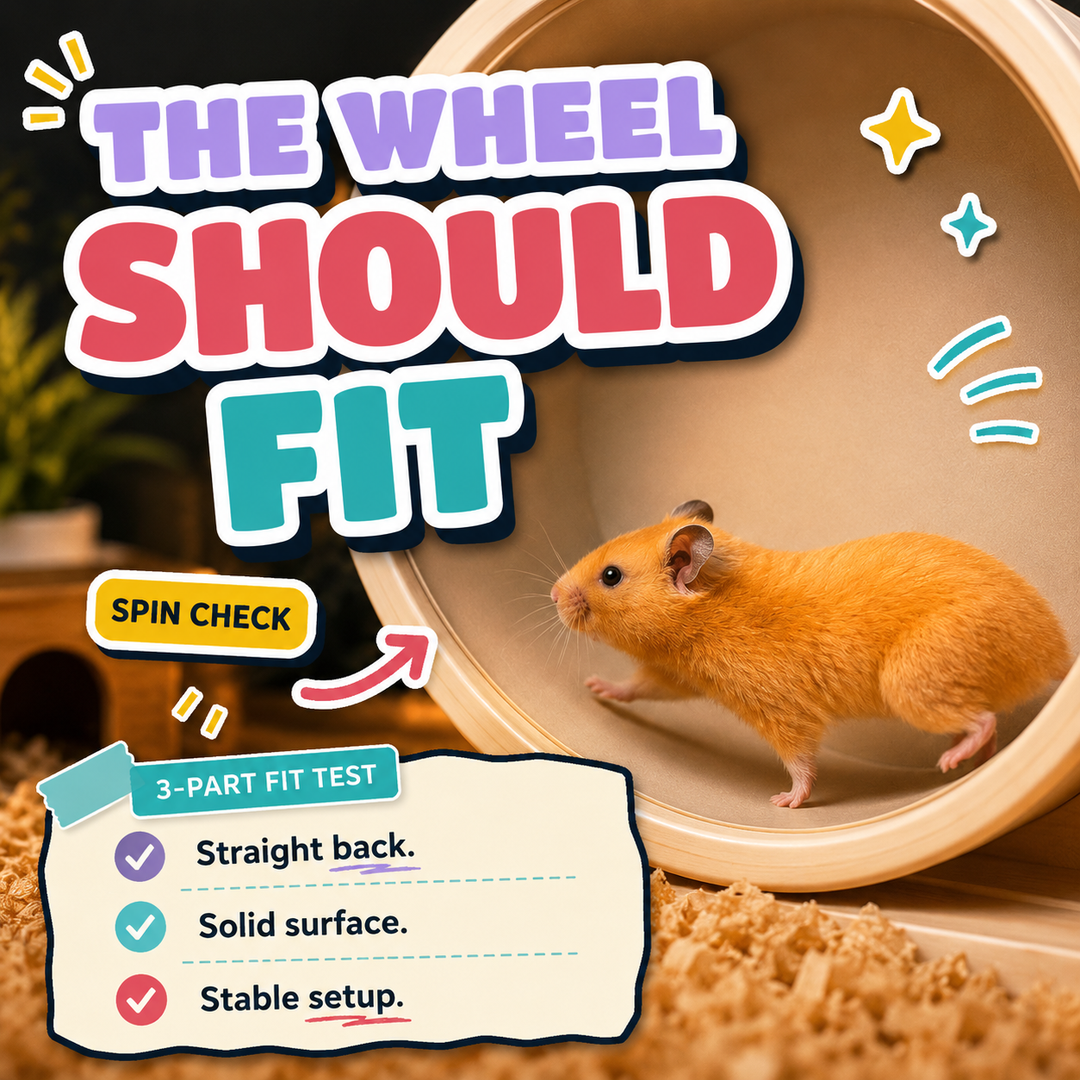
The wheel begins turning after dark. First one careful step, then a blur of tiny feet, then the soft midnight sound of a hamster apparently training for a race nobody else was told about. A wheel can be valuable exercise, but the label hamster wheel does not guarantee that the hamster actually fits it.
The useful question is not simply, “Does the wheel spin?” It is, “Can this hamster run on it with a straight, comfortable-looking back, secure footing and enough room to move freely?” Size, surface and stability all matter. So does everything around the wheel, because one excellent running route cannot replace a roomy home, deep bedding, hiding places and chances to forage.
This guide gives you a practical safe hamster wheel check you can perform while your hamster is naturally awake. It is not a diagnosis and it does not require waking anyone for a surprise fitness assessment. The hamster union would object.
Start With the Hamster, Not the Packet
Wheel packaging often leads with a species label or a diameter. Those are useful starting points, but your hamster’s posture is the final fit check. Watch from the side while they run at a normal pace. Their back should stay reasonably straight rather than forming a strong upward curve, and they should not have to lift the head sharply to keep moving.
The Blue Cross hamster care guide advises choosing a wheel that lets the hamster run straight-backed, while PDSA recommends a wheel that is as large and wide as possible. A hamster may physically enter a small wheel and still be too large to use it comfortably.

Look at several strides, not one dramatic freeze-frame. A hamster may glance up, slow down or briefly change position. What matters is the repeated running posture. If the back remains tightly curved through ordinary running, treat that as a practical sign that the wheel needs reassessing.
Use Diameter as a Starting Point
Several reputable welfare organisations publish slightly different minimum or preferred sizes, which is why body position remains so useful. PDSA lists at least 20 cm (8 inches) for dwarf hamsters and 30 cm (12 inches) for Syrian hamsters. Blue Cross gives more detailed ranges: 27–32 cm for Syrians, 25–27 cm for Chinese hamsters, 22–25 cm for Campbell’s and winter-white dwarfs, and 20–22 cm for Roborovskis.
These figures are guides, not permission to squeeze a long individual into the smallest number in a range. If two wheels both fit the enclosure safely and the larger one allows a straighter, more natural-looking stride, the larger fit is usually the more sensible choice.
Before buying, check the wheel’s internal running diameter, not the widest outside edge, stand or decorative rim. Product measurements can be a tiny maze wearing a barcode.
Choose a Solid Running Surface
A safe running track should be continuous and solid. Avoid open rungs, wire mesh and wide gaps that can catch small feet or legs. The Merck Veterinary Manual notes that broken bones can occur when a hamster’s leg becomes trapped in a wire exercise wheel or mesh material, and recommends solid-surface wheels.
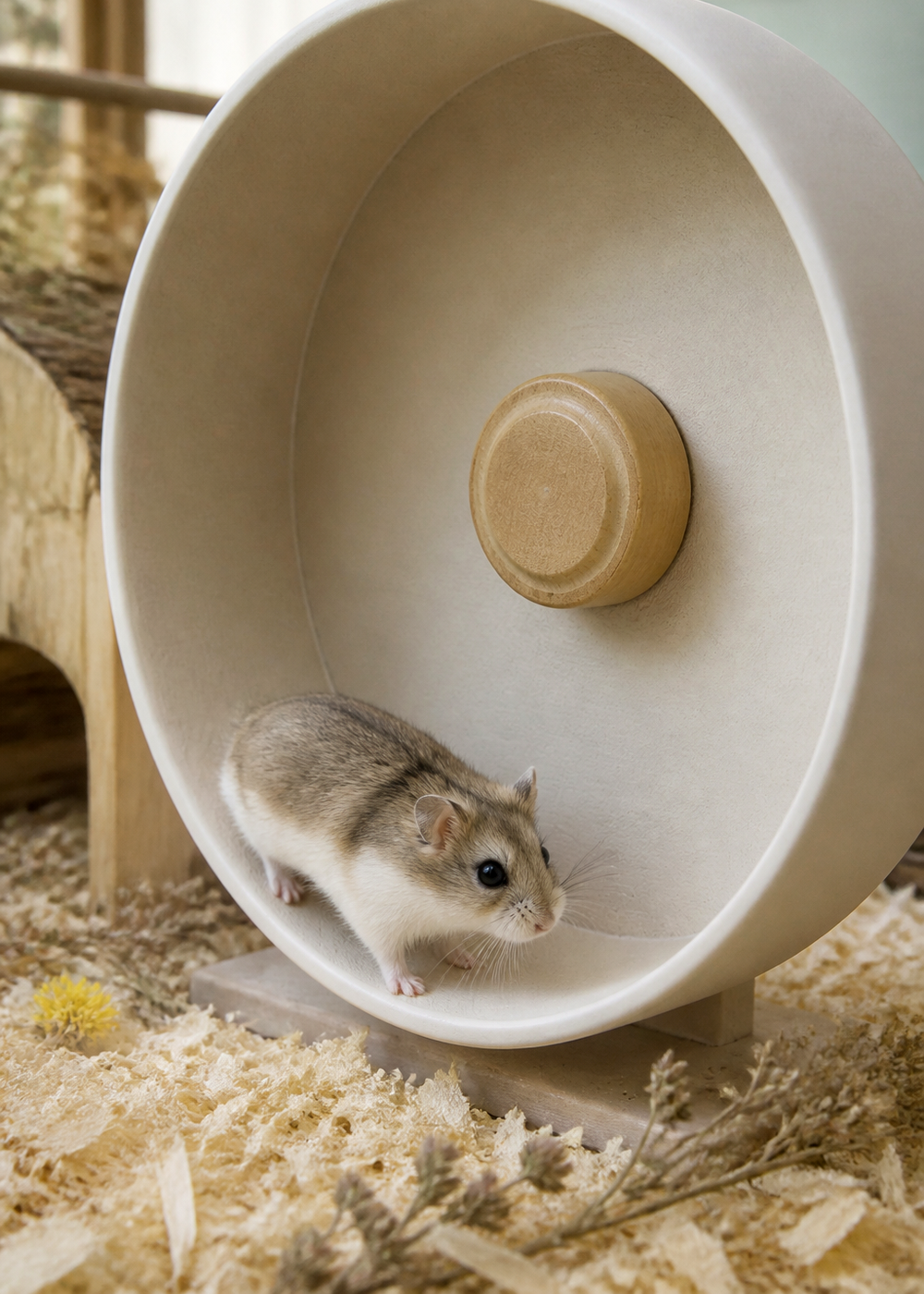
The running surface should also offer grip without sharp ridges. Smooth does not have to mean slippery: a lightly textured, intact surface can help paws land securely. Check for cracks, rough seams and damaged coating whenever you clean the wheel. If a wheel has become chewed into a miniature obstacle course, it has retired from active service.
The RSPCA recommends a good-quality, large-diameter wheel with a solid structure, ideally an axle-free design and a non-slip running surface. That does not mean every central axle is automatically dangerous; it means the moving parts and supports should not force the hamster into an awkward position or create an obvious trapping point.
Check Width, Entry and Stability
The hamster should be able to enter, turn onto the running track and leave without being pinched between the wheel and its stand. The track needs enough width for the body to stay centred rather than repeatedly rubbing a side wall. Long-haired Syrians need extra scrutiny because fur can conceal contact and catch on damaged parts.
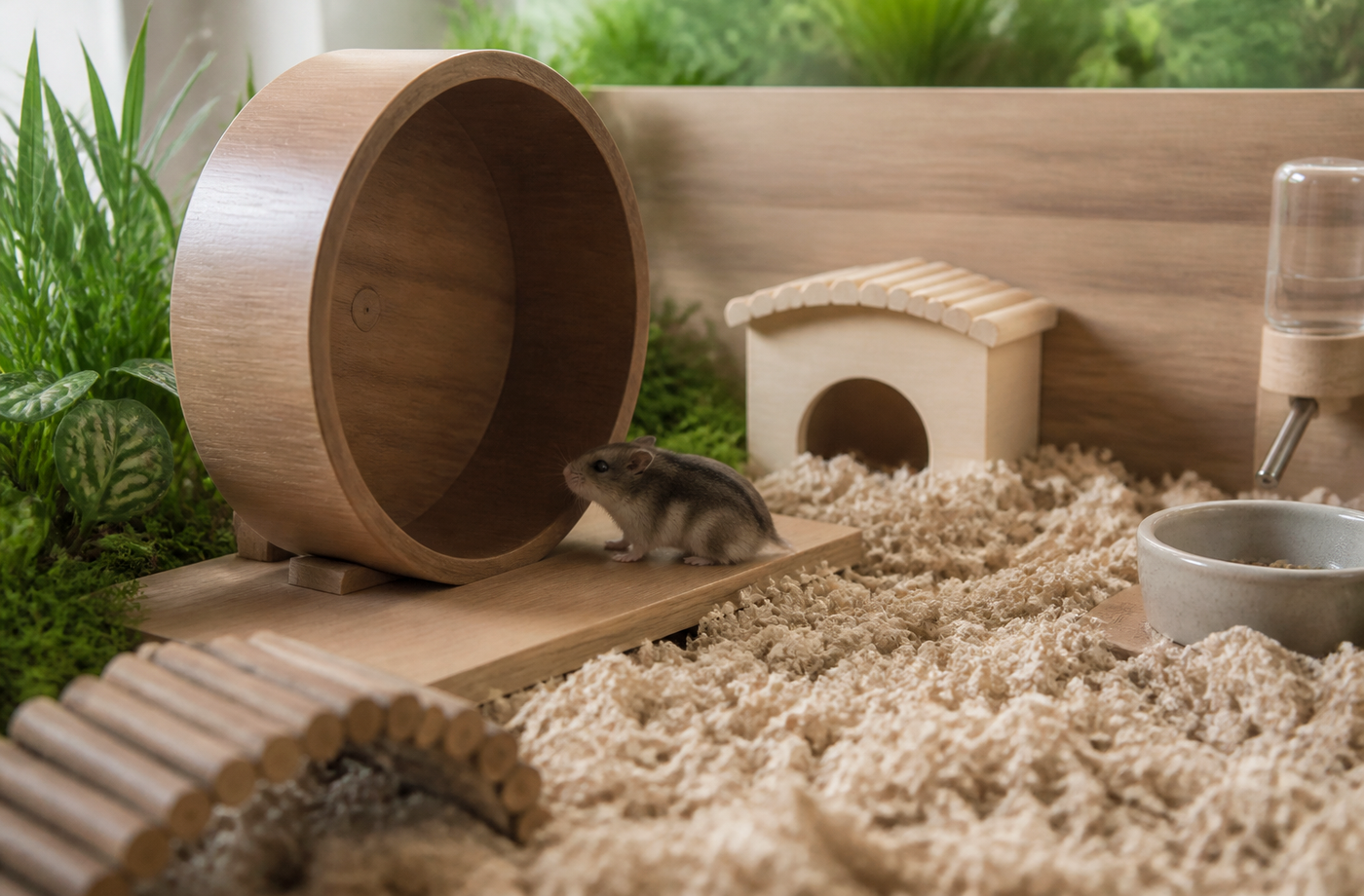
Press the stand gently before placing it in the enclosure. It should sit level and resist tipping. Then spin the empty wheel by hand. It should rotate freely without a sharp wobble, scraping edge or loose component. A little noise may be normal; a wheel attempting to unscrew itself at 2 a.m. is giving you useful feedback.
If the wheel stands on deep bedding, use a stable platform or a design that remains secure without compressing the hamster’s entire burrowing area. Leave a clear route around it. The wheel should not block access to water, a nest entrance or the only path through the enclosure.
Watch a Real Night-Time Run
Hamsters are generally active in the evening and at night, so assess the wheel when your hamster chooses to use it. Do not wake them during the day, place them on the track or keep nudging the wheel to demonstrate its purpose. Give the new object time to become familiar.
Watch for this simple sequence:
- The hamster steps on and off without slipping or being struck by a moving part.
- The body stays reasonably centred and the stride looks smooth.
- The back is not held in a pronounced curve throughout the run.
- The wheel turns without tipping, scraping or trapping bedding.
- The hamster can stop and leave whenever they choose.
One quiet observation is more informative than repeatedly interrupting the run. If you need evidence for comparison, take a short side-on video in normal room light without flash. It can help you see posture and wheel movement more clearly—and gives you something more useful than “I think the back looked a bit banana-shaped at midnight.”
The Wheel Is Not the Whole Habitat
The RSPCA is explicit that a wheel should not be the hamster’s only enrichment. Hamsters also need enough floor space to explore, deep suitable bedding for burrowing, safe hides, nesting material, things to gnaw and opportunities to search for food.
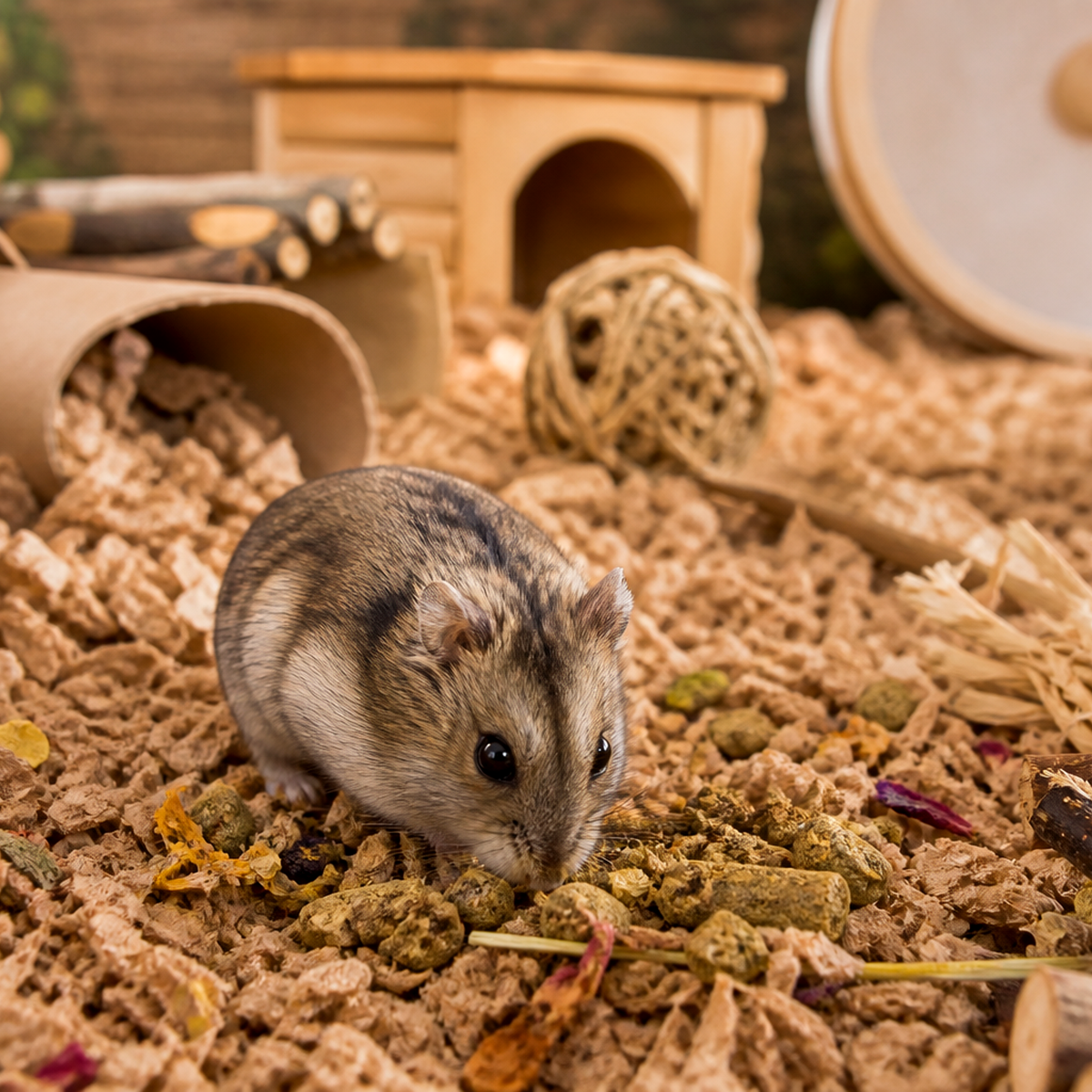
That broader environment matters even when the wheel is popular. Running is one option; it should not be the only interesting thing available. Scatter part of the normal dry ration, add hamster-safe cardboard tunnels, and preserve quiet covered routes through the enclosure. Change things gradually rather than redesigning the entire neighbourhood while the resident is asleep.
If you enjoy the tiny logistics department behind hamster behaviour, our guide to why hamsters stuff their cheeks follows the food from collection to private stash. The wheel and the cheek pouches are different systems, but both make more sense when you watch the whole routine rather than one spectacular moment.
Clean It Without Erasing the Map
Spot-check the wheel regularly for urine, damp bedding, stuck food and damaged edges. Clean it with a pet-safe method appropriate to the material, rinse when required and let it dry fully before it goes back. Strong fragrances are unnecessary; a hamster’s nose is already doing considerably more work than ours.
Try to return the wheel to the same stable position. Hamsters use familiar routes and scent information, so constant large rearrangements can be unsettling. A clean wheel is helpful. An enclosure that appears to have been redeveloped by surprise every Tuesday is less considerate.
Know When to Pause the Spin
Stop and inspect the setup if your hamster repeatedly slips, tumbles, catches fur or feet, rubs against the structure, or runs with a strongly curved back. Also pay attention to a sudden change in use. A hamster who normally runs and then becomes reluctant to move may have a health problem rather than a sudden philosophical objection to cardio.
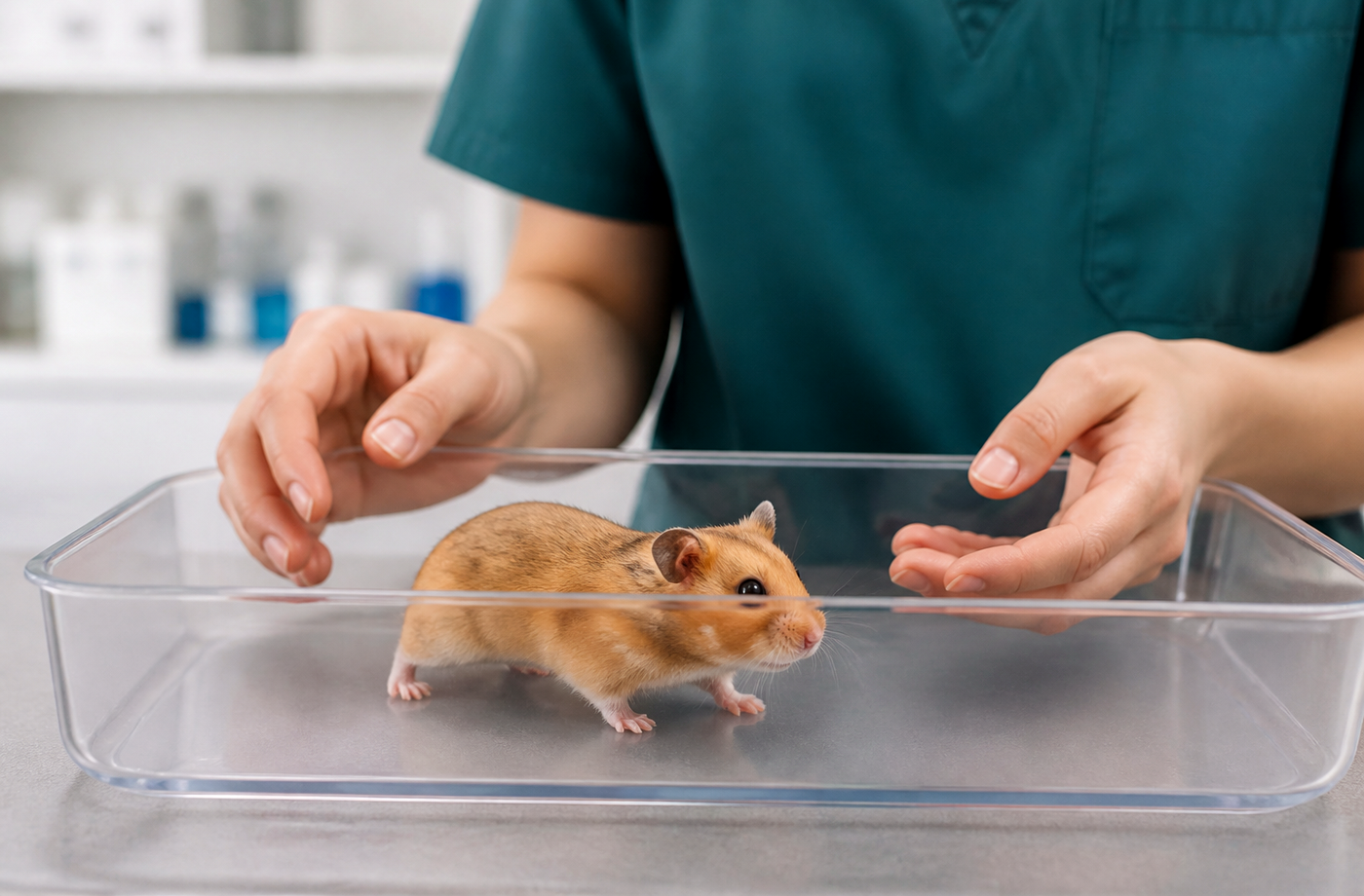
Contact a vet who treats hamsters or other small mammals if you notice pain, lameness, sore feet, swelling, wounds, an abnormal walk, reduced activity or another clear change in behaviour or appearance. Merck advises seeking immediate professional help when a hamster appears painful or reluctant to move. The RSPCA also recommends removing the wheel temporarily and asking a vet for advice if sore feet develop during use.
Do not diagnose the cause from the wheel alone. A setup problem can contribute to injury, but reluctance to run can also have unrelated medical causes. The kind response is to remove an obvious hazard, keep the hamster safe and let a professional examine the animal.
The Two-Minute Safe-Wheel Check
You can reduce the whole guide to six quick questions:
- Fit: Can the hamster run with a reasonably straight back and neutral head position?
- Surface: Is the track solid, intact and grippy, with no mesh, open rungs or sharp seams?
- Width: Can the hamster stay centred without rubbing the sides?
- Stability: Does the wheel remain level and secure at normal running speed?
- Placement: Can the hamster enter and leave freely without blocked routes or jammed bedding?
- Health: Are the feet, gait, energy and usual behaviour unchanged?
If one answer is no, fix that part before treating the wheel as finished. If the hamster looks painful or unwell, pause the equipment audit and call the vet.
A Better Spin, Not a Bigger Promise
A wheel can be a useful part of a hamster’s night: movement, choice and one satisfyingly repeatable route through the small hours. The best wheel is not the brightest one in the shop or the one with the most enthusiastic packaging. It is the one that fits the actual animal, turns safely in the actual enclosure and stays one option among many.
Watch the back. Check the surface. Test the stand. Then let the hamster decide whether tonight is for running, burrowing, reorganising the pantry—or all three before breakfast.
Trusted Sources
- RSPCA: Understanding hamster behaviour
- Blue Cross: Hamster care
- PDSA: Hamsters as pets
- Merck Veterinary Manual: Disorders and diseases of hamsters