

The brush appears. The cat remembers an appointment in another room. Somewhere between those two events, a perfectly ordinary coat-care task has acquired the atmosphere of a low-budget chase scene.
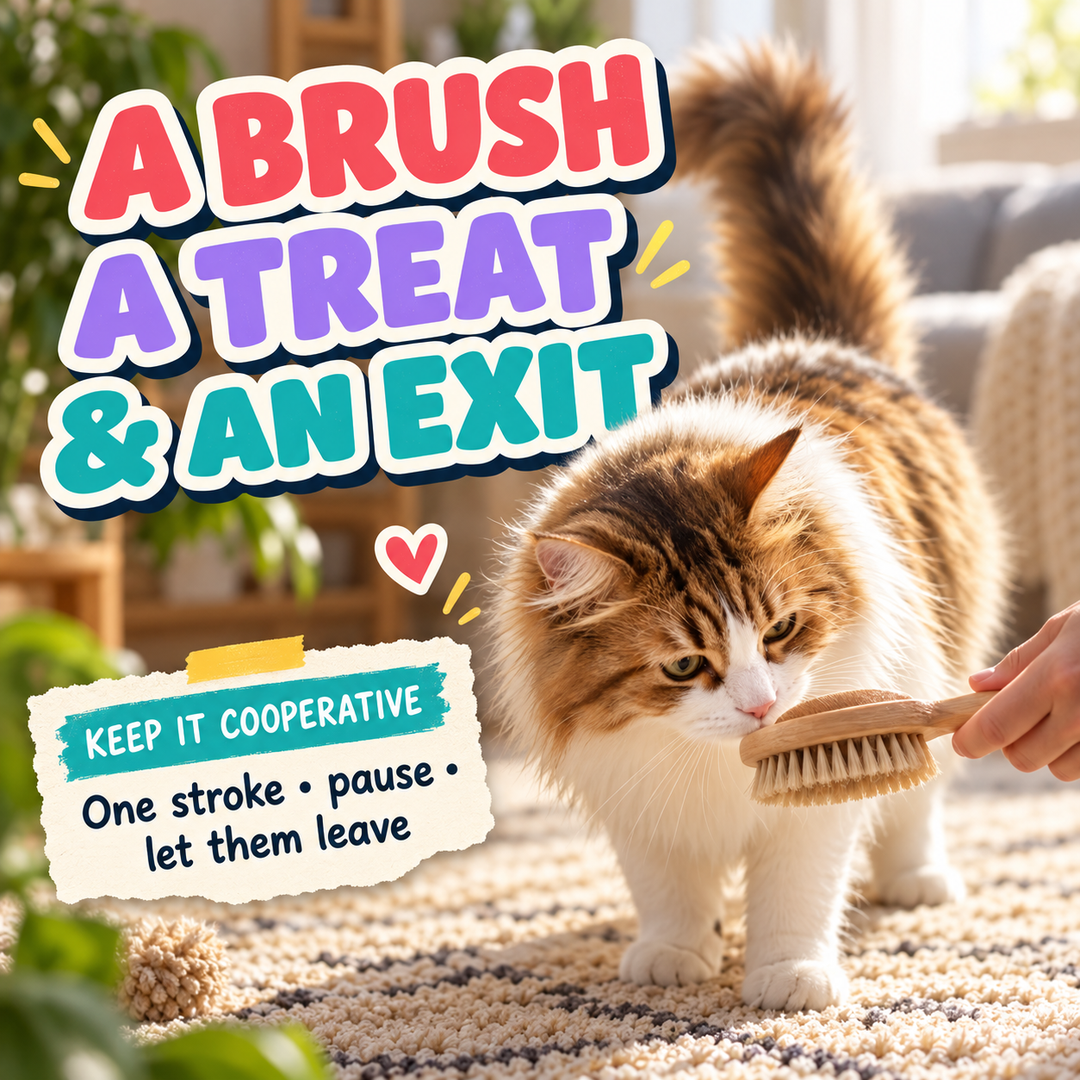
Grooming can remove loose hair, reveal skin or coat changes and help prevent tangles, especially in long-haired cats and cats who struggle to groom themselves. But a useful routine is not measured by how long a person can keep the cat in place. It begins with a tolerable tool, a short predictable interaction and the cat’s ability to pause or leave.
This guide builds a gentler brushing routine. It does not replace veterinary care or professional help with severe mats. The brush is here to support the cat, not win an argument.
Choose the Quietest Possible Start
Pick a time when the cat is awake, settled and not busy eating, playing, toileting or watching a bird with the concentration of an air-traffic controller. Use a familiar room with secure footing and an open route away.
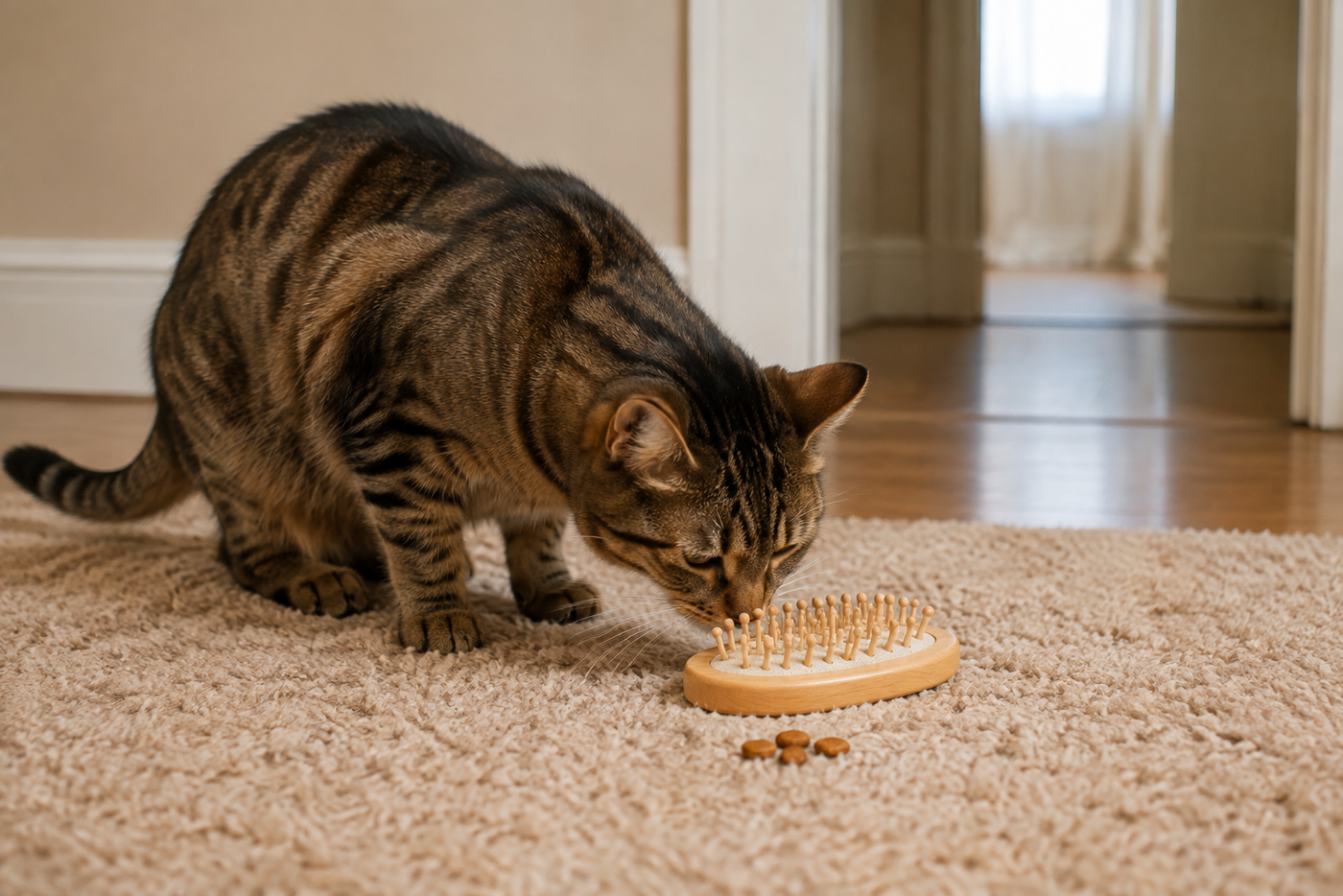
Put the grooming tool nearby without touching the cat. Let them look, sniff or ignore it. Pair calm interest with a small treat, gentle praise or another reward the cat already likes.
One comfortable investigation is enough for the first session. Familiarity is progress. You do not have to complete a full brush because the item has entered the room.
Match the Tool to the Coat
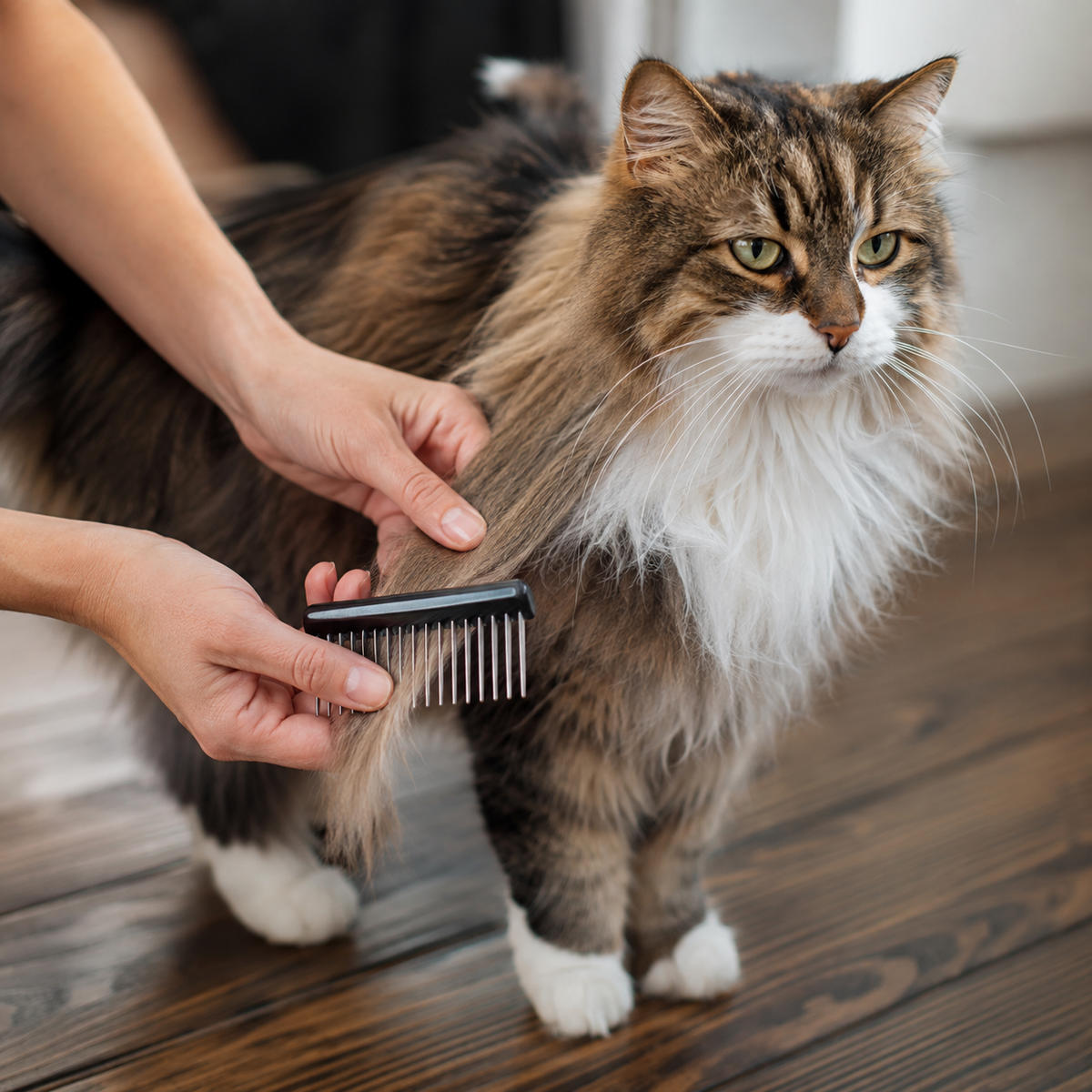
Blue Cross and Cats Protection recommend choosing grooming equipment suited to the cat’s coat. A soft brush or grooming mitt may suit a short coat; a comb and appropriate brush can help work through a longer coat in sections. Ask a vet or qualified cat-experienced groomer if you are unsure.
Inspect the tool for sharp edges, broken pins and trapped dirt. Try it gently on your own forearm so you understand the pressure and feel. A brush advertised as “professional” can still be a poor match for sensitive skin or a fine coat.
Keep scissors away from mats. Cat skin is thin and can be pulled into a tangle, making accidental cuts frighteningly easy.
Ask for One Stroke
Begin where the cat already enjoys touch, often the shoulder or upper back. Let the cat see or sniff the brush, then make one gentle stroke in the direction the hair grows. Pause. Reward. Put the brush down.
If the cat remains relaxed and re-engages, offer another stroke. If they move away, let the session end. The clear exit is not a flaw in the training plan; it is what makes participation safer and more trustworthy.
Build duration over days, not within one ambitious evening. Five comfortable strokes are more useful than fifty followed by a month-long brush embargo.
Read the Answer Between Strokes
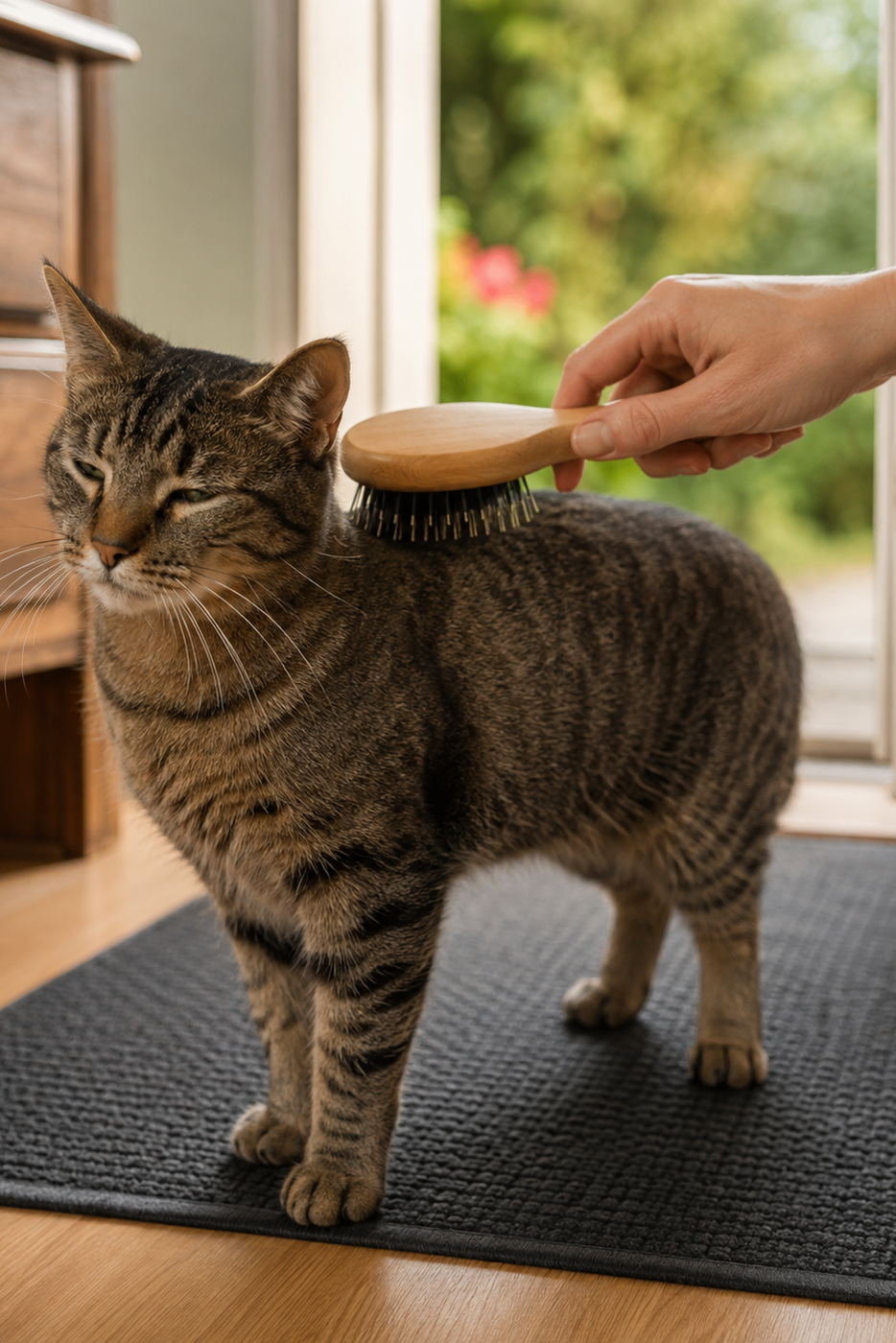
Watch the whole cat. A relaxed body, neutral ears, ordinary breathing and choosing to remain nearby suggest the session may continue. Tail lashing, skin twitching, ears rotating back, a hard stare, crouching, grabbing the brush or repeated attempts to leave mean pause or stop.
Our guide to cat tail meanings in context explains why no single flick has one fixed translation. Combine tail, ears, eyes, posture, duration and what happened immediately before it.
Do not punish a hiss, swat or retreat. Those are late pieces of information. Next time, make the session shorter, use less pressure or return to simple tool introduction.
Work in Small Sections
For longer coats, divide the task across days. Brush a small comfortable area, then stop. Work in the direction of coat growth and support the fur near the skin when gently combing loose ends so you do not pull the skin.
Pay particular attention to areas where friction encourages tangles: behind the ears, under the front legs, the chest, belly, trousers and around a collar. These can also be sensitive areas, so do not begin there.
If a knot does not loosen easily, leave it. Repeated tugging makes the next session harder and can hurt.
Treat Mats as a Separate Problem
Tight mats can pull painfully on skin, hide wounds and trap moisture. Do not cut into them with scissors, bathe them first or keep combing when the cat shows discomfort. Water can tighten some mats, and struggling increases injury risk.
Ask a veterinarian or reputable cat-experienced groomer how the mat should be removed. Severe, extensive or skin-tight matting may require veterinary care and carefully managed clipping. Sedation decisions belong to the veterinarian.
Once the coat is comfortable, build a prevention routine that the cat can tolerate. The aim is not to make the cat endure more. It is to prevent the difficult part from returning.
Clean the Tools and Check the Coat
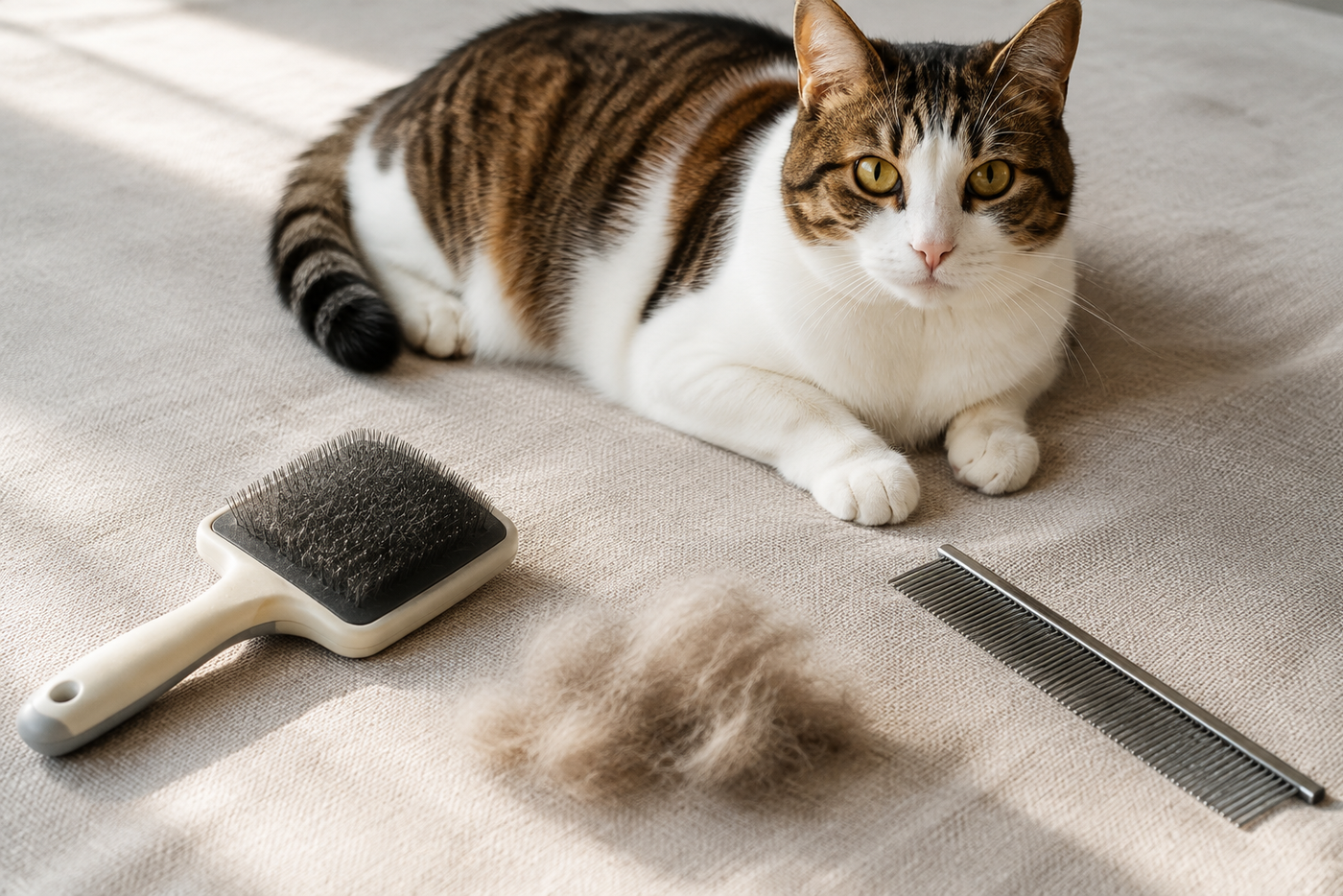
Remove loose fur from brushes and combs after use. Clean them according to their material and let them dry fully. Do not share grooming tools between animals with suspected skin disease or parasites without veterinary guidance.
As you groom, look and feel gently for redness, dandruff, scabs, swelling, bald patches, parasites, tenderness or a new lump. Notice whether the coat has become greasy, dry, clumped or unusually thin.
Do not turn the inspection into repeated poking. Record what you found, take a clear photo if useful and contact the clinic when the change is new, painful or persistent.
Help Cats Who Groom Less
Age, pain, dental disease, obesity, illness and mobility changes can make self-grooming harder. A cat who suddenly develops an unkempt coat may need a medical assessment rather than a stronger brush.
Bring grooming within easy reach by using a non-slip surface and a position that does not require the cat to balance or twist. Short sessions may be especially important. Ask the veterinarian about safe handling if arthritis, skin disease or another condition is present.
Cats can also overgroom. Repeated licking, broken hair, bald areas or skin damage may relate to medical or behavioural causes. Do not assume boredom or stress without ruling out health problems.
When the Vet Should See the Skin
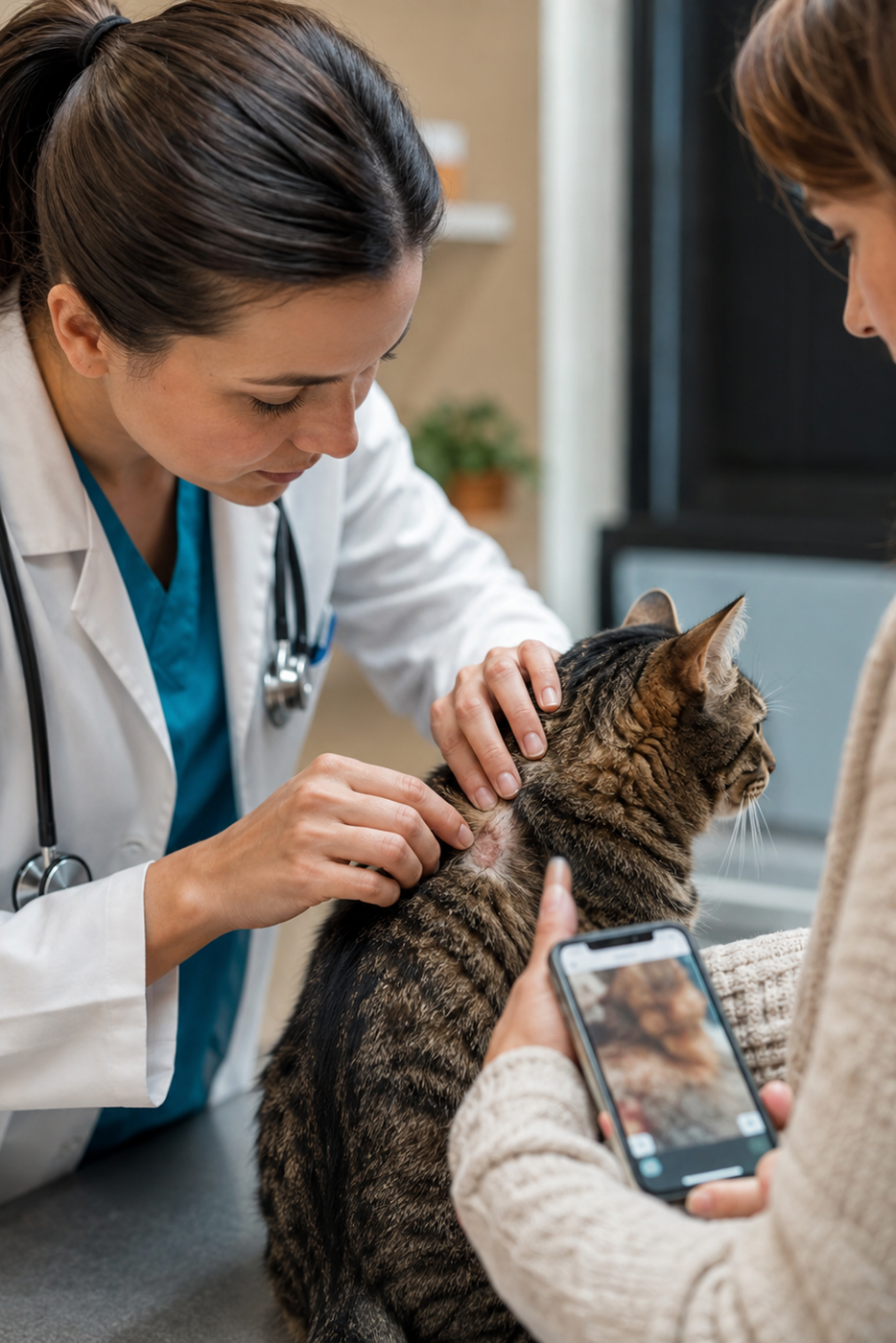
Contact a vet for pain, bleeding, wounds, inflamed skin, a sudden coat change, persistent scratching, parasites, bald patches, strong odour, discharge, a new lump, severe matting or a cat who has stopped grooming normally. Prompt advice also matters if the cat becomes unusually quiet, stops eating or reacts painfully to ordinary touch.
If a grooming tool has cut or caught the skin, stop. Apply only first aid recommended by the clinic and do not keep brushing around the area.
Bring photos, the timeline and details of new products, medicines or household changes. The coat can be evidence about the wider cat, not merely a cosmetic project.
The Three-Minute Cooperative Routine
Try this sequence:
- Place the brush nearby and reward calm investigation.
- Touch the shoulder with the back of the brush, then pause.
- Give one gentle stroke in the direction of the coat.
- Reward and wait for the cat’s answer.
- Stop while the body is still relaxed and the exit remains open.
Repeat at another calm time. Add strokes slowly and move to sensitive areas only after the easy regions are genuinely easy.
Leave Before the Cat Has To
Good grooming can be almost comically brief. The brush arrives without fanfare. One section of coat gets attention. The cat receives useful payment. Everybody leaves with the same number of fingers and a little more trust.
Choose the right tool. Start in a comfortable place. Read the whole cat between strokes. Get professional help before a mat or skin problem becomes a home battle.
A brush, a treat and an exit is not a small plan. For many cats, it is the whole reason tomorrow’s session is possible.
Trusted Sources
- Blue Cross: How to Groom Your Cat
- Cats Protection: Grooming
- VCA Animal Hospitals: Grooming and Coat Care for Your Cat
- VCA Animal Hospitals: How to Groom a Long-Haired Cat