
Some days the grand expedition is cancelled by rain, a busy calendar or the dog’s firm belief that the front step has become legally impassable.
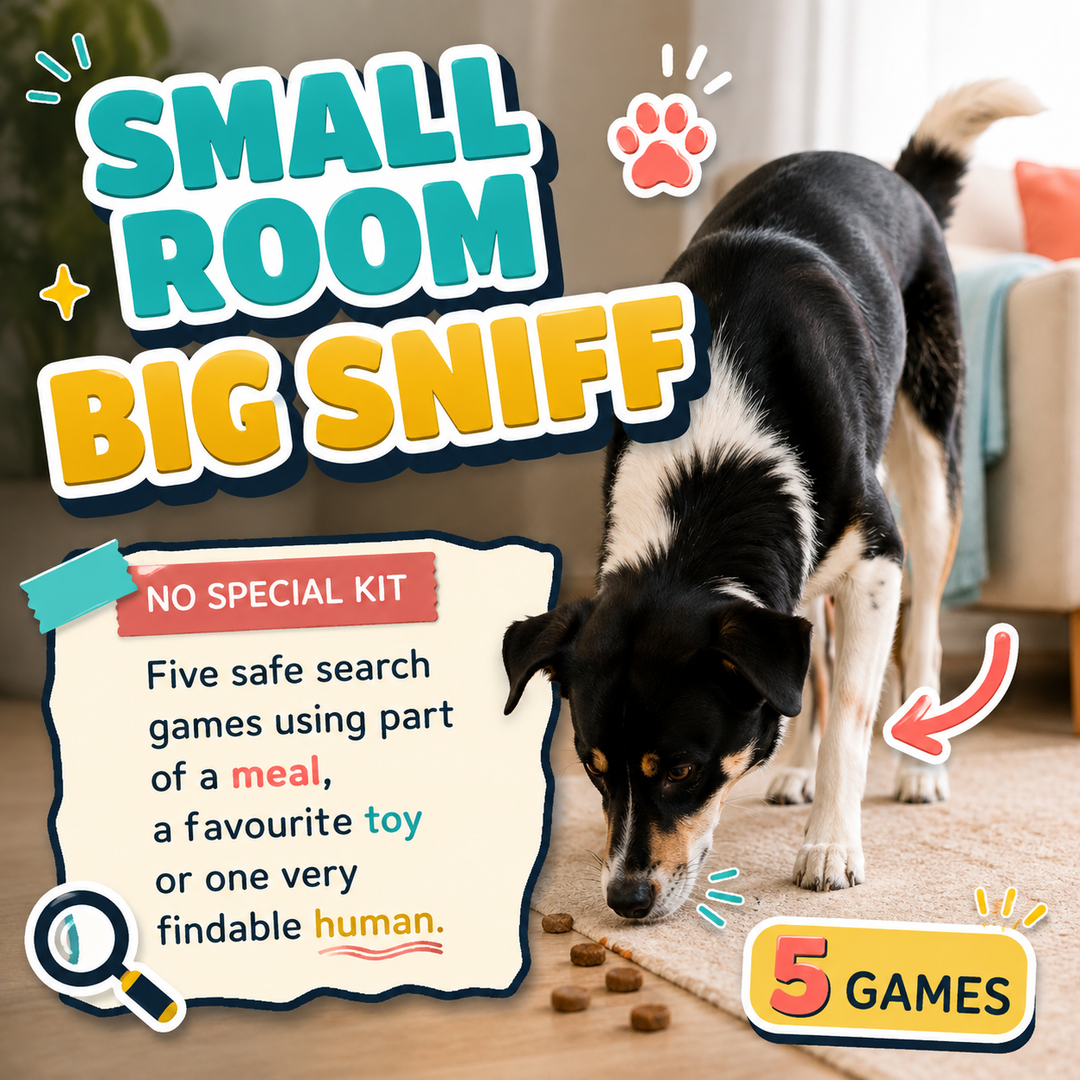
The nose can still go to work.
Indoor scent games turn part of a meal, a favourite toy or one familiar human into a small search. They do not require a specialist kit or a living room the size of an agility arena. They do require supervision, an easy starting point and permission for the dog to solve the puzzle at dog speed.
The goal is not to make dinner unnecessarily complicated. It is to give a natural behaviour somewhere safe and satisfying to happen.
Why the Nose Deserves a Job
Dogs Trust describes sniffing as a natural behaviour and a key way dogs gather information about their environment. At home, scent-based enrichment can be as simple as searching for scattered food, following a short trail or locating a familiar toy.
That mental work complements ordinary walks; it does not erase a dog’s need for appropriate exercise, toileting, rest and social contact. Think of it as another layer in the day. The walk brings weather, movement and neighbourhood news. The indoor search is a small assignment from the Department of Finding One Biscuit Behind a Cushion.
CloudyAww’s guide to letting dogs sniff on walks explains why time with the nose down can be part of a full walk rather than wasted distance.
Set the Room Up for Success
Use part of your dog’s normal food allowance where possible. Dogs Trust advises counting food used for enrichment within the day’s portions, especially when games happen regularly. If your dog has a prescription diet, allergies, weight plan or digestive condition, ask your vet which rewards are suitable.
Choose one quiet, uncluttered room. Remove cables, medicines, cleaning products, children’s small toys and anything the dog might swallow. Use intact, dog-safe toys and containers. Supervise homemade activities, and skip cardboard or fabric setups for dogs who shred and ingest material.
Start easy enough that the dog succeeds within seconds. If they freeze, bark at the puzzle, paw frantically or leave, simplify it. A scent game should create curiosity, not an unpaid internship with impossible targets.
Game One: The Easy Scatter Search
Ask your dog to wait behind a gate or with another person for a moment. Scatter a small handful of kibble over a clean towel or a clear section of floor, then release them with a consistent cue such as “find it.” For the first round, let several pieces remain visible.
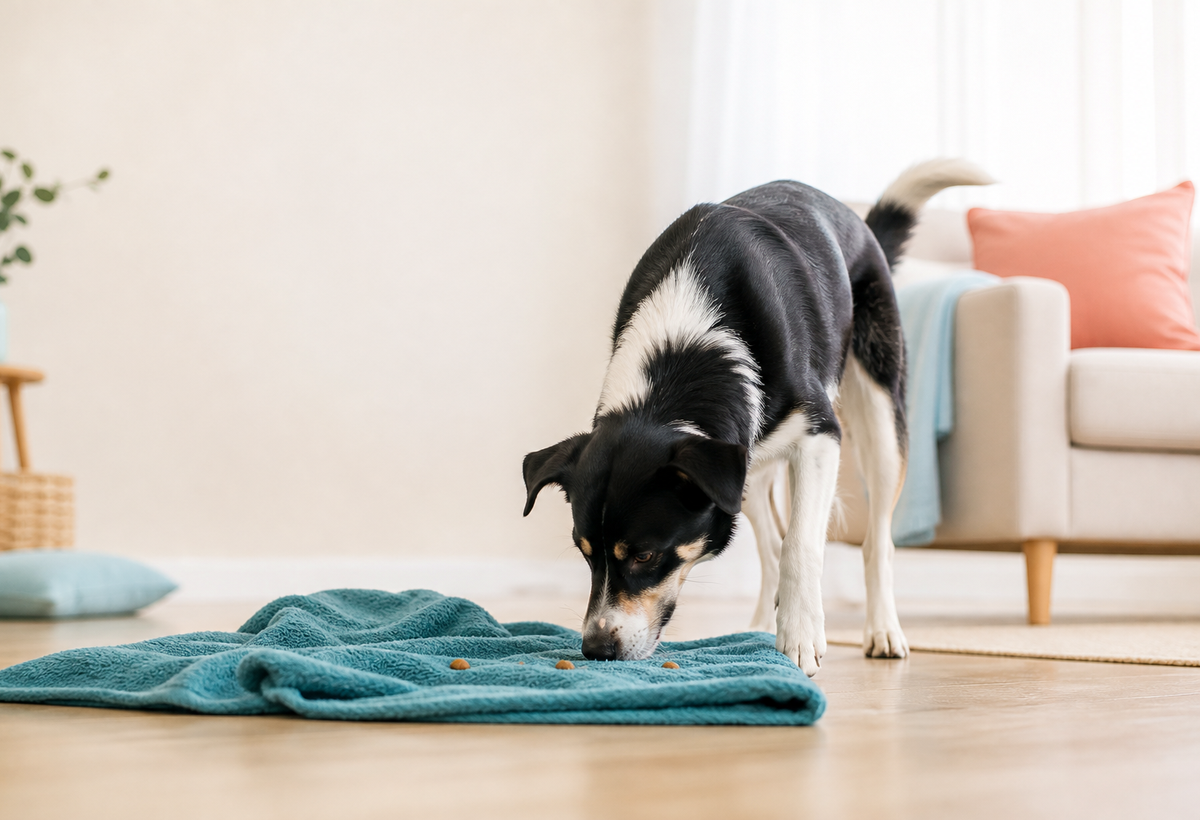
Once the dog understands the game, fold the towel loosely so some pieces sit in shallow ridges. Keep every fold easy to open with a nose. Do not knot the towel or leave the dog alone with it.
This is the useful starter because the answer arrives quickly. The dog learns that nose-down searching pays, while you learn how much difficulty they actually enjoy. End while interest is still high, then lift the towel and check that every piece has been found.
Game Two: Three Safe Hiding Spots
Place three sturdy, open containers on the floor and drop food into one while the dog watches. Use containers too large to swallow and without sharp edges, lids or handles that can trap a muzzle. Let the dog investigate and reward the correct find.
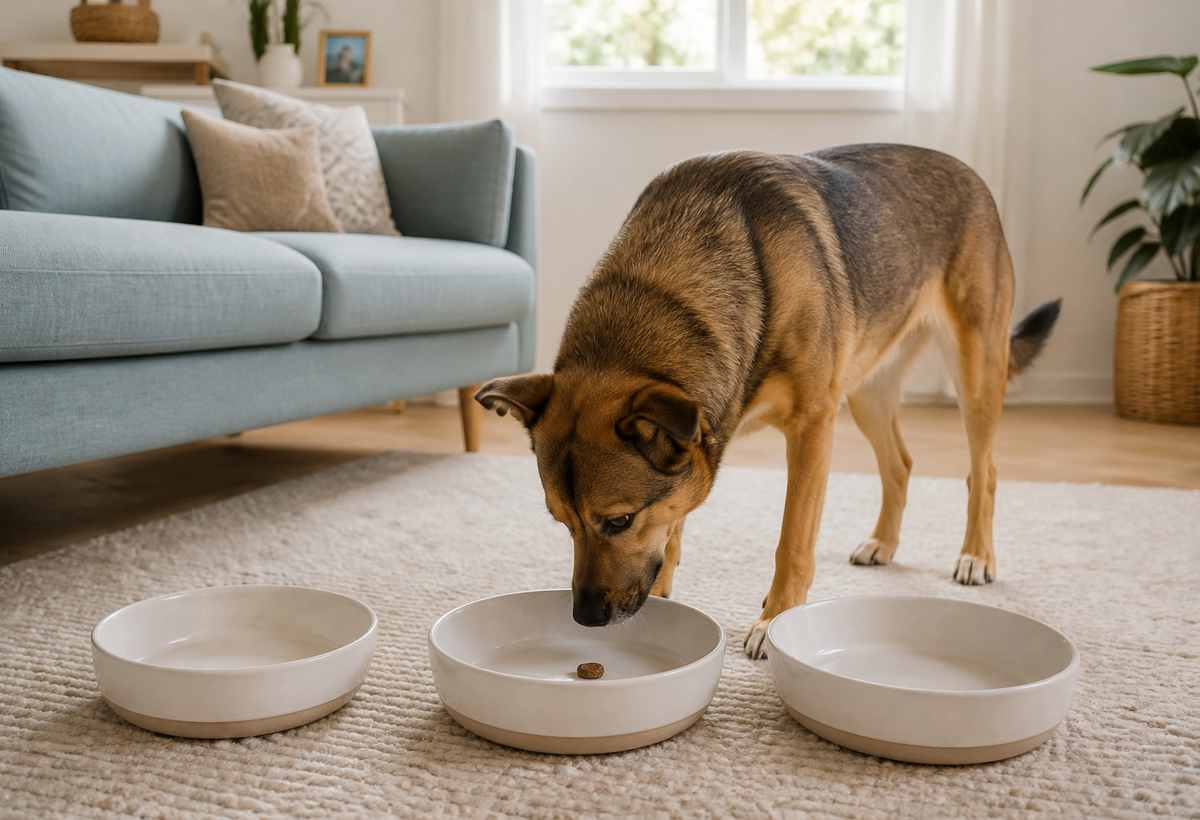
On later rounds, hide a piece in one container while the dog waits just outside the room. Keep the other two empty. Move the positions, but do not rub food over everything or turn the setup into a confusing scent fog.
For a dog who wants to pick up the containers, switch to three washable mats and place the food under the edge of one. The game is allowed to adapt to the dog in front of you. It does not earn extra points for resembling an internet tutorial exactly.
Game Three: A Short Treat Trail
Lay a short trail of widely spaced food pieces across a hallway or room, ending with a slightly larger reward or favourite toy. Make the first trail straight and visible. Later, add one gentle turn or leave a slightly wider gap between two pieces.
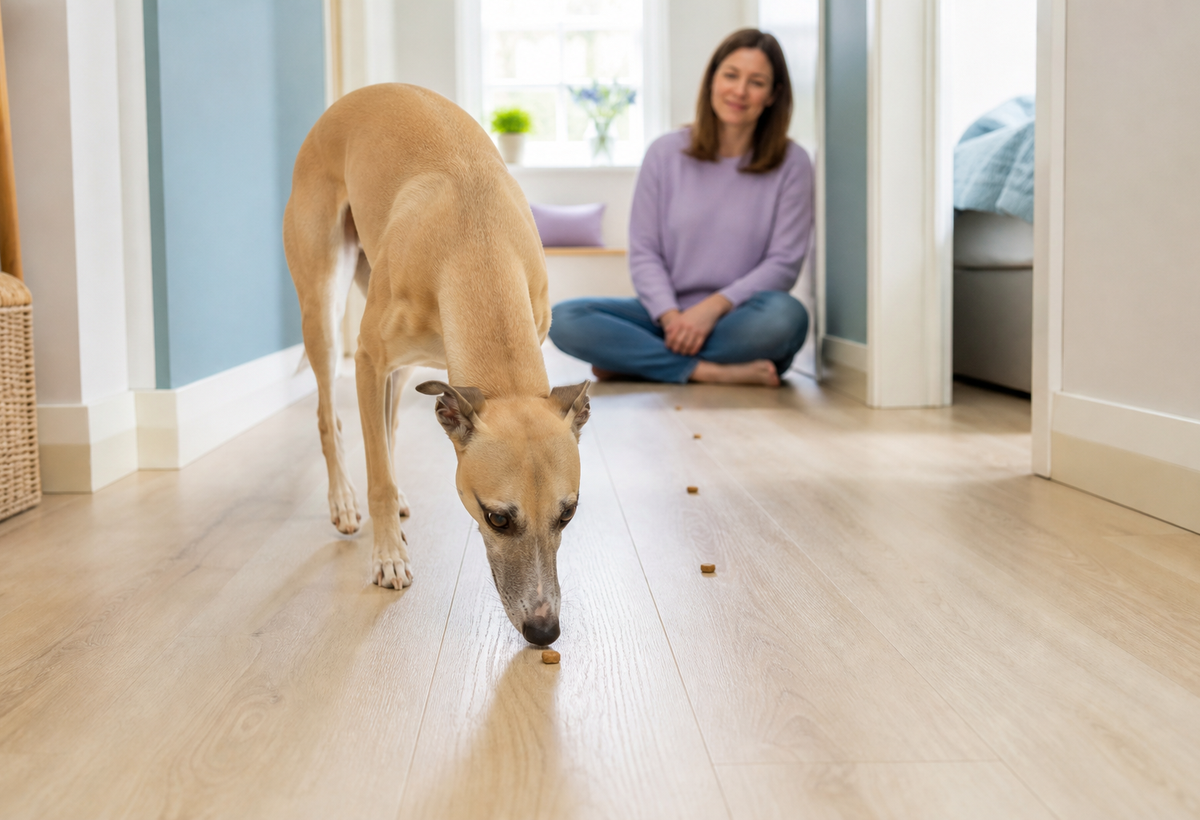
Watch the floor. Dogs who rush, have mobility concerns or struggle on smooth surfaces need a non-slip route. CloudyAww’s guide to helping dogs on slippery floors explains why traction belongs in the plan before the game begins.
Do not lure a dog up stairs, under unstable furniture or into a place where they feel trapped. The route should finish somewhere comfortable, with enough room to turn around and celebrate the case being closed.
Game Four: Find the Favourite Toy
Begin with a toy your dog already likes. Let them sniff it, place it partly behind a chair leg while they watch, then invite them to find it. Mark the discovery with warm praise or a small reward.
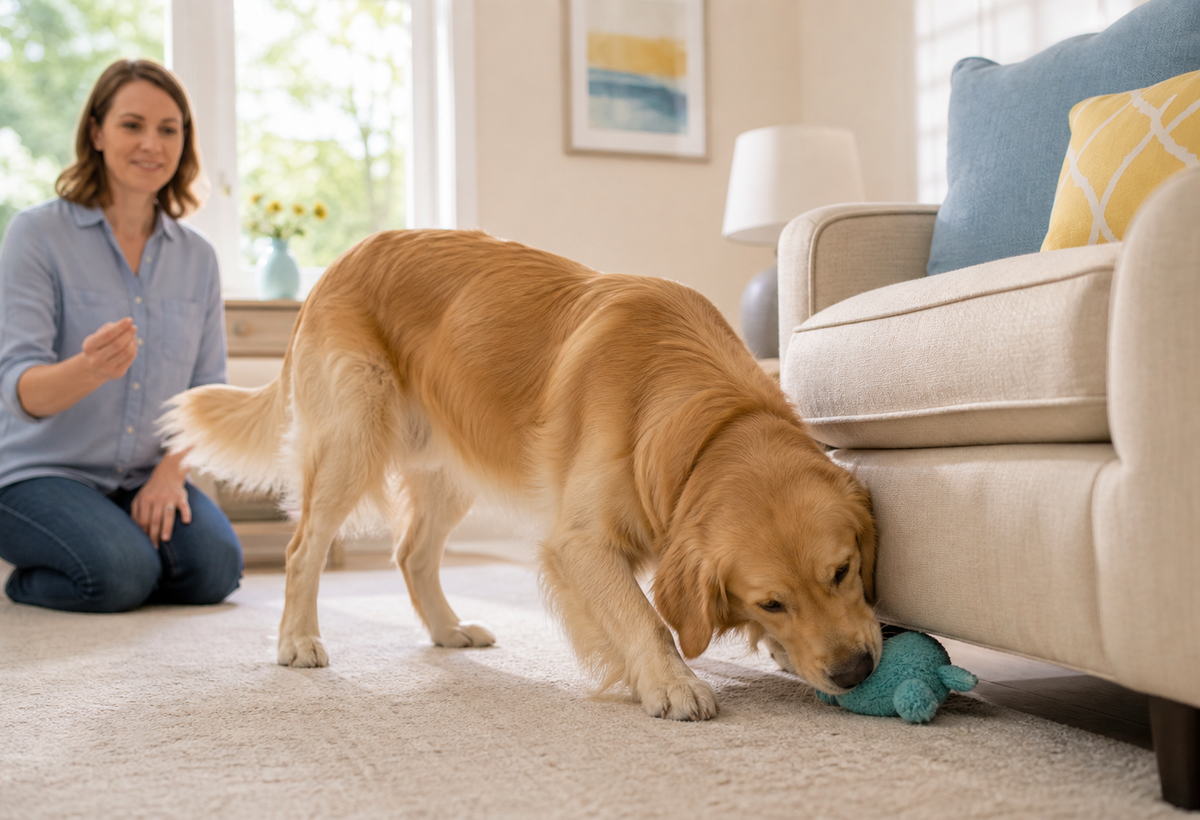
Build difficulty one detail at a time: move the toy farther away, hide more of it, or place it in the next room. Avoid hiding it inside furniture, under heavy objects or anywhere the dog needs to claw, chew or squeeze to retrieve it.
Blue Cross suggests toy searches as a gentle form of scent work. For dogs who are less interested in toys, use part of a meal instead. For dogs who guard toys or food, do not improvise a swap-and-grab game; ask a qualified reward-based professional for a safer individual plan.
Game Five: Find Your Human
This one works best with two people at first. One person stays with the dog while the other hides somewhere easy, such as behind an open door. The hidden person calls once, and the dog follows voice and scent to find them. The reunion should be happy and low-pressure.
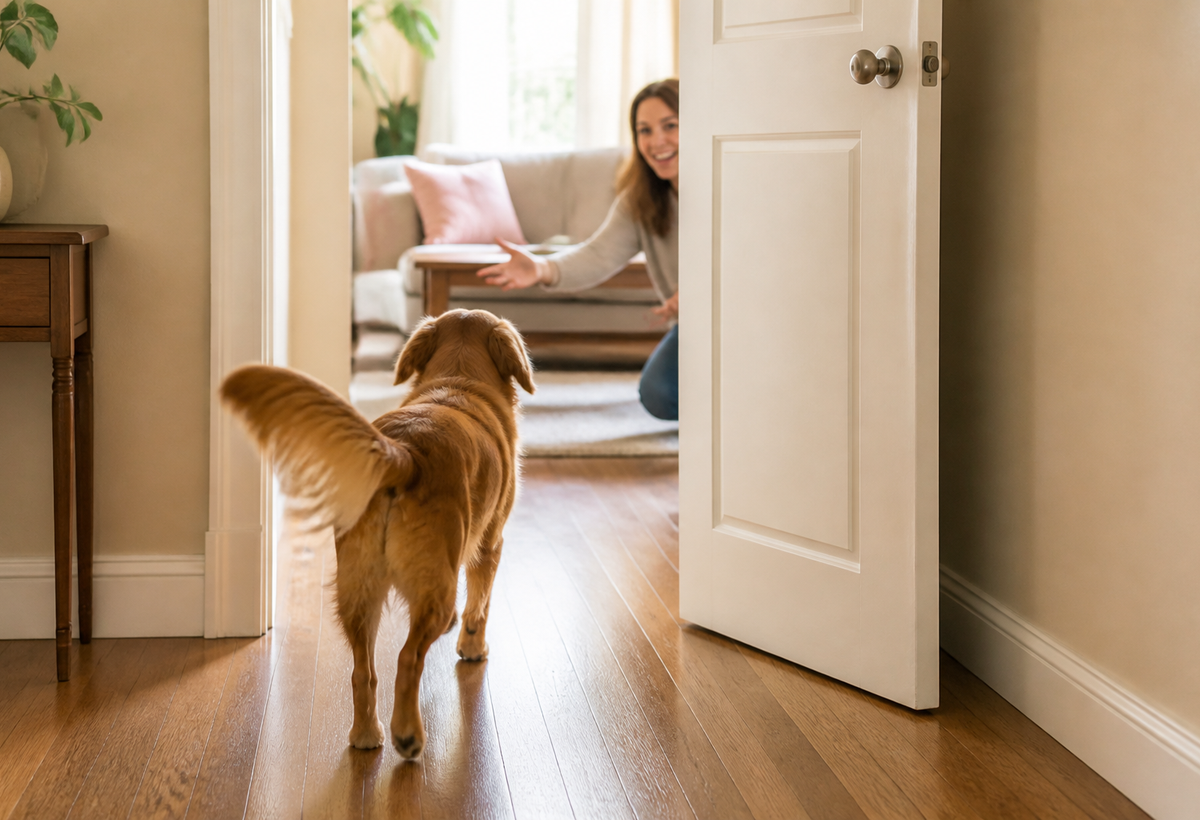
Progress from half-visible to fully out of sight. Never hide inside a cupboard, lock a door between you or encourage searching around stairs and exits. If the dog becomes worried when a person disappears, choose another game. Enrichment should not rehearse distress.
A dog who finds you deserves a proper little victory. Praise, offer a piece of their meal or begin a brief favourite toy game. Then stop before the household loses one adult to increasingly ambitious hiding places.
Adjust the Difficulty, Not the Dog
Dogs vary in scenting experience, confidence, mobility and motivation. A young dog may need one visible piece and a lot of encouragement. An experienced searcher may enjoy waiting in another room while you place three hidden finds. Senior dogs can still enjoy nose work, but the route and duration should suit their body and health.
Change only one variable at a time: distance, visibility, number of hiding places or room. If the dog searches randomly, vocalises, paws destructively or disengages, make the next round easier. You can also end the session and try again another day.
Two or three successful minutes can be plenty. Dogs Trust recommends variety in enrichment rather than relying on one favourite activity forever. Rotate scent games with rest, chewing, play, training and ordinary sniff-filled walks.
When to Stop and Ask for Help
Stop immediately if the dog tries to swallow part of the setup, guards the search area, becomes frantic, slips, coughs, struggles to breathe or shows pain. Remove the activity calmly and contact a vet if there is any health concern.
A sudden drop in interest, exercise tolerance or ability to find familiar food can also deserve veterinary advice, especially when it comes with appetite, weight, movement or behaviour changes. A game cannot diagnose what changed.
If weather is the obstacle rather than health, Rainy Walks Without the Standoff offers a gentler outdoor plan. Indoor scent work can fill one pocket of the day; it should not quietly become the whole coat.
The CloudyAww Read
The best indoor scent game is small, safe and solvable.
Use part of a normal meal, clear the room, supervise the setup and begin with an answer your dog can find quickly. Scatter, trail, hide a toy or hide yourself. Then adjust the puzzle to the dog’s confidence instead of asking the dog to match the puzzle.
You do not need expensive equipment. You need a nose, a few safe choices and the willingness to be genuinely impressed when the kibble behind the chair is discovered for the third time.
Browse more warm, practical pet logic in the Aww Articles library.
Sources and Further Reading
- Dogs Trust: Enrichment activities for dogs
- Dogs Trust: How to teach “find it”
- Blue Cross: Scent work for dogs
- American Veterinary Society of Animal Behavior: Indoor winter activities