

The front door closes. A new lead hangs from the hook. Somewhere behind the sofa, a dog is listening to the radiator, the fridge and three humans trying very hard to behave normally.
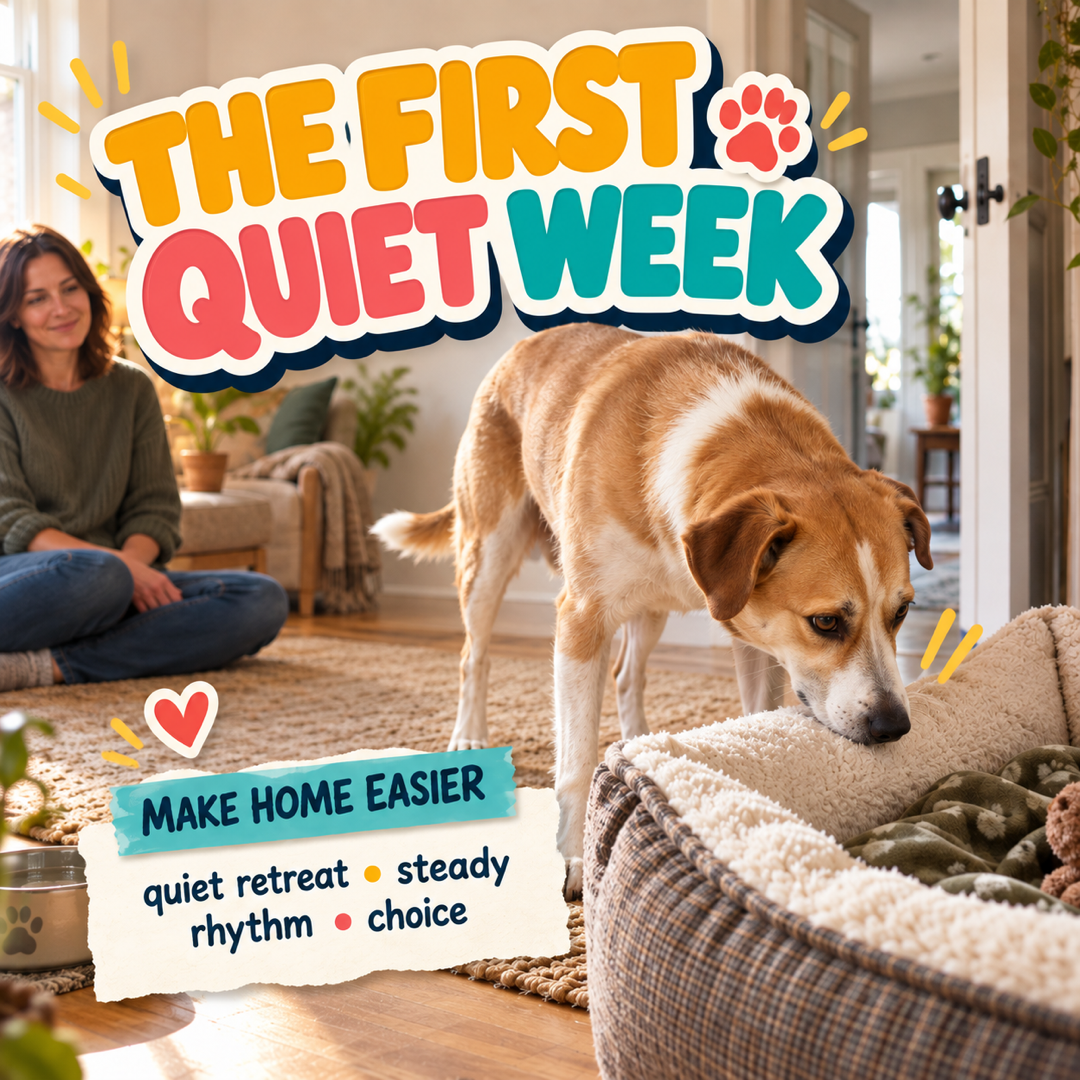
This is the strange part of bringing home a rescue dog: everybody knows it is a happy day except, perhaps, the dog. They have changed buildings, smells, voices, routines and rules in one journey. Even a kind home can be a lot of information at once.
The first week does not need to prove how quickly you can become best friends. Its quieter job is to make the new home understandable. Give the dog somewhere safe to retreat, make the day predictable, let contact be voluntary and watch the individual in front of you rather than a timetable from the internet.
Make the Arrival Smaller Than Your Excitement
Homecoming is not the moment for a house tour, a welcome party and a full review of the neighbourhood’s most ambitious squirrels. Begin with the essentials: a calm toilet opportunity, water, the food and routine recommended by the rehoming team, and access to a limited, dog-proofed part of the home.
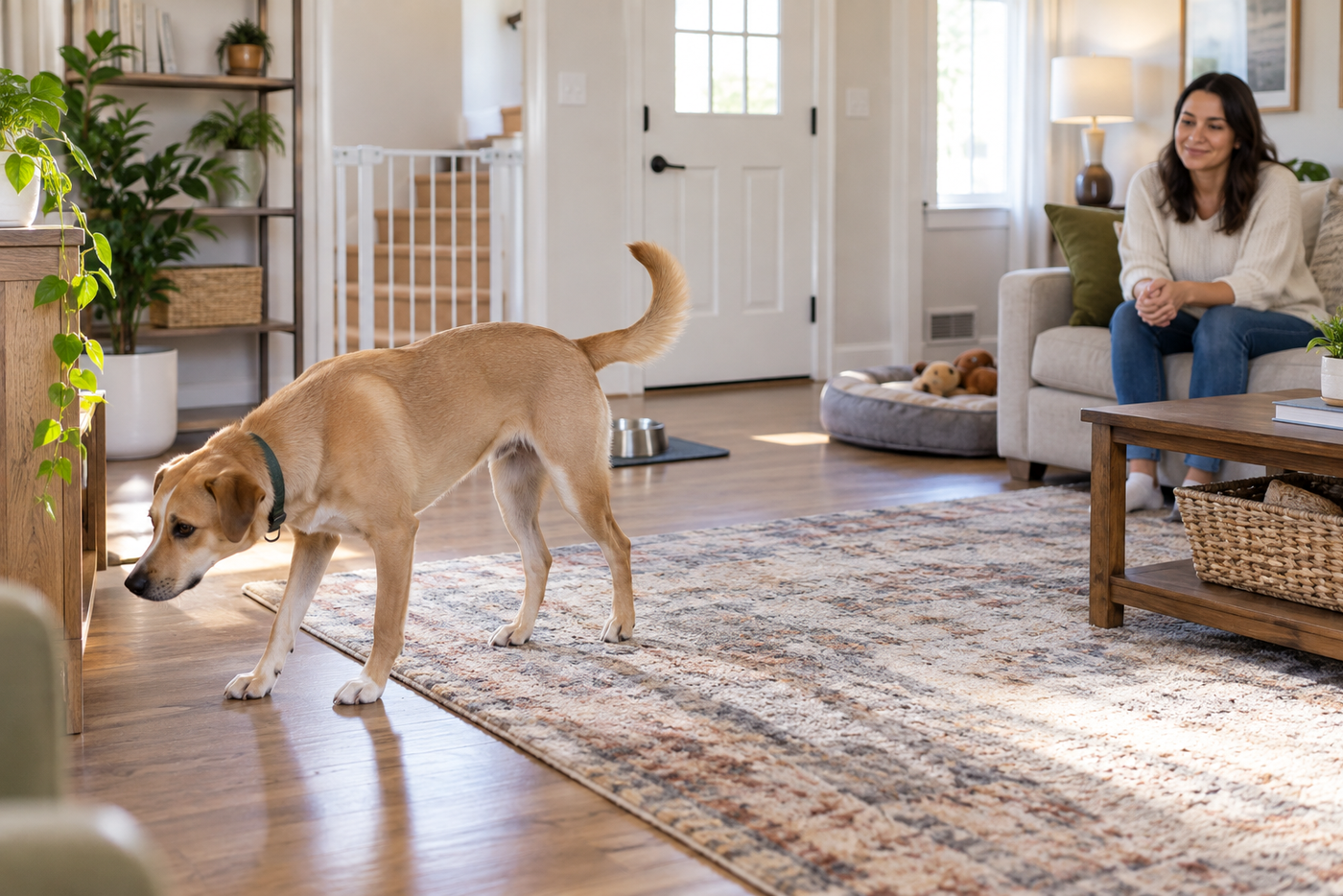
Check gates, doors, cleaning products, medicines, cables, plants and anything chewable before the dog arrives. During early exploration, supervise without following them so closely that it becomes a tiny guided museum tour.
Dogs Trust and the RSPCA both advise taking the transition slowly. That does not mean every dog must live in silence for a fixed number of days. It means new experiences should be added according to how this dog is coping. A confident dog may explore sooner. A worried dog may prefer to watch from one spot. Neither has missed a deadline.
Build a Retreat, Not a Display Crate
A useful safe place is somewhere the dog can choose to enter and leave. It might be an open crate they already know, a covered bed, a quiet corner behind a baby gate or a mat beside a sofa. Put it away from the busiest walkway and make sure children, visitors and other animals do not disturb the dog there.
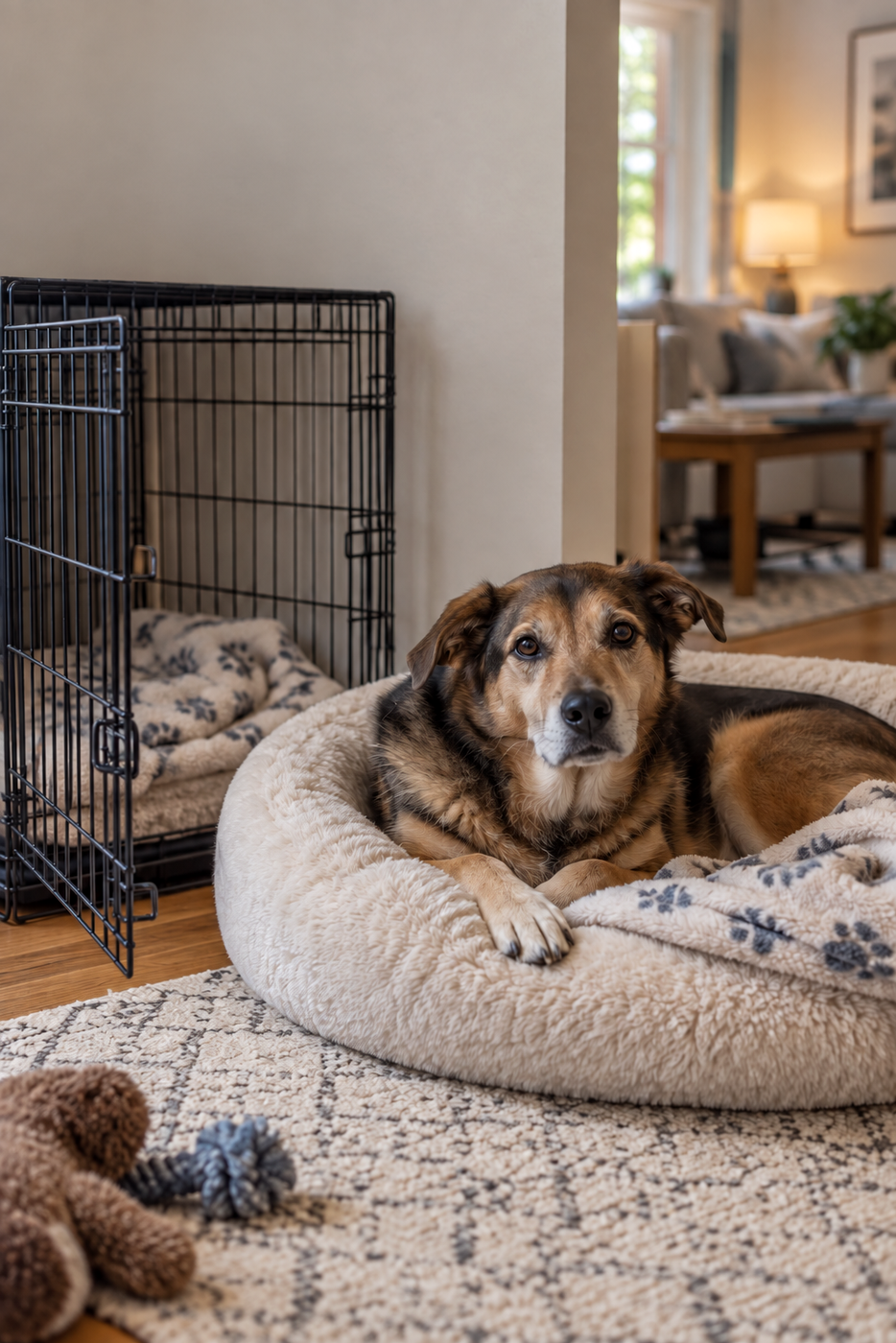
The important part is not the furniture. It is the agreement: this place is not punishment, nobody drags the dog out, and rest is allowed to finish. The door should remain open unless the dog has already been safely and positively trained for confinement.
Add familiar bedding if the rescue or foster home can provide it. A known smell in a new room can be one small piece of continuity. Keep water easy to reach and check that the setup is comfortable, ventilated and free from dangling cables or other hazards.
Borrow Familiarity Wherever You Can
Ask the rehoming team what the dog has been eating, where they slept, when they usually walked, which words they know and what they avoid. The first days are not the best time for an abrupt food change or a complete lifestyle rebrand.
Preserve useful parts of the old routine, then adjust gradually where your household needs something different. Meals, toilet breaks, walks, quiet time and bedtime do not have to happen to the minute. They do need a recognisable shape.
That predictability gives the dog fewer questions to answer. It also helps you notice what is normal: when they eat, drink, rest, toilet, play, follow, hide and recover after a noise. A short note on your phone is enough. You are collecting a baseline, not opening a surveillance department.
Let Contact Be the Dog’s Idea Too
A dog who approaches is not always requesting a cuddle, and a dog who stays nearby may still need more space. Keep your body loose and slightly turned rather than leaning over them. Let them sniff. Avoid reaching over the head or holding them in place.
If the dog leans in and appears comfortable, Dogs Trust suggests a short stroke on the chest or shoulder, then a pause. If they move closer or ask again, continue. If they turn away, stiffen, lick their lips, lower their ears or leave, let the interaction end.
One sign never gets the whole vote. Our tiny guide to dog body language explains why posture, movement, setting and recovery matter together. A wagging tail does not cancel a tense face, and unusual stillness is not automatically calm.
Use food, toys, praise or distance according to what the dog actually values. Reward-based training still requires observation; a biscuit is only a reward if the dog wants it. Avoid shouting, leash corrections, forced handling and flooding the dog with something frightening until they “get used to it.”
Keep Early Walks Familiar, Not Impressive
The first walks are for toileting, orientation and gentle sniffing—not collecting an entire week’s exercise in one heroic lap. Follow the rescue’s advice, use secure equipment that fits the dog and start with short, repeatable routes in quieter conditions.
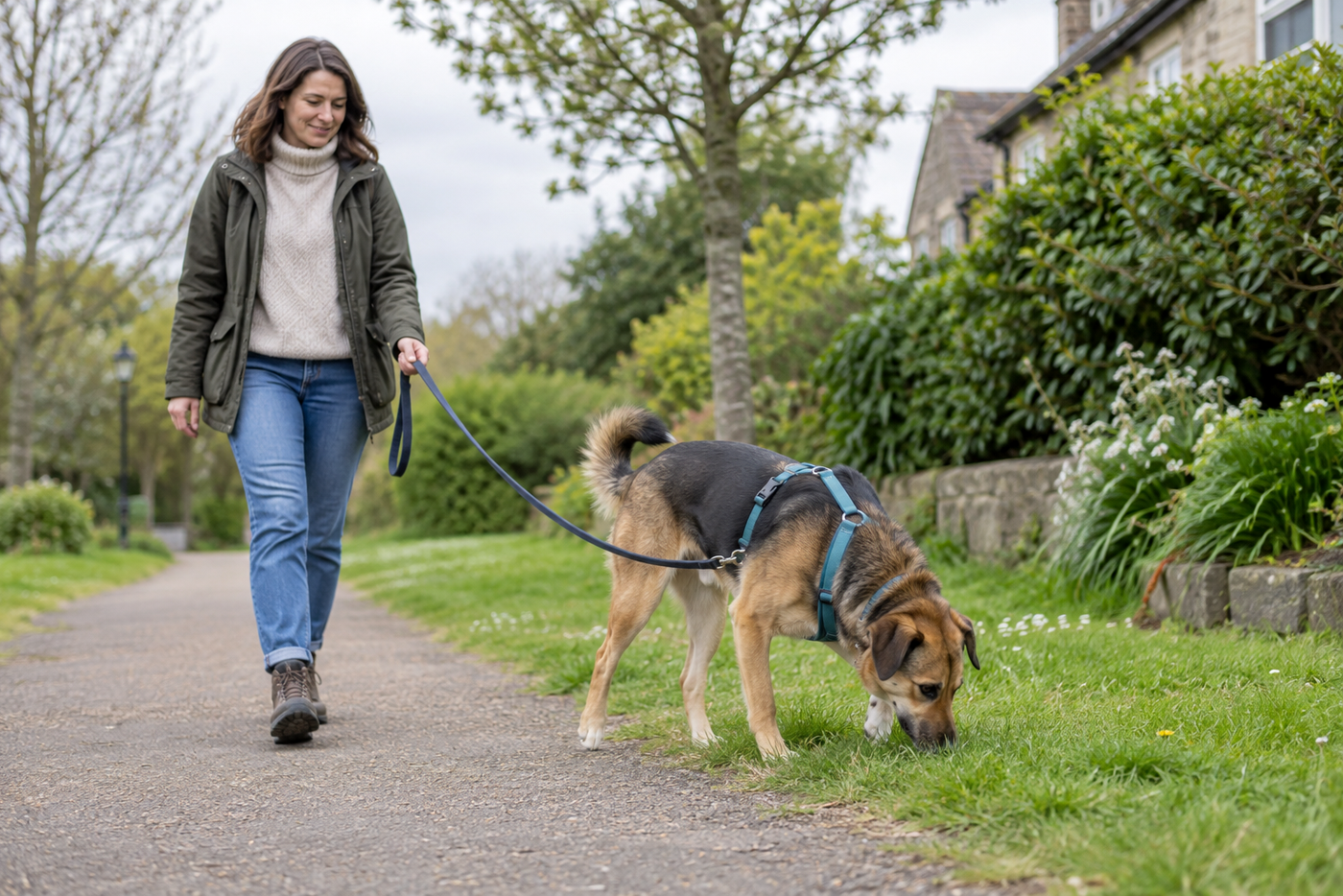
Sniffing gives the dog information and lets them move through the environment at a less frantic pace. Our guide to building a better dog walk with time to sniff can help you shape that slower outing.
Watch what happens after the walk as well as during it. A dog who can drink, eat, settle or sleep afterwards may be coping differently from one who paces, startles at every sound or cannot come down from the experience. If the route seems to use up the dog’s whole novelty budget, make the next one shorter or quieter.
Make the House Predictable Before Making It Social
For the first few days, fewer visitors usually means fewer variables. The dog is already learning the sounds, people and movement of the household. Extra greetings can wait.
When the dog is resting, eating and exploring more comfortably, introduce one calm person at a time. Give the dog space and a clear retreat. The visitor should ignore rather than pursue them, and the meeting can end early. Our calm visitor plan covers the setup in more detail.
Resident animals and children need their own careful plan; a quick “let them sort it out” meeting is not a safety strategy. Use barriers, supervision and species-appropriate introductions, and follow the rehoming organisation’s advice for the animals involved.
Approach Alone Time Below the Point of Panic
It is normal for some newly adopted dogs to watch where people go or follow from room to room while they learn the household. That behaviour alone does not diagnose separation anxiety. Our article on why a dog may follow you from room to room looks at the wider context.
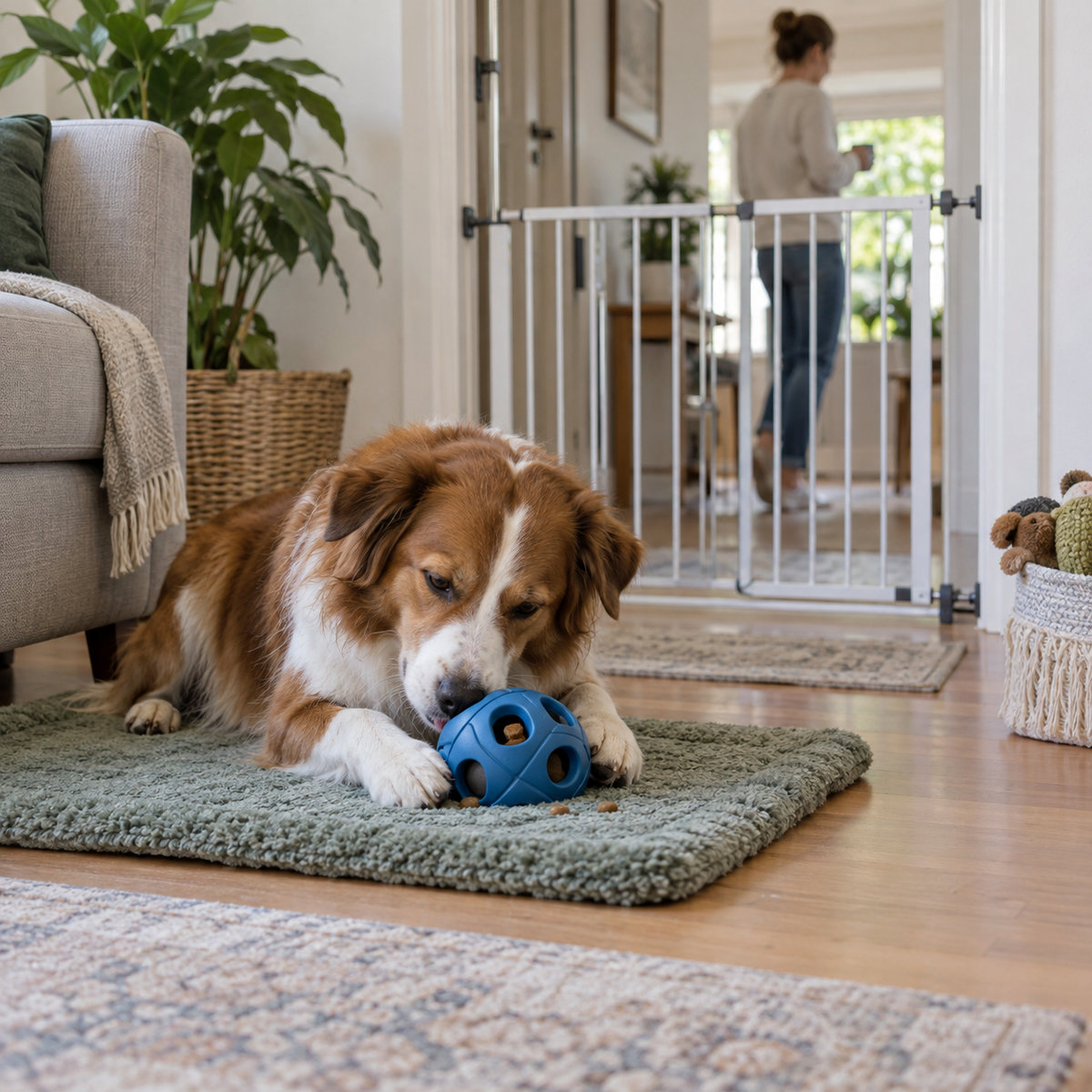
Still, the long-term answer is not to remain visible every second and then disappear for a full workday. Start with tiny, ordinary separations while the dog is relaxed: move around the room, step briefly behind a barrier or let them work on an activity at a comfortable distance. Build time gradually only while they remain settled.
If the dog stops eating, vocalises, pants, paces, scratches at exits or cannot settle, the step was too difficult. Return before distress escalates, make the next attempt easier and seek qualified help if the pattern continues. Do not punish distress or rehearse longer absences in the hope the dog will simply give up.
Read the Dog, Not a Countdown
You may hear that a rescue dog changes after three days, three weeks and three months. It can be a useful reminder that adjustment takes time, but it is not a biological schedule and it cannot tell you how this dog should behave on Thursday.
Look for individual changes instead. The dog may begin to sleep more deeply, choose different resting places, investigate toys, eat more comfortably, ask for contact or recover more quickly after ordinary sounds. Progress can wobble. A busy day may be followed by a quieter one.
Also remember that a very still or withdrawn dog is not necessarily relaxed. Turning away, lip licking unrelated to food, yawning when not tired, ears held back, freezing, a tense face and unusual quietness can all occur with stress. Compare the whole body, the trigger, the duration and what happens next.
Know When “Settling In” Needs Help
Do not explain every change as nerves. Contact your vet promptly if the dog is not eating or drinking normally, vomits repeatedly, has persistent diarrhoea, seems painful, has breathing difficulty, collapses, appears severely weak or shows another sudden health change. Follow any discharge or treatment instructions from the rescue and clinic.
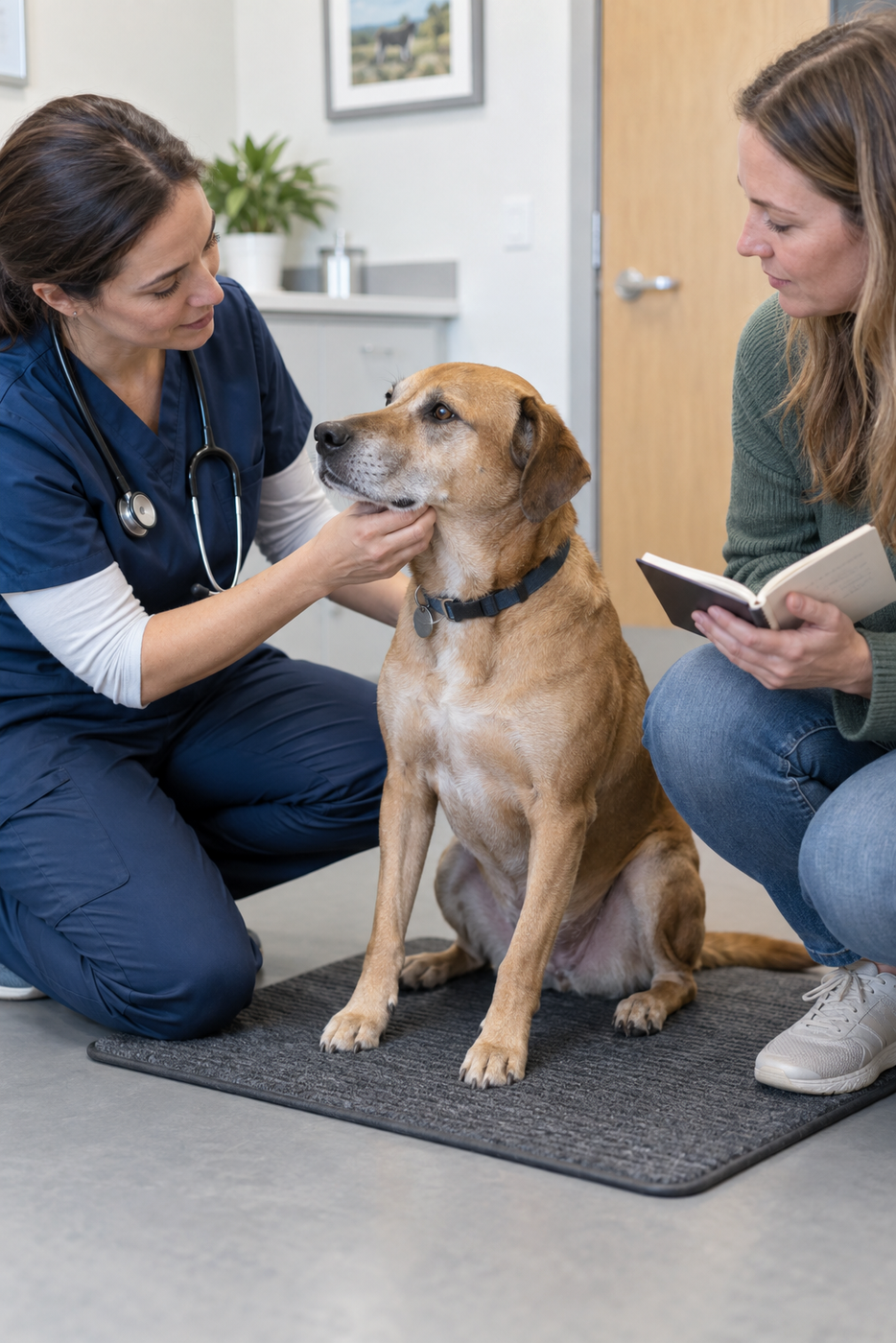
For repeated fear, aggression, panic when left, guarding, inability to rest or behaviour that makes the household unsafe, contact the rehoming organisation and your vet. They can help rule out medical contributors and refer you to a suitably qualified, reward-based behaviour professional.
Ask for help early rather than waiting for the dog to fail a bigger test. A short video and a note of what happened before, during and after the behaviour can be useful if recording is safe and does not add pressure.
A Good First Week Looks Almost Boring
The useful first-week plan is not a list of achievements. It is a series of repeated, readable days: familiar food, toilet breaks, short sniffing walks, quiet sleep, gentle choices and one new thing only when the previous things are manageable.
Let the dog keep some unanswered questions. You do not need to discover their opinion on cafés, cousins, vacuum cleaners and the postman’s trolley before Sunday.
Make the home safe. Keep the rhythm recognisable. Protect the retreat. Let contact be chosen. Notice what helps the dog recover. Trust is not proved by how quickly they perform happiness; it grows as the new place becomes easier to predict.
Sooner or later, the dog behind the sofa may stretch, sigh and choose a spot in the middle of the room. Do not throw a party. That would rather miss the point.
Trusted Sources
- Dogs Trust: How to Help a Rescue Dog Get Settled Into Your Home
- RSPCA: Getting Ready for Your Rescue Dog
- Dogs Trust: Helping Dogs Cope With Fear and Big Emotions
- Dogs Trust: Separation Anxiety in Dogs — Signs and Support
- American Veterinary Society of Animal Behavior: Humane Dog Training Position Statement
- American Animal Hospital Association: Adopting a Rescue Dog — What to Expect
- VCA Animal Hospitals: Common Emergencies in Dogs