The front legs land first. The chest drops. The back end stays high, the tail starts conducting an invisible orchestra, and a dog who was standing normally one second ago has suddenly become a furry punctuation mark.
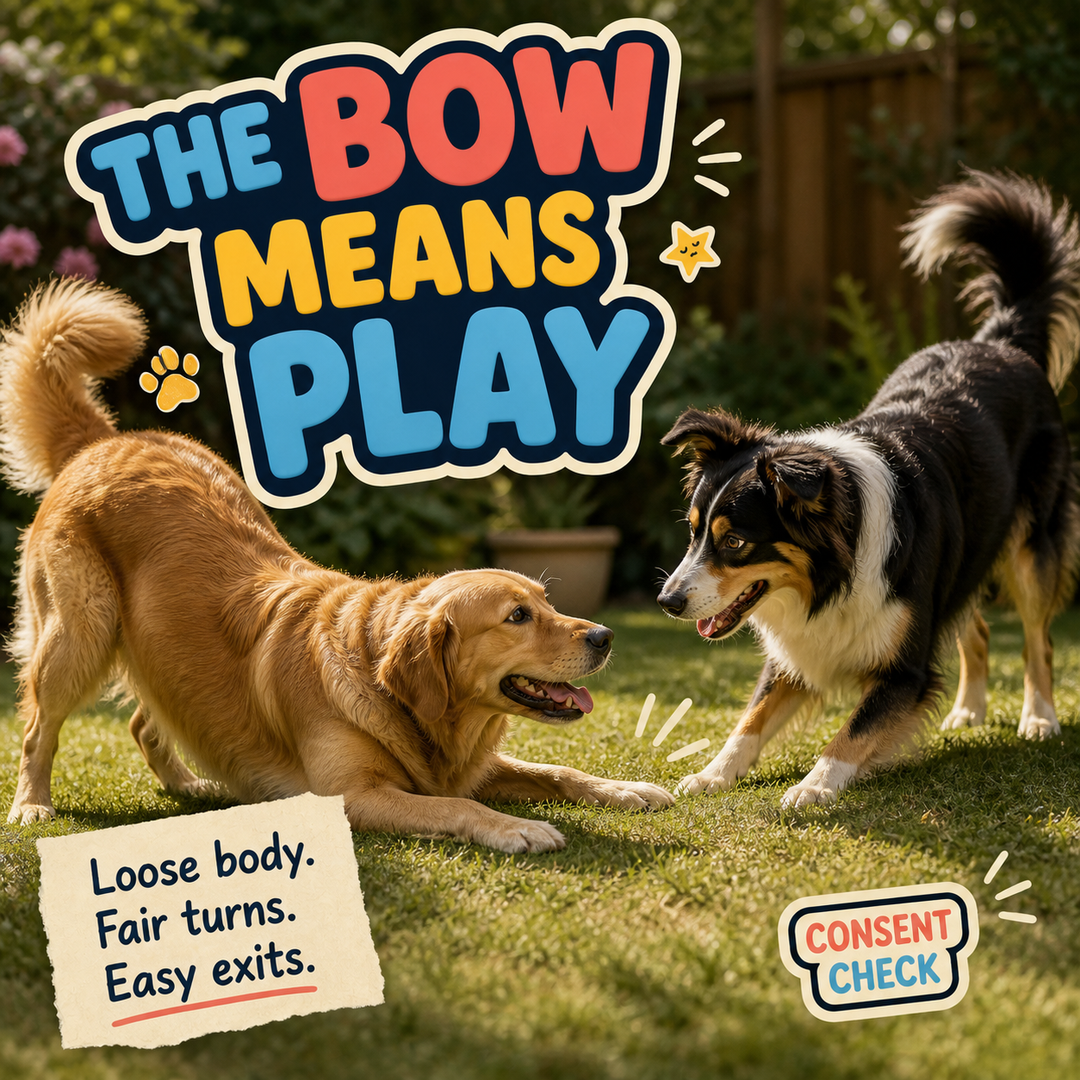
That familiar shape is called a play bow. Dogs often use it to invite or restart play with another dog—and sometimes with a person who has clearly failed to notice that the meeting has moved to the games department.
A bow is a useful clue, not a permission slip for unlimited chaos. The whole dog, the other participant and what happens next tell you whether the invitation is welcome, balanced and still fun.
What a Play Bow Looks Like
In a classic play bow, the dog’s front end lowers while the hindquarters remain standing. The forelegs may stretch forward, the mouth may look softly open and the movement is usually loose rather than rigid.
Dogs Trust describes the play bow as an invitation that can also show friendly intent and ease social tension. The American Kennel Club likewise identifies it as a common way dogs initiate play with dogs or people.
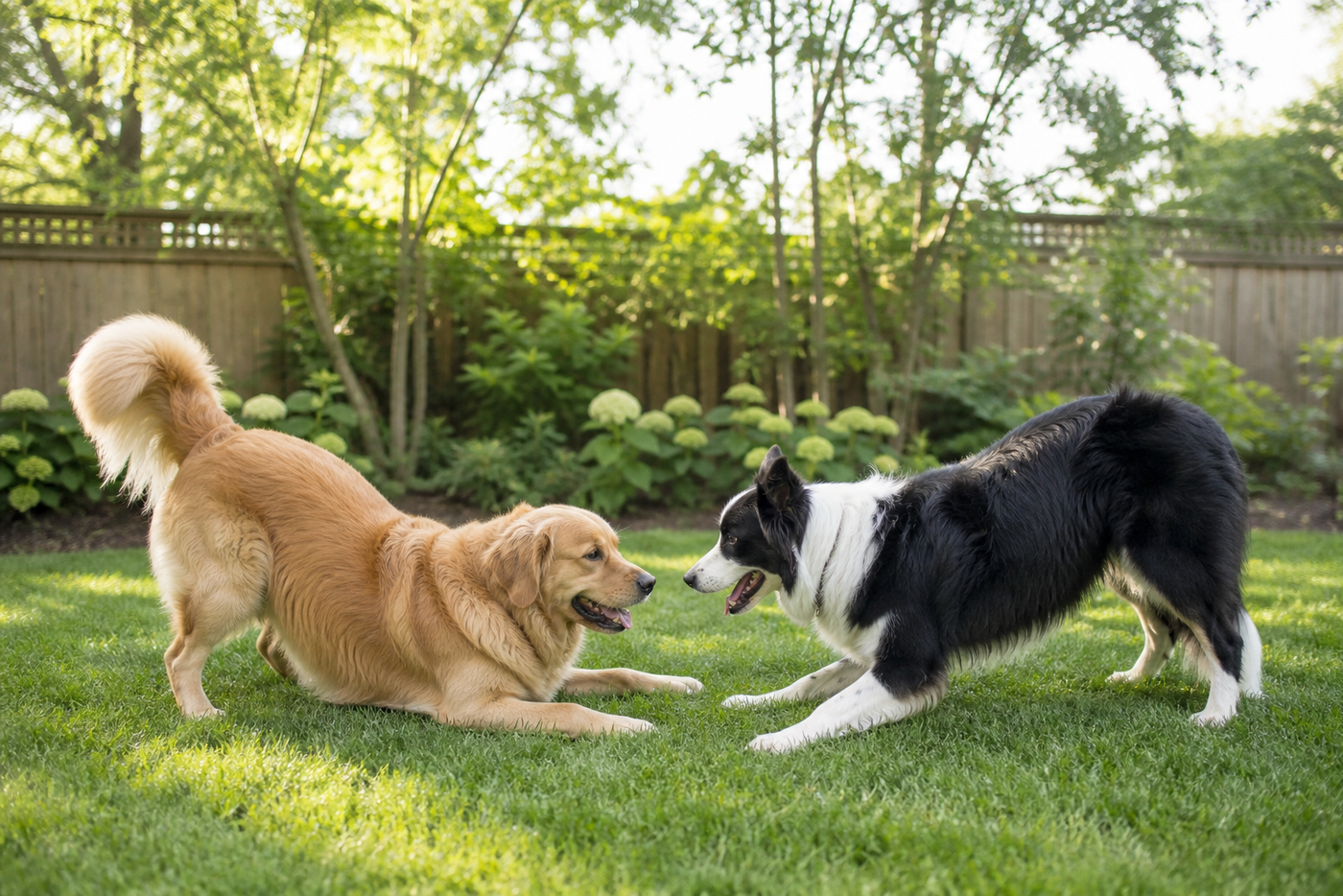
Not every bow is perfectly symmetrical. Some dogs offer a full dramatic stretch; others drop one shoulder, slap both front paws down or perform a quick half-bow before springing away. Body shape, age, mobility and individual style all change the silhouette.
The Bow Is a Visual Message
Research on dogs and wolf puppies found that play bows were performed almost entirely when the partner could see the dog. That supports the idea that the posture works as a visual signal rather than a random stretch that happens to look theatrical.
The signal can begin a game, but it also appears during ongoing play—especially after a pause. One dog freezes, checks the other, bows, and the game restarts. In academic language, the pair has renewed playful motivation. In living-room language, somebody pressed continue.
Read the Movement Around It
A healthy play moment usually contains more than one cheerful shape. Look for loose, bouncy movement, soft eyes, curved approaches and easy changes of direction. The dogs may exaggerate their movements, take turns chasing and allow pauses without immediately crashing back into one another.
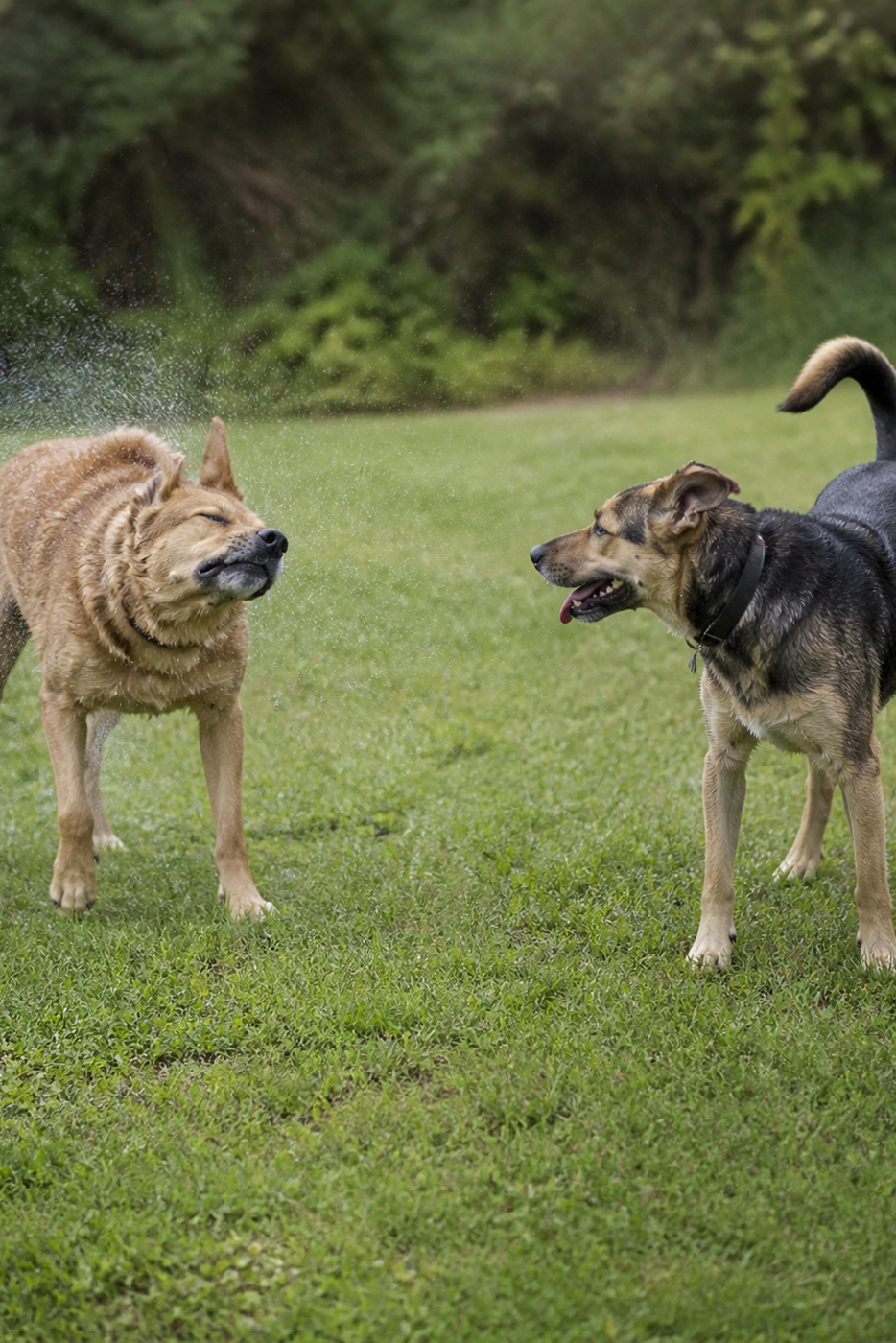
Our tiny guide to dog body language follows the same rule: one tail, ear or posture never gets the whole vote. Read the sequence and the whole body.
Fair Play Has Role Swaps
Good social play often includes role switching. The chaser becomes the chased. The larger dog lowers their body or slows down. One dog pauses and the other waits or offers a new invitation.
Dogs Trust recommends watching for mirroring, self-handicapping, regular breaks and loose, wiggly bodies. These are practical signs that both participants are contributing to the game rather than one dog enduring it.
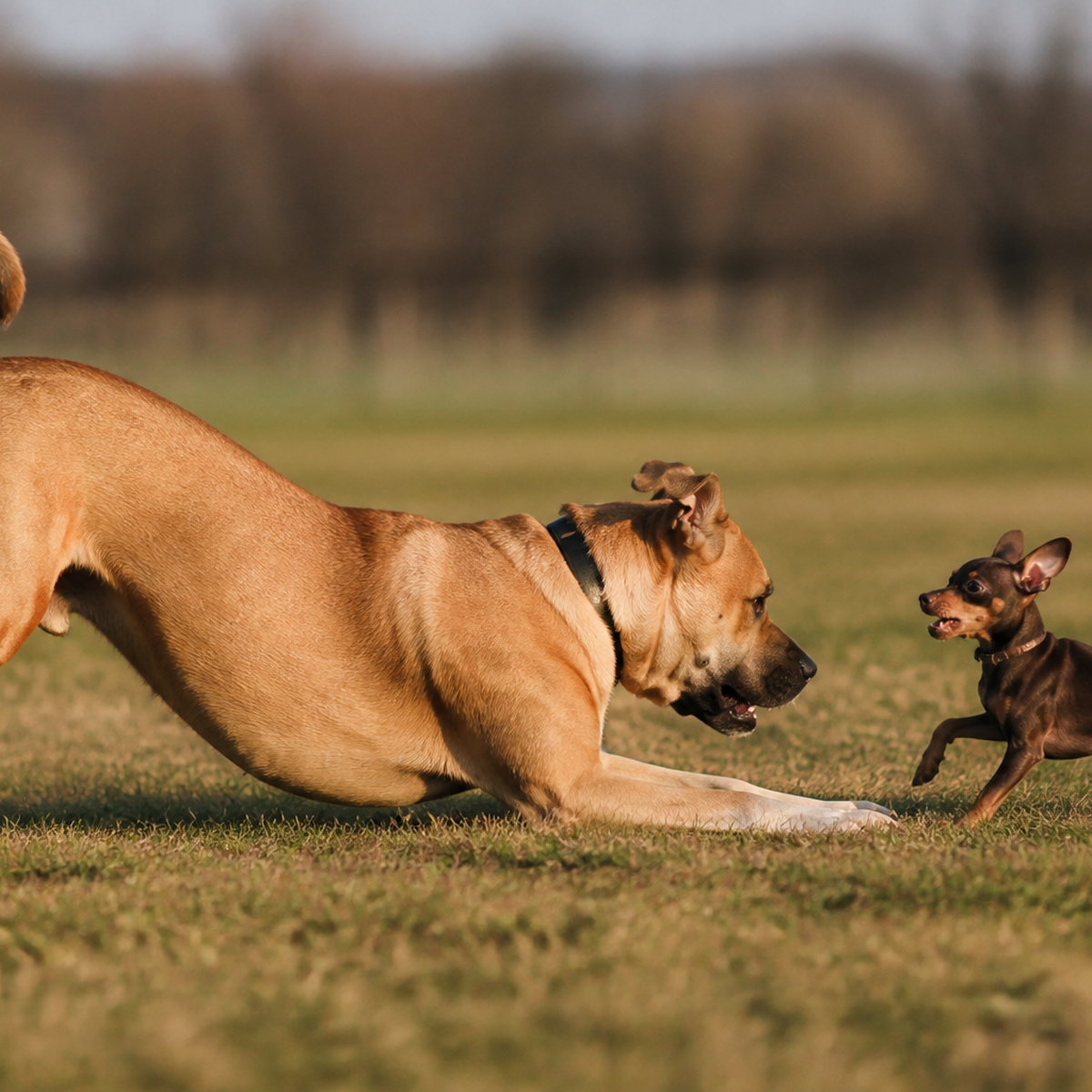
Size differences do not automatically make play unsafe, but they do make observation more important. A large dog choosing gentler movement with a smaller friend tells you more than the size gap by itself.
Use a Consent Check
If the game looks intense, call the dogs apart calmly and create a short pause. Do not grab collars in the middle of arousal if you can safely avoid it. Let both dogs reset, then watch what each chooses.
If both dogs return with loose bodies and another invitation, the pause probably interrupted a wanted game. If one dog moves away, hides behind a person, sniffs elsewhere or avoids rejoining, respect that answer.
The goal is not to test who is toughest. It is to keep exits real.
When the Shape Is Not Enough
A play bow can appear inside a moment that is becoming too fast or one-sided. Watch for a body becoming stiff, a fixed stare, repeated pinning, relentless chasing, hard mouthing, ignored attempts to leave or one participant repeatedly trying to create distance.
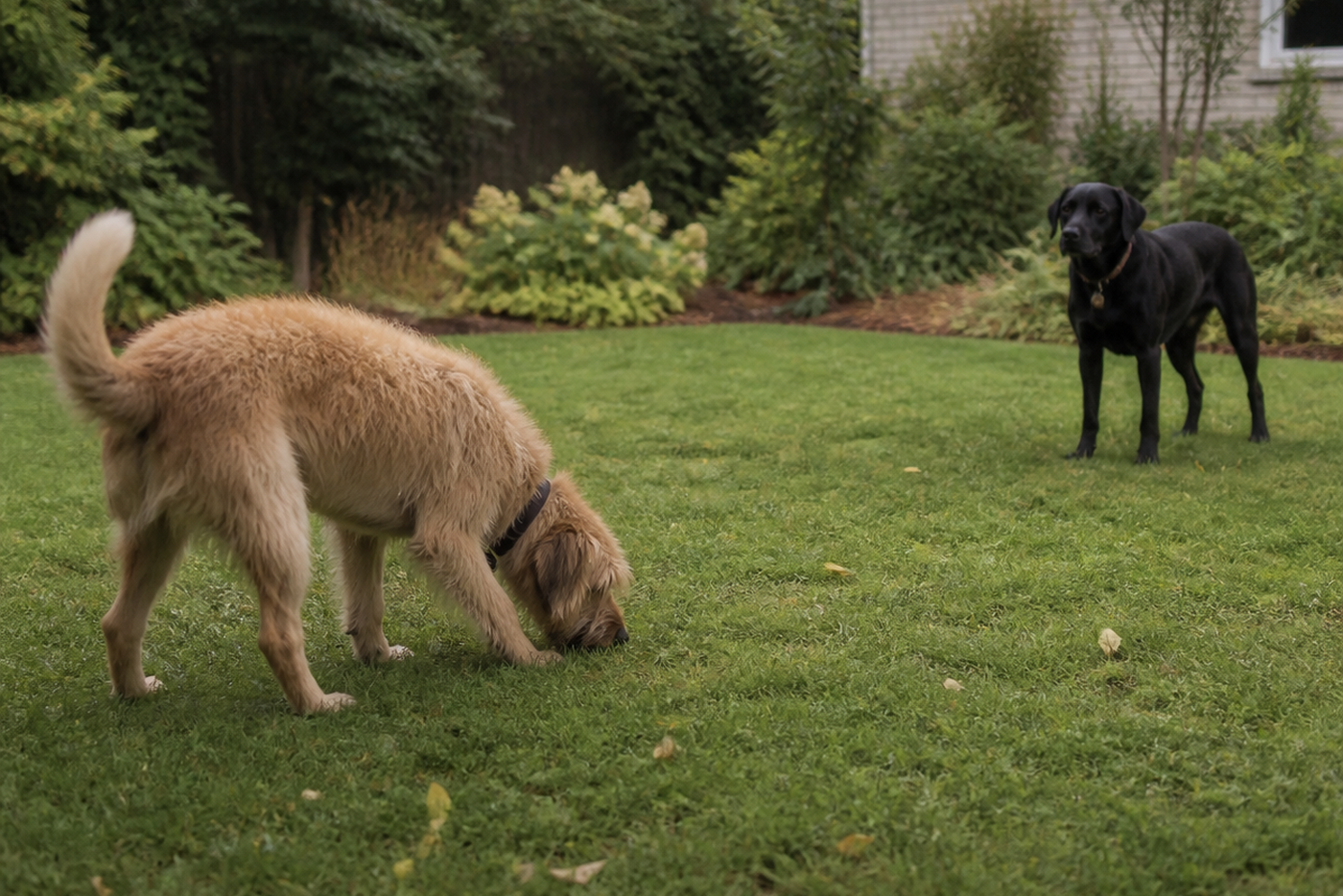
Growling by itself does not prove a fight; many dogs vocalise during play. The useful comparison is the sound plus the body, the turn-taking, the pauses and each dog’s ability to stop.
Playing With People Counts Too
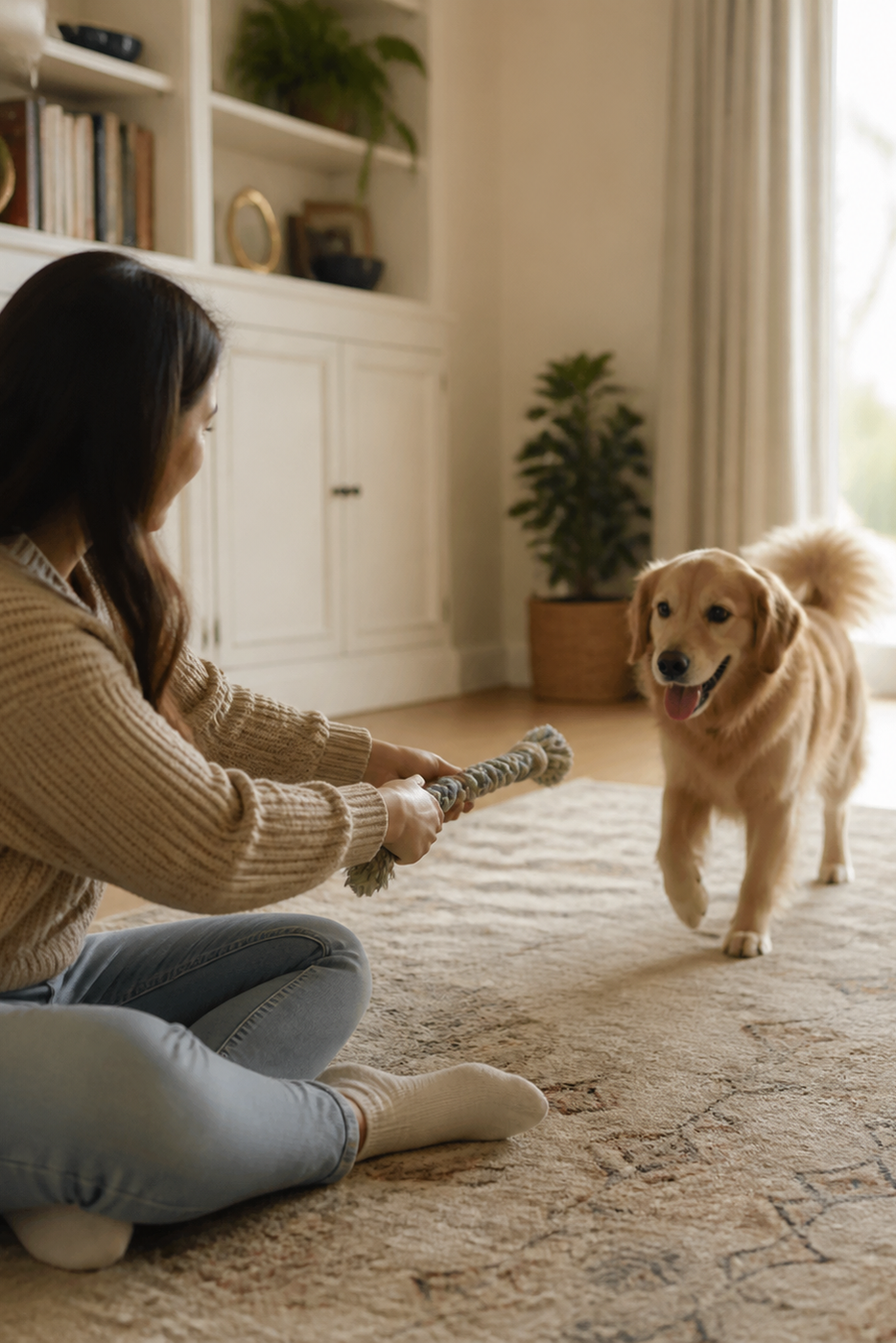
Dogs may bow toward a person, a toy or an empty patch of floor where they expect a chase to begin. You can answer with an appropriate game: roll a toy, move away for a short chase cue, offer tug with clear release rules or begin a familiar play routine.
Keep hands away from fast mouths and do not encourage body-slamming, ankle-grabbing or games that become difficult to stop. Play should have a beginning, a middle and a working brake pedal.
For another piece of friendly play language, see why dogs sometimes sneeze during play.
Give the Game Somewhere Safe to Go
Choose a grippy, uncluttered space with enough room to turn and retreat. Remove unstable furniture, sharp edges, food bowls, guarded chews and toys that trigger conflict between the particular dogs involved.
Not every dog enjoys dog-to-dog play, and that is not a personality failure. Some prefer familiar partners, parallel walks, sniffing, toy play with a person or quieter enrichment. Match the activity to the individual rather than trying to manufacture a social highlight reel.
When to Ask for Help
Speak with a qualified reward-based behaviour professional if play repeatedly tips into fear, conflict or loss of control, or if you are unsure how to manage a size, age or history mismatch safely.
Ask a veterinarian about a sudden reluctance to bow, run or turn—especially when it comes with stiffness, limping, yelping, reduced activity or another change from normal. A posture can change because the social mood changed, but it can also change because movement hurts.
The Five-Second Play Read
- Shape: Is the bow loose rather than stiff?
- Partner: Can the other dog see it and choose what happens next?
- Rhythm: Are there pauses, curves and role swaps?
- Exit: Can either participant leave without being pursued relentlessly?
- Recovery: Does everyone return to normal movement and behaviour?
A play bow is one of the clearest invitations in dog language. Read the reply as carefully as the invitation, keep the game balanced, and let a pause remain a perfectly valid answer.
Trusted Sources
- Dogs Trust: Understanding your dog’s body language
- RSPCA: Understanding your dog’s body language
- American Kennel Club: Understanding dog body language
- Animal Behaviour study: Investigating the function of play bows in dog and wolf puppies