
The walk is moving perfectly well until it isn’t. One second your dog is collecting neighbourhood updates from a hedge; the next, all four paws appear to have been professionally installed in the pavement. The lead tightens, the schedule keeps moving, and the human instinct is often to say, “Come on,” with increasing optimism.
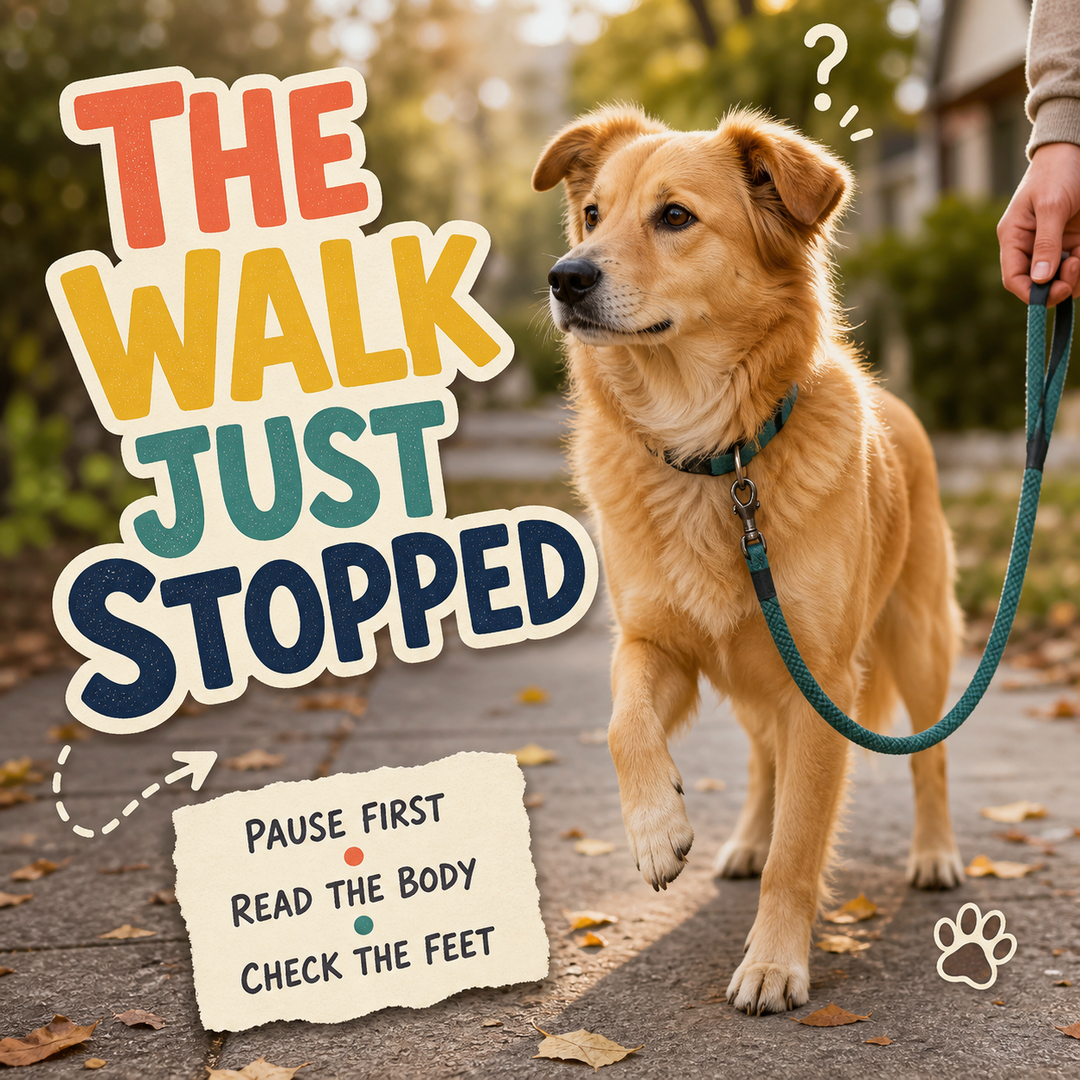
A dog who freezes on a walk is not automatically being stubborn. A pause can be about uncertainty, fear, intense curiosity, physical discomfort, fatigue, heat, an unfamiliar surface or something in the environment that we have not noticed yet. The useful response is not to diagnose the entire dog from one stop. It is to slow down long enough to read the scene.
This guide gives you a practical way to separate a thinking pause from a worried freeze, make the next few seconds safer and recognise when a sudden change deserves veterinary attention. It is behaviour guidance, not a diagnosis, and nobody will be towed past the recycling bins for the sake of reaching a step goal.
A Stop Is Information, Not a Verdict
Start by taking pressure out of the lead. A taut lead can add another unpleasant sensation to a moment that is already difficult, and pulling removes your chance to see what the dog does when they have room to choose.
Look at the whole dog. Where is the weight? Are the legs braced? Is the body low or leaning away? Are the ears pinned, the mouth suddenly closed, the tail tucked or the eyes fixed on one point? Dogs Trust includes freezing among possible signs of stress, but one signal still needs context. A dog quietly watching a squirrel with a loose body is telling a different story from a dog flattened beside a roaring lorry.
Our tiny guide to dog body language uses the same rule: ears, tail, eyes, posture, movement and situation get a shared vote.
First Check: What Changed Around You?
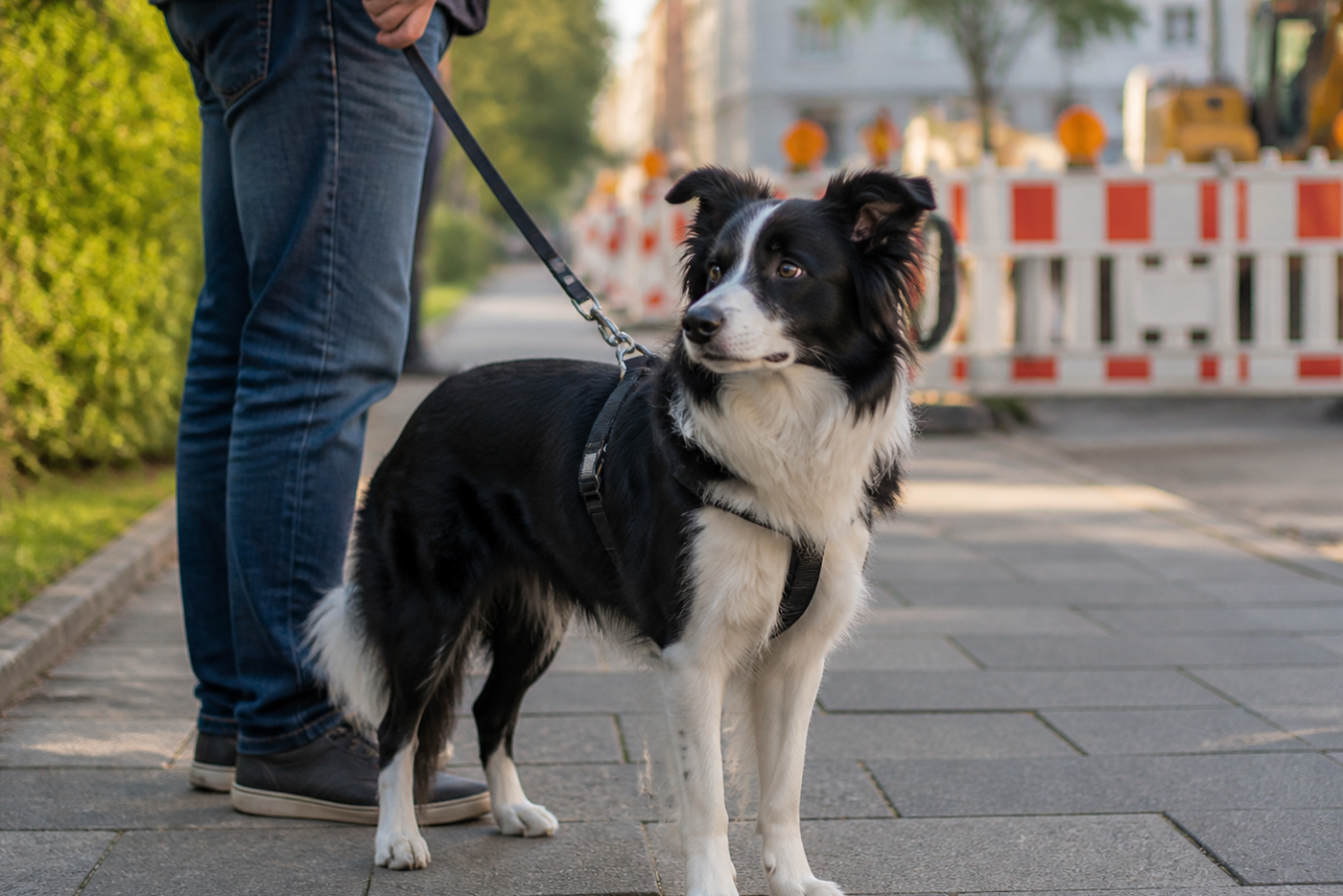
Before asking the dog to move, scan the route. Listen as well as look. A metal gate may be banging behind you. A bus may be releasing its brakes. A dog could be staring from a doorway. Roadworks, wheeled bins, umbrellas, narrow passages, shiny floors and a sudden crowd can all change a familiar walk.
Notice direction. Is the dog looking toward something, or trying to lean away from it? Did the stop begin when you turned onto a particular street? If you take two relaxed steps sideways or back toward a wider space, does the body soften? That small experiment is more useful than repeating the cue louder.
Busy environments can stack several challenges at once. The dog does not need to prove bravery by staying close to the thing that worries them. Distance is a practical tool, not a defeat.
Read the Whole Dog
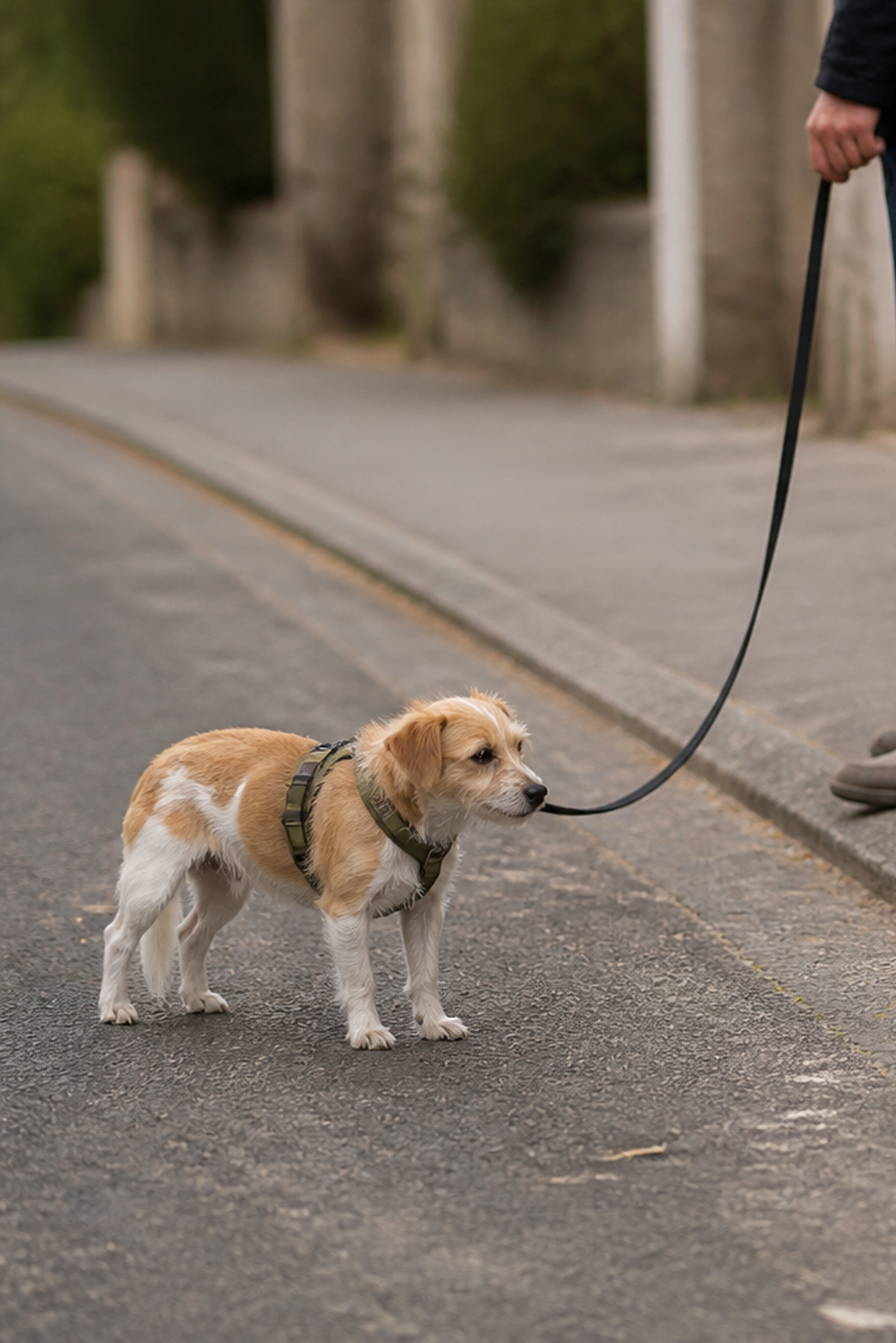
A worried freeze often comes with stillness elsewhere: held breath, a tight mouth, lowered posture, weight shifted backwards, tucked tail, pinned ears or repeated scanning. Some dogs may lick their lips, yawn or turn the head away. Those signs are not a secret code with one fixed translation; together, they can show that the dog needs more space or time.
By contrast, a curiosity stop may include a forward but loose posture, active sniffing, ears moving as sounds change and an easy ability to disengage. The dog may pause, investigate and then continue without pressure. That is not a broken walk. It is the walk doing its actual job.
Avoid reaching over a frightened dog, crowding them or putting your face close to theirs. Keep your own movements calm and leave a clear route away.
Make Space Before Asking Again
Turn your body slightly side-on, soften the lead and wait. If the dog can eat safely in that situation and is interested, scatter a few familiar treats away from the trigger or reward one voluntary step toward a calmer direction. Do not lure the dog closer to something they fear and then trap them there.
You can also make a gentle U-turn, cross the road or use a parked car, hedge or wall as a visual barrier. Dogs Trust recommends creating distance from triggers and helping reactive dogs avoid situations they cannot yet cope with. The goal is not to force a performance. It is to help the dog return to a state where choice and learning are possible.
If your dog needs a shorter, quieter route today, take it. A five-minute decompression walk can be more useful than forty minutes of conflict.
Curiosity Looks Different From Fear
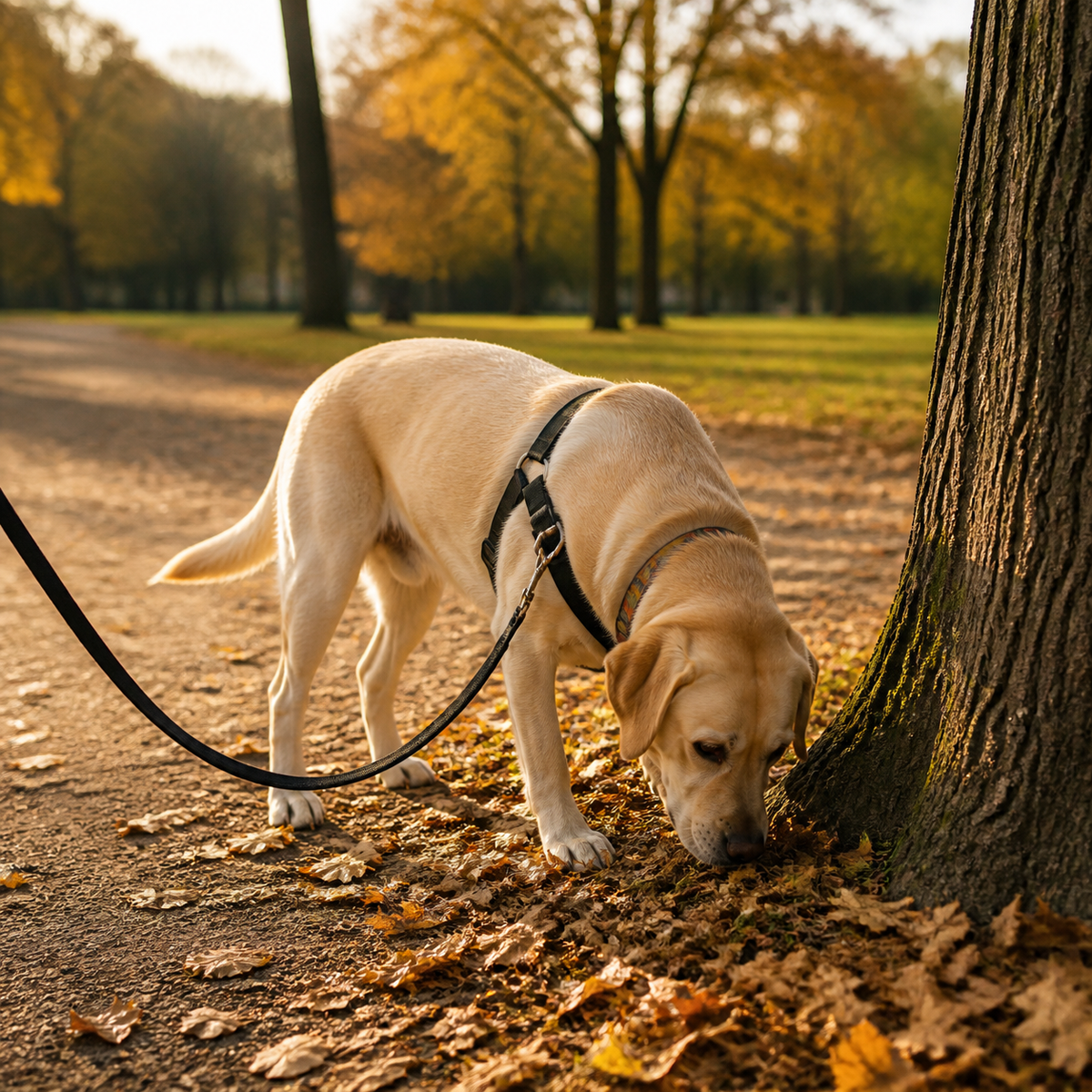
Sniffing deserves its own category. Dogs gather information through scent, and a dog who stops to inspect a tree, verge or lamppost may simply be reading a very detailed local bulletin. If the body stays comfortable and the dog can move on, build time for that into the walk.
Our guide to making room for sniffing on dog walks explains why a walk measured only in distance can miss much of its value. A pause that looks inefficient to a human may be the most interesting minute of the dog’s morning.
Watch what happens after the sniff. Curiosity usually resolves or moves. Fear may keep the body locked, increase scanning or make the dog try to retreat.
Check the Route and Equipment
Look at the ground. Hot pavement, sharp gravel, road salt, broken glass, sticky debris and unstable surfaces can make a dog stop. Smooth floors can be especially difficult for dogs with pain, weakness or low confidence; our guide to dogs slipping on smooth floors covers traction and safer routes in more detail.
Check the harness or collar for twisting, pinching and rubbing. Make sure the lead clip is moving freely and has not caught against a strap. If the dog wears a coat or boots, check that nothing has shifted. Equipment should support the walk, not become a small portable argument.
Heat and fatigue matter too. Choose cooler times, carry water where appropriate and shorten the route when conditions or the individual dog require it.
Check the Feet, Gait and Energy
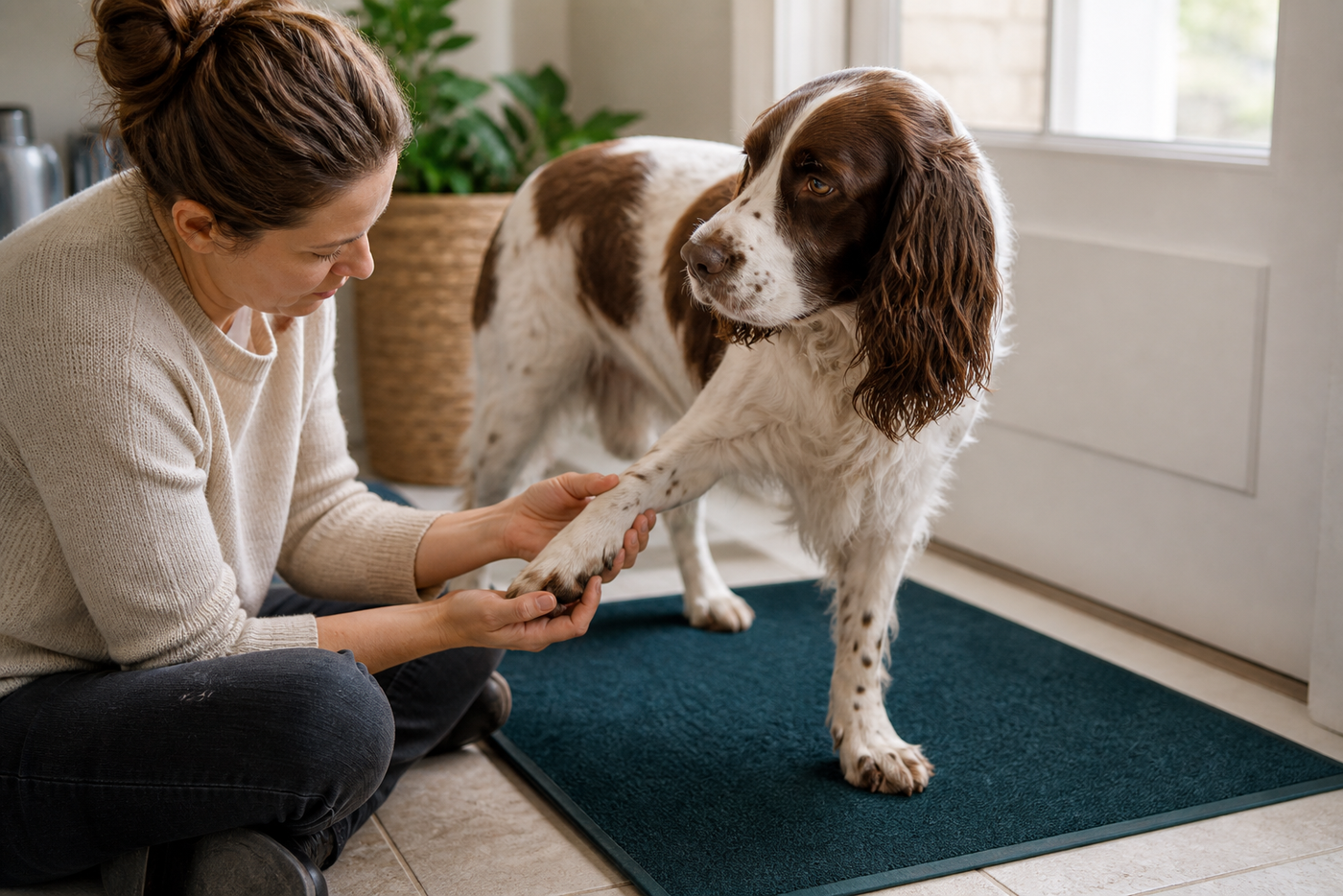
A sudden refusal to continue can be physical. Blue Cross lists reluctance to walk, limping, difficulty getting up and behaviour change among possible signs of pain. Merck explains that lameness may appear as an altered gait, reduced weight-bearing or a shortened stride.
Move to a safe quiet place and observe before handling. Is one paw held up? Is the dog placing weight evenly? Did the stop follow a slip, jump or yelp? If your dog is comfortable with paw checks, look for an obvious stone, thorn, damaged nail, cut or pad irritation. Stop if handling causes distress or pain.
Do not give human painkillers unless a veterinarian has specifically instructed you to do so. Some common medicines can be dangerous to dogs.
Use a Simple Reset Plan
When the scene looks behavioural rather than medical, use a short repeatable plan:
- Pause and loosen the lead.
- Scan the dog and the environment.
- Add distance or choose an easier direction.
- Reward voluntary movement; do not drag.
- End or shorten the walk if the dog cannot settle.
Write down repeated patterns. Time, location, weather, nearby animals, traffic, surfaces and how quickly the dog recovered can reveal more than the dramatic stop itself. A short video can also help a qualified trainer or veterinarian, provided recording does not delay getting the dog somewhere safe.
When to Call the Vet
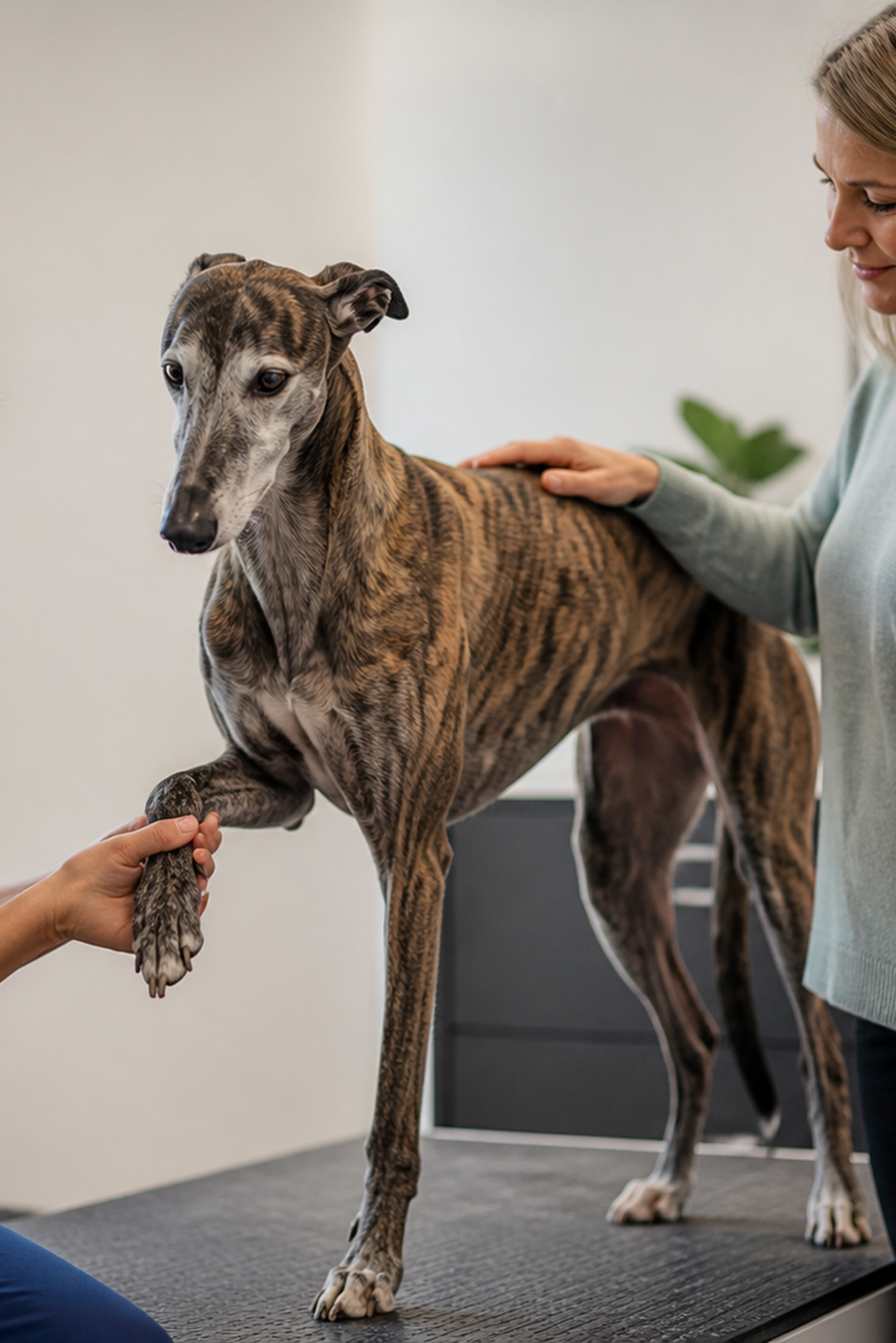
Contact your vet if freezing is sudden, repeated or accompanied by limping, yelping, altered posture, weakness, reduced appetite, unusual tiredness, difficulty rising, breathing change or reluctance to use stairs or jump. Seek urgent advice if the dog cannot bear weight, collapses, has severe breathing difficulty, has experienced trauma or appears to be in significant pain.
Older dogs and dogs with known joint, spinal or neurological conditions may show subtle changes before an obvious limp appears. A route that was manageable last month may no longer feel the same. Veterinary assessment can help distinguish pain or illness from an environmental worry.
For repeated fear-based freezing, ask your vet about a qualified force-free behaviour professional. Pain and fear can overlap, so it is sensible to rule out medical contributors before building a training plan.
The Two-Minute Walk-Stop Audit
Use six questions while you wait:
- Body: Does the dog look loose and curious, or low, tight and unable to disengage?
- Direction: Are they focused toward something or trying to move away?
- Route: What changed in sound, traffic, surface, space or nearby animals?
- Equipment: Is anything pinching, tangled, hot or uncomfortable?
- Movement: Is the gait even, with normal weight on every leg?
- Pattern: Is this familiar and brief, or new, repeated and worsening?
One answer may not explain the stop. Together, they tell you whether to wait, create distance, choose another route or call the vet.
Let the Walk Become a Conversation
A good walk is not a straight line with a dog attached. It is a moving negotiation between safety, curiosity, exercise, comfort and the world arriving from every direction.
When your dog stops, pause before you pull. Read the whole body. Check the route and the feet. Make space for a voluntary next step, and take a new pattern seriously when it appears.
Sometimes the answer is a sniff. Sometimes it is a U-turn. Sometimes it is a veterinary appointment. The useful skill is noticing which conversation you are actually having.
Trusted Sources
- Dogs Trust: Signs your dog may be stressed
- Dogs Trust: Reactive dogs
- Blue Cross: How to spot if your dog is in pain
- Merck Veterinary Manual: Lameness in dogs