

The water bowl is full, freshly washed and placed exactly where a human would expect a water bowl to live. The cat walks past it, drinks from the bathroom tap and leaves the household facilities manager with several follow-up questions.
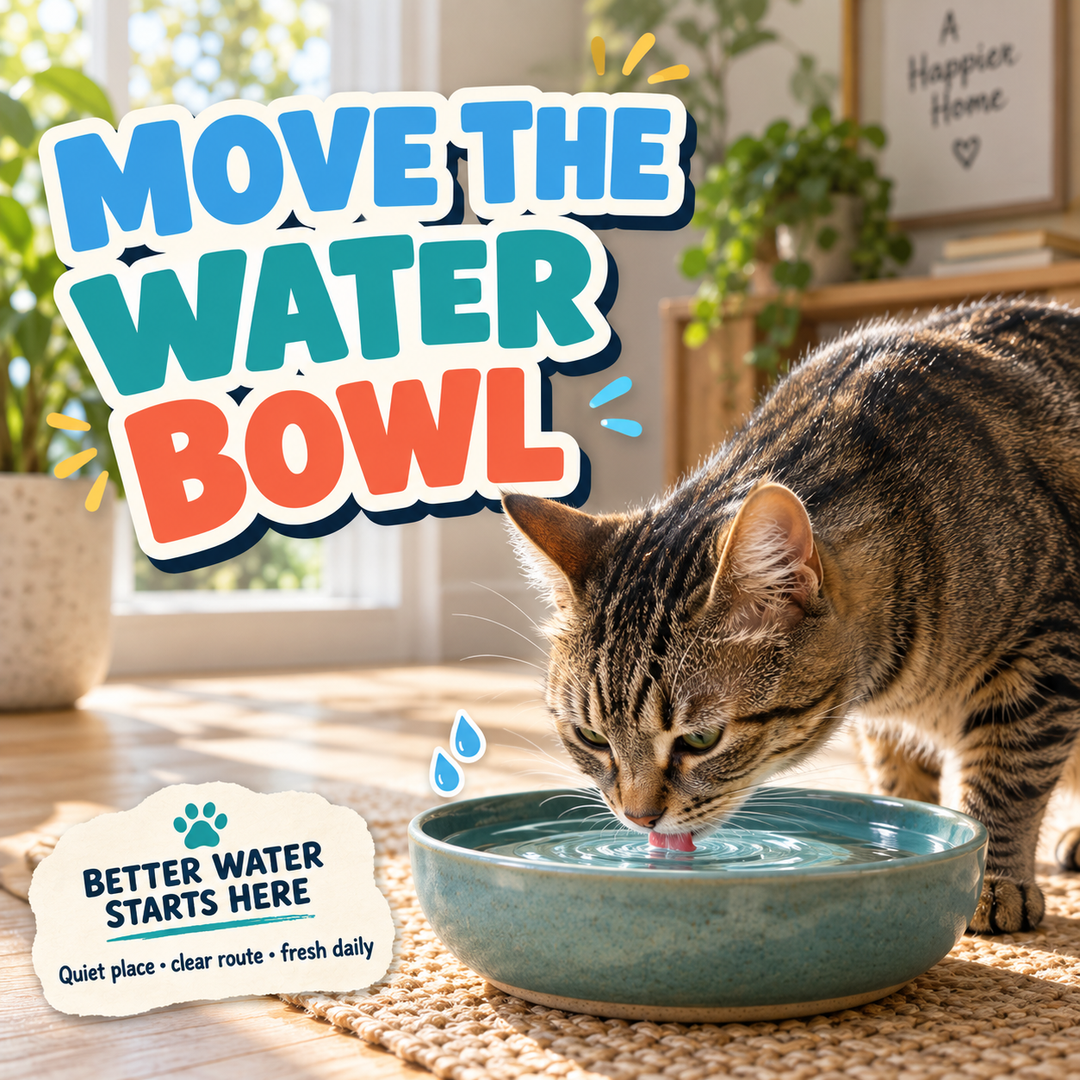
Cats do not judge a drinking station by neat kitchen symmetry. Location, bowl shape, cleanliness, noise, access and the relationship to other resources can all affect whether a station feels worth using. Some cats prefer still water, some investigate a fountain, and some want several choices without having to negotiate a narrow hallway or another cat.
This guide helps you build a calm, practical water setup and notice changes that belong in a veterinary conversation. It is not a treatment plan, and the aim is not to make a cat drink on command. We are improving the invitation.
Start With Location, Not Decoration
International Cat Care recommends offering water away from food and litter areas, in quiet places where a cat can drink without feeling exposed or trapped. That often means moving the bowl out of the busy feeding cluster and giving it its own useful address.
Look at the route from the cat’s point of view. Can they approach, pause and leave without squeezing past a noisy appliance, a dog bed or another cat? Is the bowl beside a door that opens suddenly? Does the washing machine begin its spin cycle six centimetres from their whiskers?
A suitable station feels uneventful. It has a clear approach, a little space around it and no requirement to drink while keeping one eye on household traffic.
Run a One-Bowl Location Test
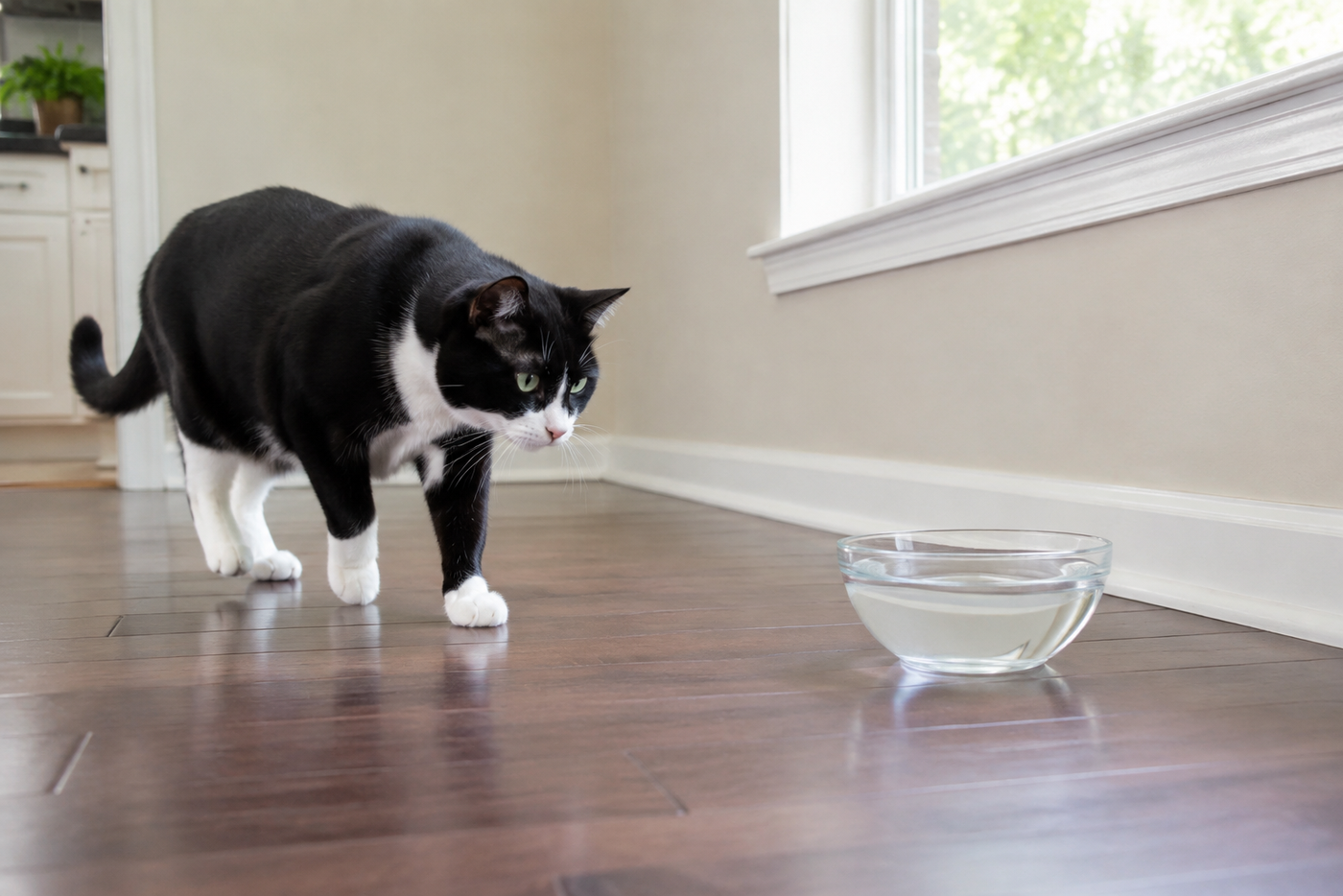
Before buying anything, move one familiar clean bowl to a quieter place and leave the original station available. Choose a stable surface away from litter trays, strong smells and obvious ambush points. Note whether the cat investigates the new position over several days.
Do not keep relocating every bowl each morning. Cats benefit from predictable resources, and a location test needs enough time to become familiar. Change one variable—place—while keeping the water and vessel the same.
Our guide to building a better window spot for your cat uses the same principle: a resource works best when the route, footing and surrounding activity make sense to the animal using it.
Offer More Than One Sensible Choice
Cornell Feline Health Center notes that fresh water should be available at all times. In a larger home or a multi-cat household, one bowl in one room may not provide easy access for everyone.
Try two or more stations in separate, useful locations. Spreading them out matters more than lining three bowls together and calling it a network. A cat resting upstairs, an older cat avoiding stairs and a cautious cat living with a confident companion may each benefit from a nearby option.
Keep a simple map for a week: station, vessel, when you saw it used and any obvious disturbance. You are looking for preferences, not running a tiny hydration competition.
Let the Vessel Join the Experiment
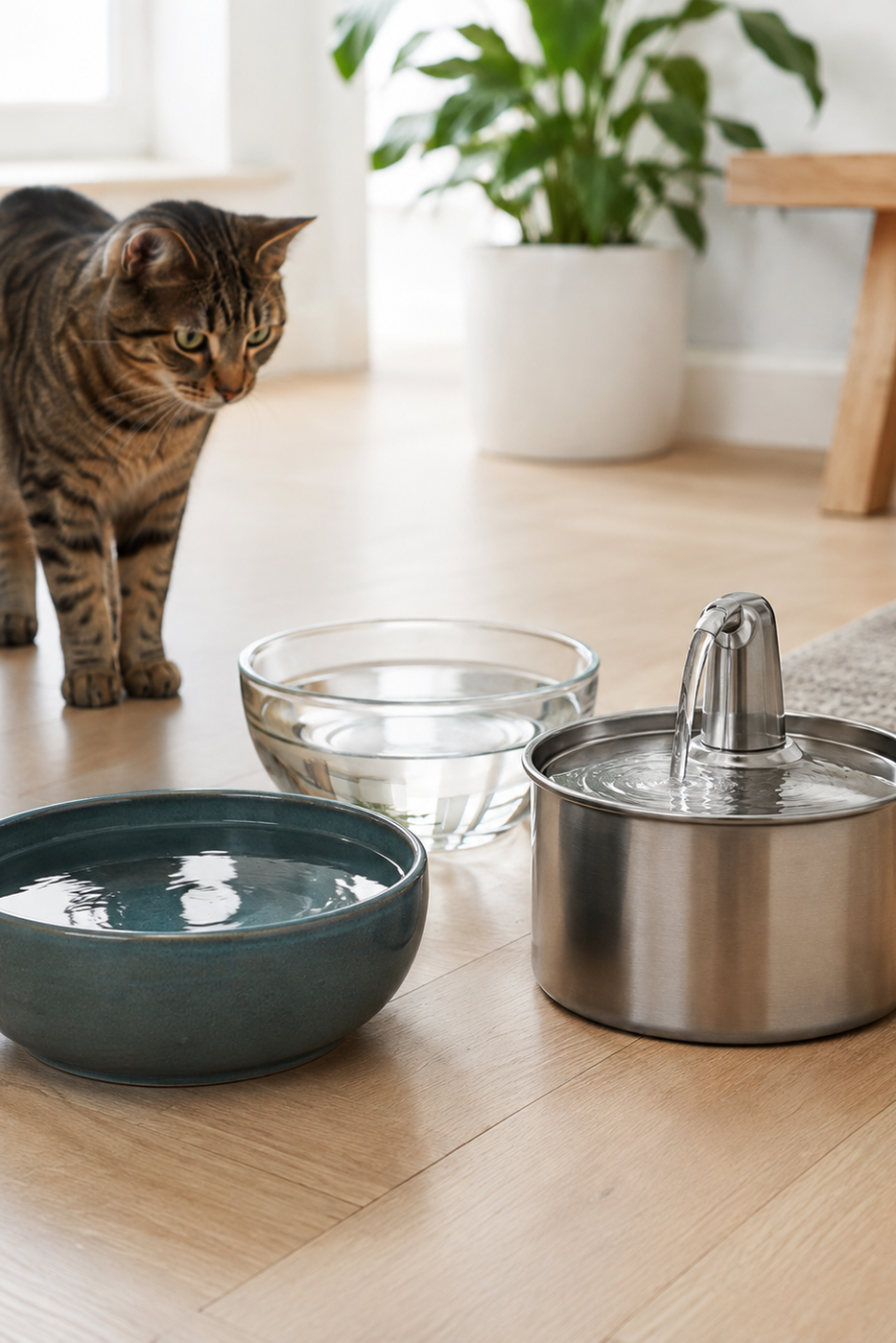
Cats Protection suggests trying different bowl types and a water fountain because individual preferences vary. A wide ceramic, glass or stainless-steel bowl can reduce contact with the whiskers and is usually easier to inspect than a scratched or strongly scented container.
Offer alternatives separately so the cat can choose. Use vessels that are stable, intact and easy to clean. Avoid a lightweight bowl that walks across the floor with every lick or tips when a paw performs a quality-control inspection.
A fountain is an option, not an upgrade every cat must accept. Introduce it beside an existing bowl, keep the sound gentle and preserve a still-water choice while the new object becomes familiar.
Build Access for Every Cat
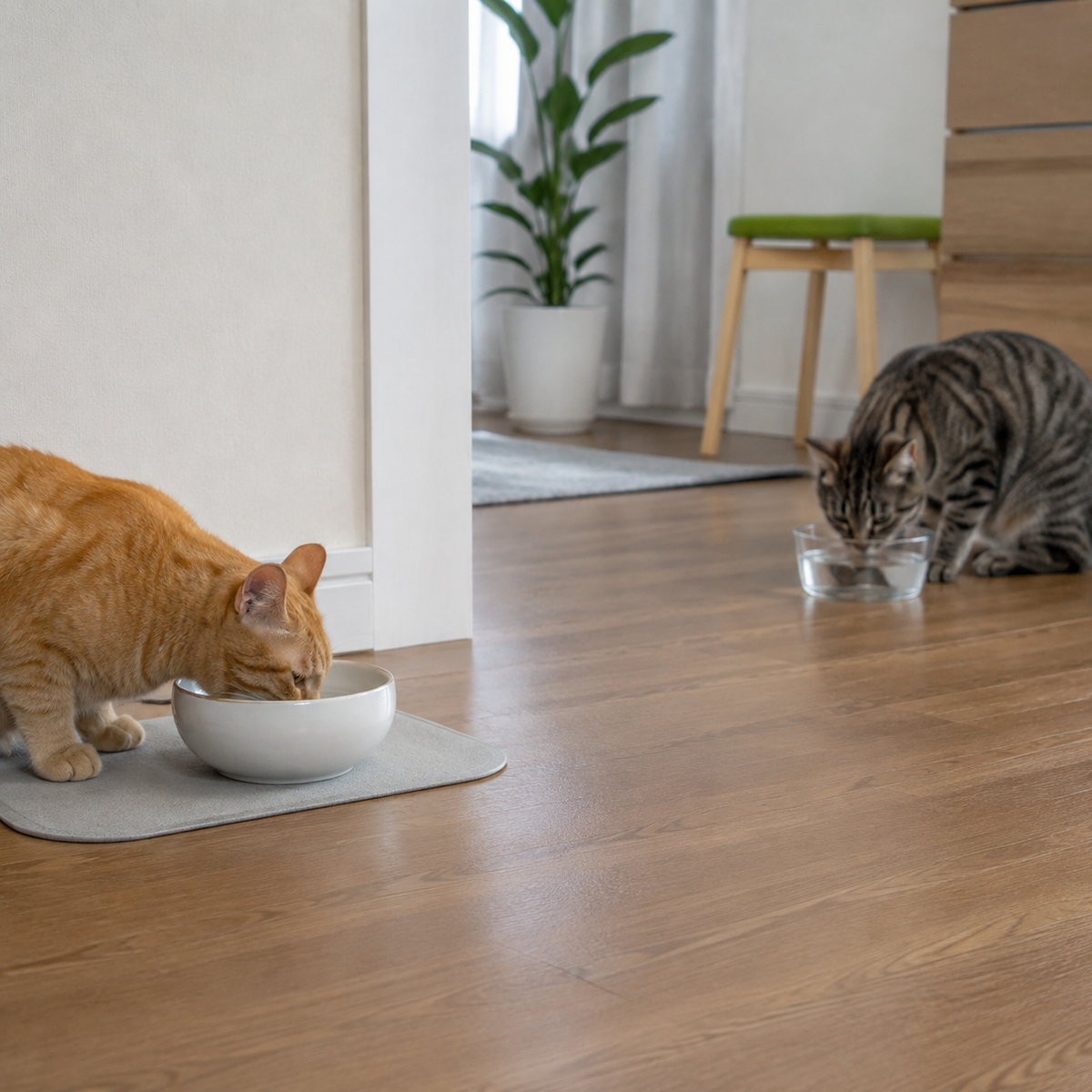
In a multi-cat home, a station can contain water and still be difficult to use. Watch whether one cat blocks a doorway, waits beside the bowl or follows another cat into the room. Resource tension can be quiet: a pause, a detour or a drink abandoned before it begins.
Place stations so each has more than one comfortable approach where possible. Avoid dead ends and narrow corners. Older cats and cats with limited mobility need stable, non-slip footing and water close to their preferred resting areas without a large step or jump.
Read the whole interaction. Our guide to cat tail meanings in context explains why one body part never gets the whole vote. Route choice, ears, eyes, posture and the other cat’s position belong in the same picture.
Keep the Water Actually Fresh
Wash bowls regularly, replace water daily and refresh it sooner if food, fur, dust or litter has entered. Use a cleaning method suitable for the material, rinse thoroughly and avoid leaving a strong detergent fragrance.
Wide bowls make the water surface easy to see, but they still need checking. A full bowl may contain a floating biscuit, a mysterious fibre and the remains of somebody’s enthusiastic paw-washing programme.
Place a washable mat beneath splashy stations, but choose one that stays flat and does not slide. Dry damp areas so the route remains secure.
Give Fountains a Real Cleaning Routine
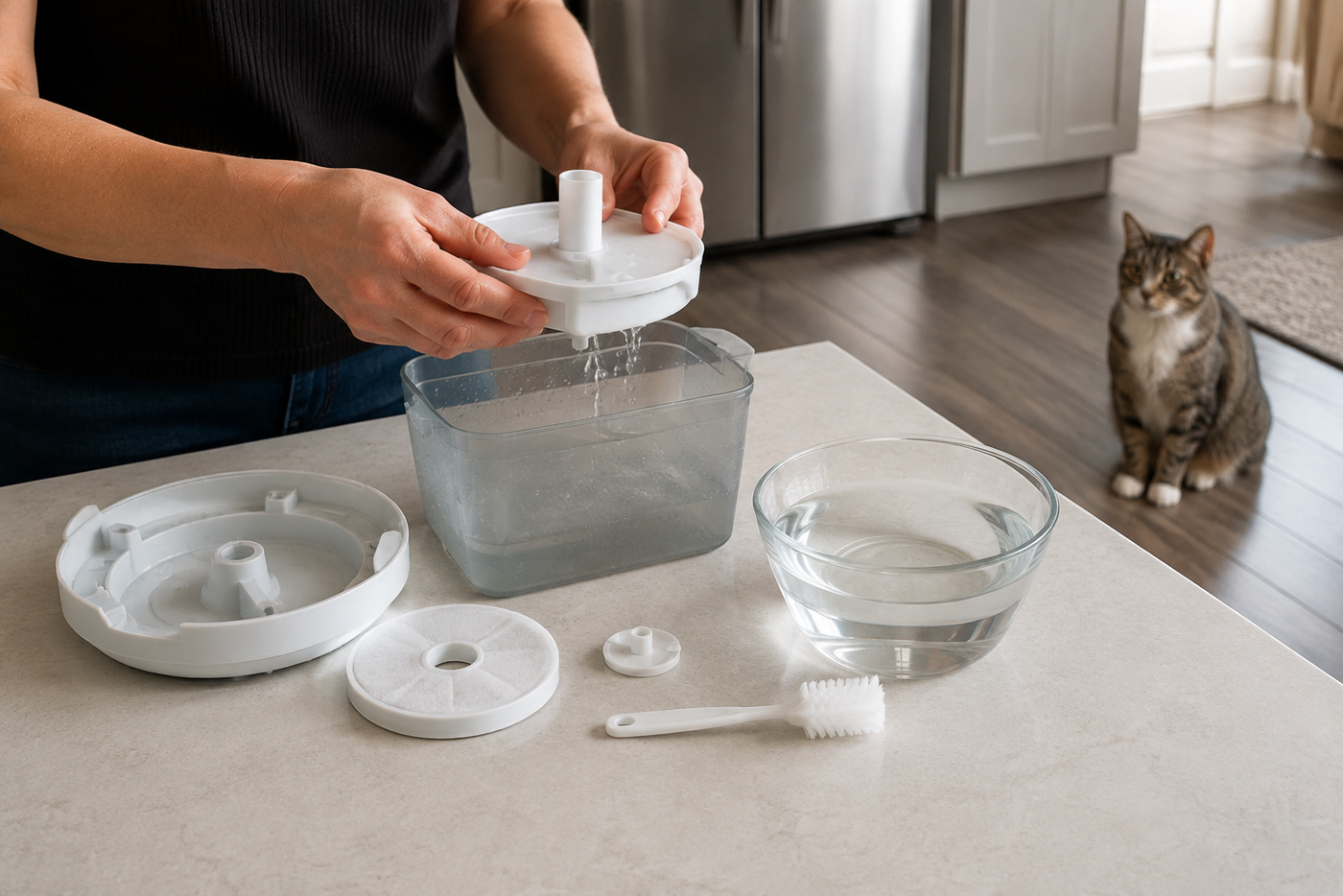
A fountain needs more than a top-up. Unplug it, take it apart as the manufacturer directs and clean the reservoir, pump, channels and other water-contact surfaces. Replace filters on the recommended schedule and inspect cords for damage.
Biofilm and debris can collect where the surface looks clean from above. If a component cannot be reached or has become cracked, heavily scratched or impossible to clean, replace it rather than trusting the decorative waterfall.
Keep another fresh-water source available during cleaning and if the fountain stops. Electricity should not be the only member of the household authorised to dispense water.
Notice Change, Not a Magic Number
Drinking varies with diet, weather, activity and the individual cat. Cats eating wet food may obtain more water from meals than cats eating dry food. That is why a sudden change from the cat’s normal pattern matters more than comparing them with somebody else’s pet online.
Notice how often bowls need refilling, whether the litter tray is wetter, whether the cat visits water repeatedly and whether appetite, weight, energy or toileting has changed. Do not restrict water to test a theory.
Avoid relying on a home skin-tent test to declare hydration normal. If something looks different, collect useful observations and ask a veterinarian.
When the Bowl Becomes a Health Clue
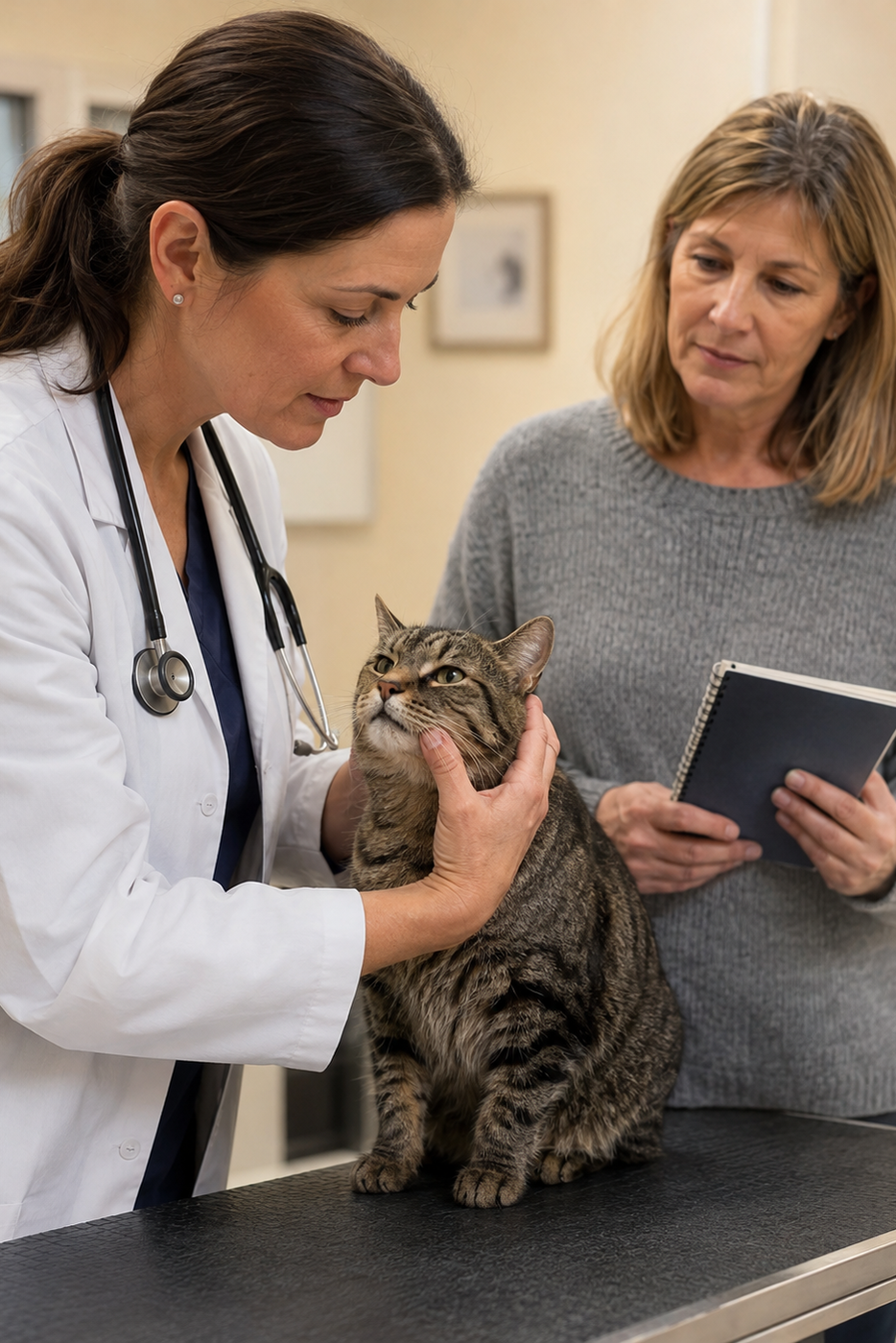
Contact a vet if your cat drinks or urinates noticeably more or less than usual, loses weight, eats less, vomits, seems weak, becomes unusually quiet or shows another persistent change. Increased thirst can occur with several medical conditions, and reduced drinking can accompany illness too.
Straining to urinate, passing only tiny amounts, crying in the litter tray, blood in the urine, repeated unsuccessful visits or inability to pass urine needs urgent veterinary attention. Cats Protection warns that a urinary blockage is a life-threatening emergency, particularly in male cats.
Bring a short timeline: when the change began, what you observed at bowls and trays, diet, medication and any recent environmental change. A photo of the station or video of unusual behaviour can help if recording does not delay care.
The Two-Minute Water-Station Audit
Check six things:
- Place: Is the station quiet, accessible and away from food and litter?
- Route: Can the cat approach and leave without being blocked?
- Choice: Is there another station or vessel worth trying?
- Bowl: Is it wide, stable, intact and easy to clean?
- Freshness: Is the water clean and changed regularly?
- Pattern: Is drinking and urination normal for this cat?
Fix one weak point at a time. If the pattern itself has changed, move the veterinary call ahead of the interior-design project.
Give Water a Better Address
A good drinking station is easy to reach, easy to leave and boring in all the right ways. The bowl stays clean. The route stays clear. Other pets cannot quietly control access. A second option exists when preference, age or household geography calls for it.
Move one familiar bowl. Watch what happens. Add a choice rather than a command.
The cat may still inspect the tap. At least the official facilities now make sense.
Trusted Sources
- International Cat Care: Encouraging Your Cat to Drink
- Cornell Feline Health Center: Hydration
- Cats Protection: Cats and Drinking
- Cats Protection: Urinary Problems in Cats