

Fireworks can turn an ordinary evening into a house full of unexplained weather.
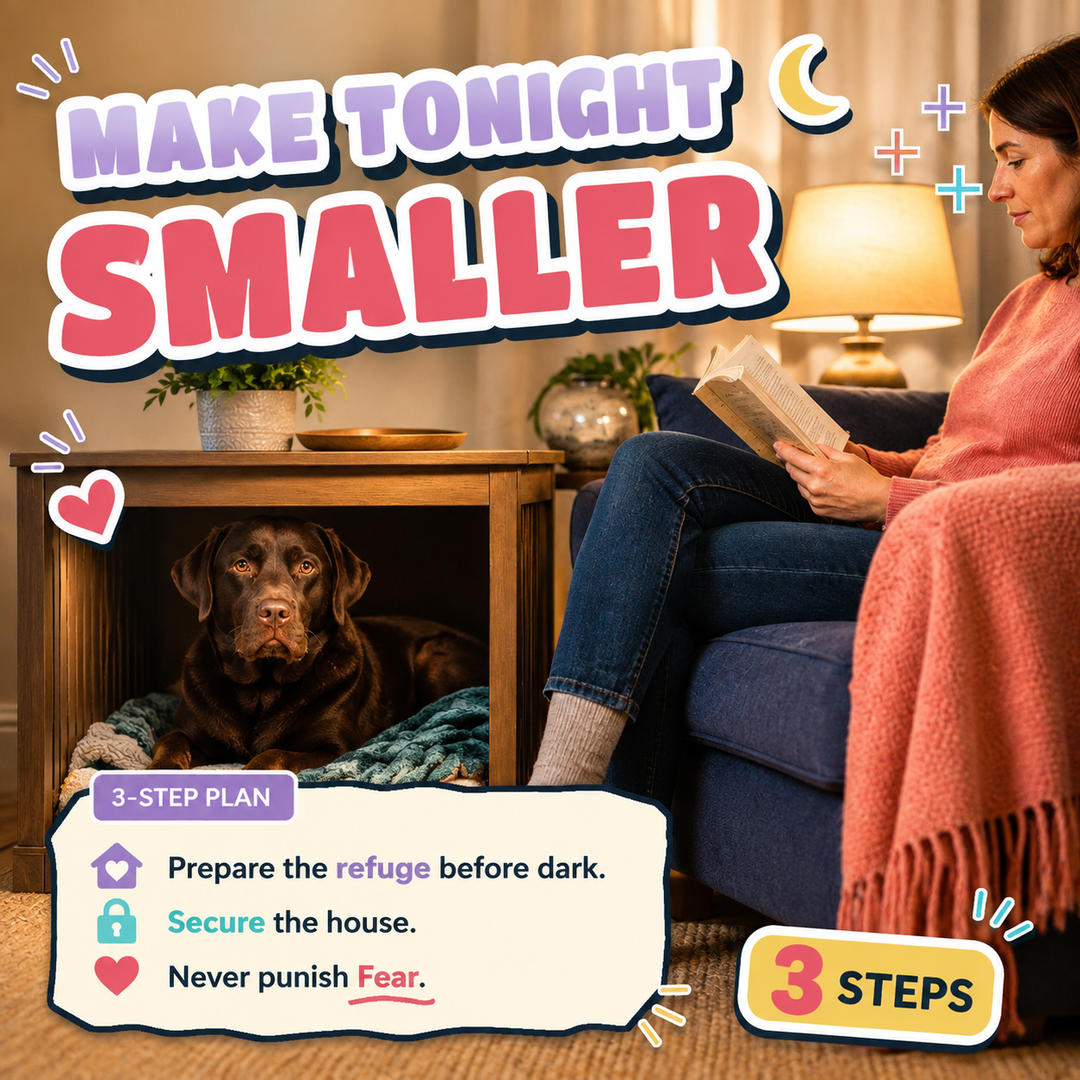
The bangs arrive without a visible source. Windows flash. Familiar rooms sound different. A dog may pace, a cat may disappear, and a rabbit may become so still that the fear is easy to miss.
The kindest plan begins before the first noise. It does not promise to make every pet calm, and it never treats fear as bad behaviour. It makes the environment safer, gives the animal choices and brings a vet into the conversation early when distress is significant.
Think smaller, softer and more predictable: a secure home, a prepared refuge, ordinary human company and no last-minute experiments.
Before the Night: Make a Real Plan
Check local event dates, but remember that private fireworks may happen unexpectedly. Begin preparations weeks ahead when possible. The British Veterinary Association advises owners of significantly distressed pets to contact their vet early to discuss individual treatment and behaviour options.
Update microchip details and check collars or identification where appropriate. Inspect gates, windows, cat flaps, doors and outdoor housing before dark. A frightened animal may make an escape attempt that is completely unlike their ordinary behaviour.
Write a simple household plan: who walks the dog before dusk, who closes curtains, where each animal can hide, and which number to call if something goes wrong. Preparation should remove decisions from the loudest part of the evening.
Build a Refuge, Not a Trap
Create a comfortable hiding place in a quiet internal room or familiar corner. For a dog, that might be an open crate or a covered table with bedding. For a cat, it might be a cat cave, a box on a stable shelf or access beneath familiar furniture. The pet should be able to enter and leave unless a vet or safety emergency requires otherwise.
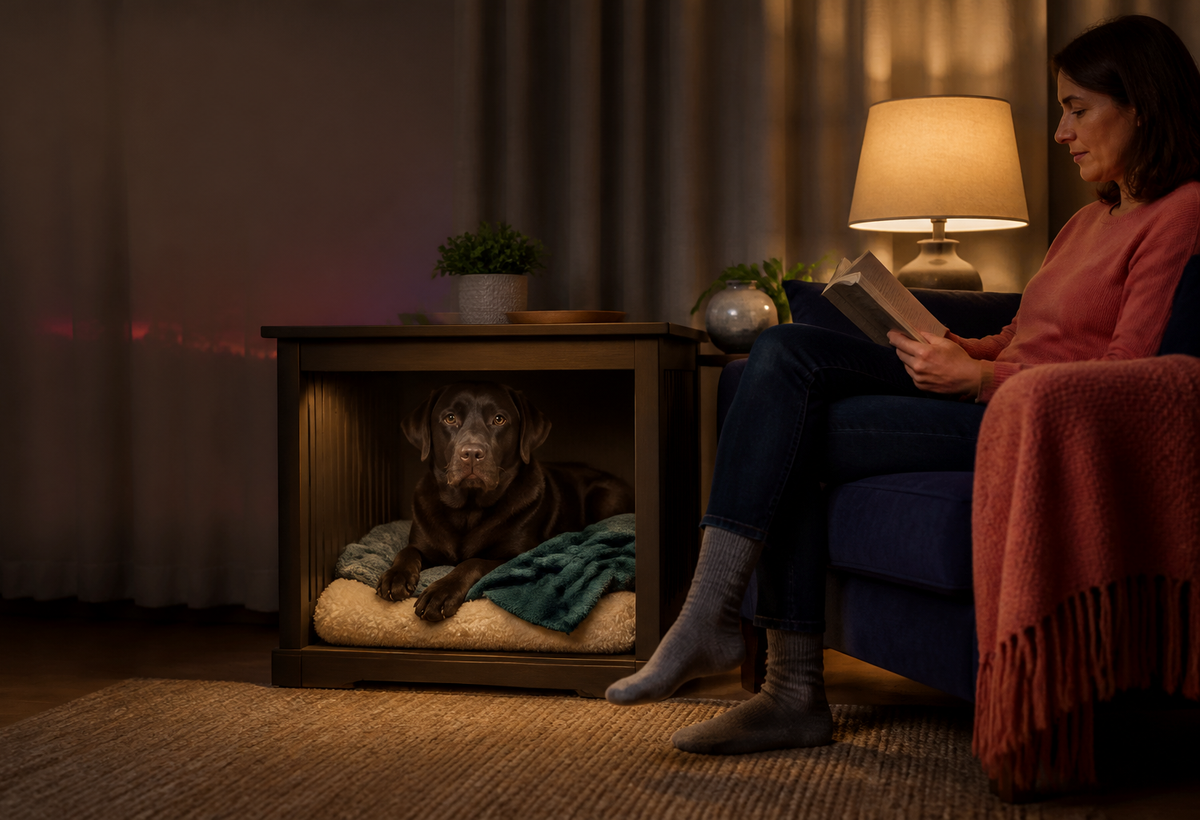
Introduce the refuge before fireworks season. Put ordinary bedding, familiar scents and safe favourite items there. Use it on calm days too, so it does not become the mysterious bunker that appears only when the sky starts shouting.
Close curtains and windows to reduce flashes and sound. Comfortable background television, radio or music may help mask some noise, but keep it at a volume the animal already tolerates. Do not blast one loud sound to defeat another.
Sort Walks, Toileting and Food Early
Exercise and toilet dogs during daylight, before fireworks are likely. Keep them on a secure lead even if they are usually reliable, and do not take them to a display. Cats should be brought inside in good time, with litter, water, food, hiding places and secure doors available.
Feed earlier if your pet tends to refuse food once noise begins, but do not make a sudden diet change. Prepare water in the safe room. Move bowls only if the pet knows where to find them.
For outdoor small pets, species and housing matter. PDSA advises bringing rabbits, guinea pigs and other small pets into a quiet, cool indoor area when possible, avoiding a sudden hot temperature change. If housing cannot come indoors, seek species-specific veterinary or welfare advice on reducing light and sound while maintaining safe ventilation.
During the Bangs: Offer Choice and Stay Ordinary
Secure the room before the noise peaks. Close curtains, keep external doors controlled and ask visitors to pause before opening them. Leave the prepared refuge accessible.
Stay calmly nearby when you can. If your pet seeks contact and usually enjoys it, quiet reassurance is fine. If they hide, pace or choose distance, do not pull them out or force play. The RSPCA advises allowing frightened dogs to pace, whine or hide rather than coaxing them from the place they have chosen.
Never punish barking, toileting, hiding, thumping or other fear responses. Fear is not a disciplinary problem. Your job is to prevent injury and lower pressure, not to win an argument with the nervous system.
Dogs: Read the Obvious and the Quiet Signs
Dogs may pant, drool, tremble, pace, vocalise, cling, hide or try to escape. Some signals are quieter: repeated yawning, restlessness or refusing familiar food. The BVA notes that toileting in the house can also accompany fireworks-related distress.
Keep the dog indoors and away from windows and external doors. Offer a familiar toy or food activity only if they want it. Do not insist on distraction when the dog is too worried to engage.
CloudyAww’s guide to dog yawning explains why a yawn belongs with the rest of the body and situation. During fireworks, repeated yawning alongside panting, pacing or hiding is context worth noticing.
Cats: Let Hiding Do Its Job
Cats often cope by withdrawing. Provide several safe options at different heights and do not block the route between them. Keep cat flaps and windows secure, bring the cat indoors before dark and make sure litter, water and food remain available.
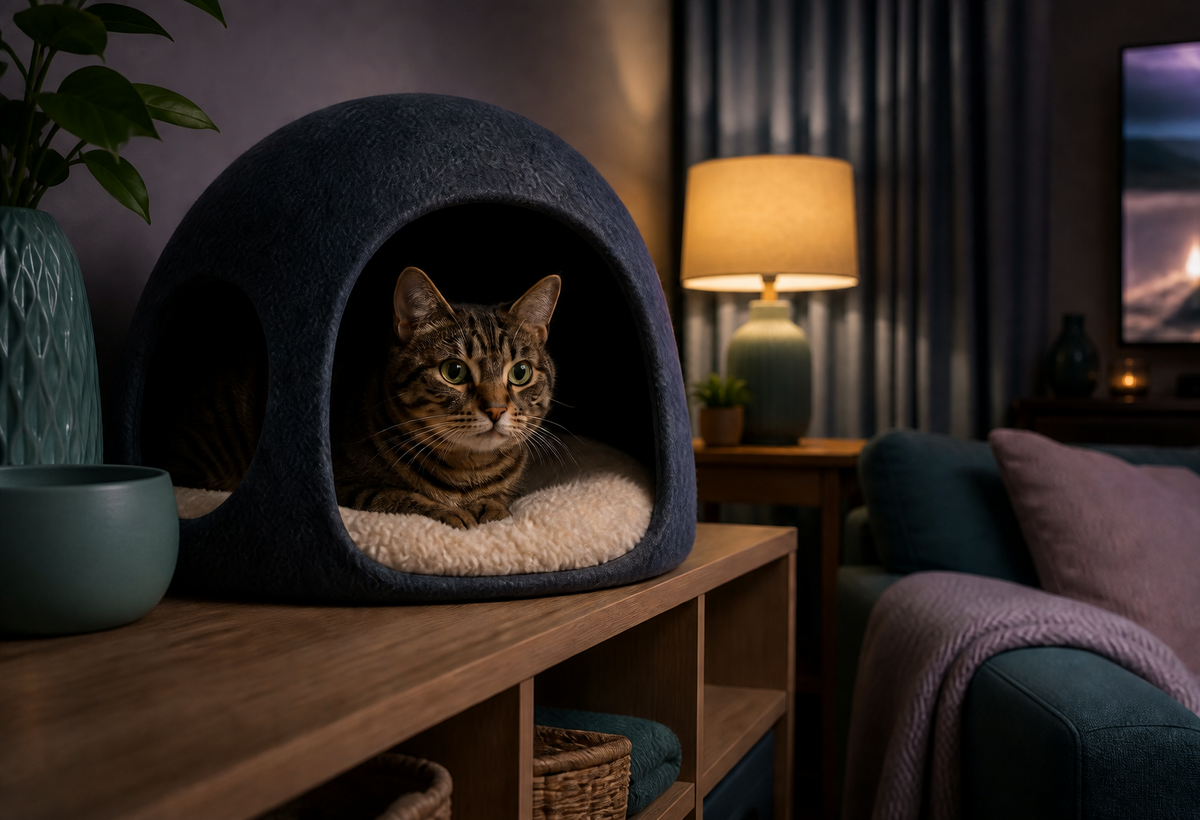
A hidden cat still needs quiet observation. Check without reaching into the hiding place. Look for breathing difficulty, injury or a failure to return to normal eating, drinking and toileting after the event.
Avoid carrying a frightened cat around the house or holding them at a window to “show” them the noise. The cat does not need a closer demonstration. They need control over distance.
Rabbits, Guinea Pigs and Other Small Pets
Fear can be less theatrical in prey species. PDSA lists trembling, rapid breathing, hiding, attempts to escape, reduced eating, tooth grinding and changes in toileting among possible signs. Rabbits and guinea pigs may stamp or become very still.
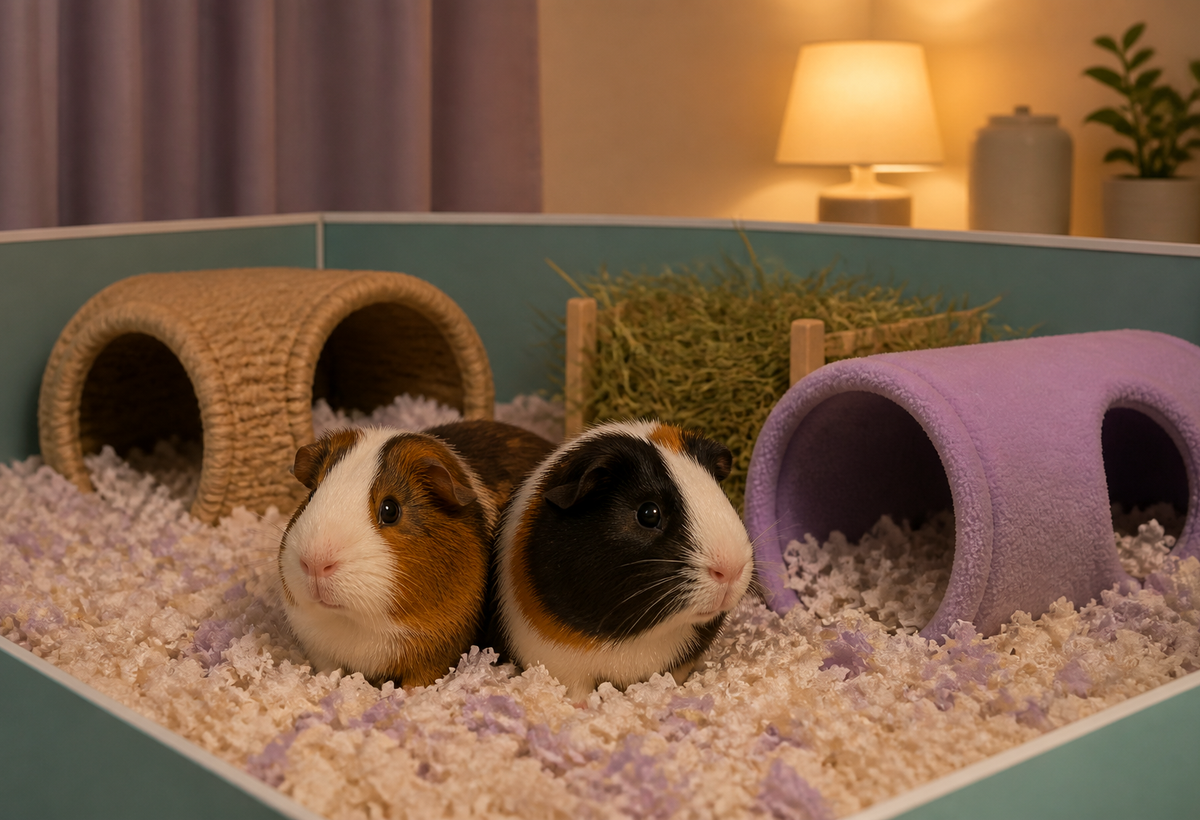
Keep bonded companions together unless a vet tells you otherwise. Provide generous bedding and multiple hides with more than one entrance, so no animal feels trapped. Partly covering an enclosure may reduce light and sound, but ventilation must remain clear.
Keep fireworks, sparklers, smoke and bonfires far away from housing. Do not use unproven calming products or human medication. PDSA notes that evidence for calming products in small pets is limited; environmental protection and veterinary advice remain the safer route.
For more small-pet care context, CloudyAww’s hot-weather guide for rabbits and guinea pigs explains why temperature, ventilation and species-specific observation cannot be treated as afterthoughts.
After the Noise: Check the Whole Animal
Wait until the area is genuinely quiet before opening doors, cat flaps or outdoor access. Check gardens and paths for debris before pets return outside. Keep the next part of the routine gentle and familiar.
Notice recovery. Did breathing settle? Did the pet drink, eat, toilet and rest normally? A frightened animal may need time, but persistent distress, injury, collapse, breathing difficulty, repeated vomiting, inability to urinate, or a small pet who stops eating needs prompt veterinary advice.
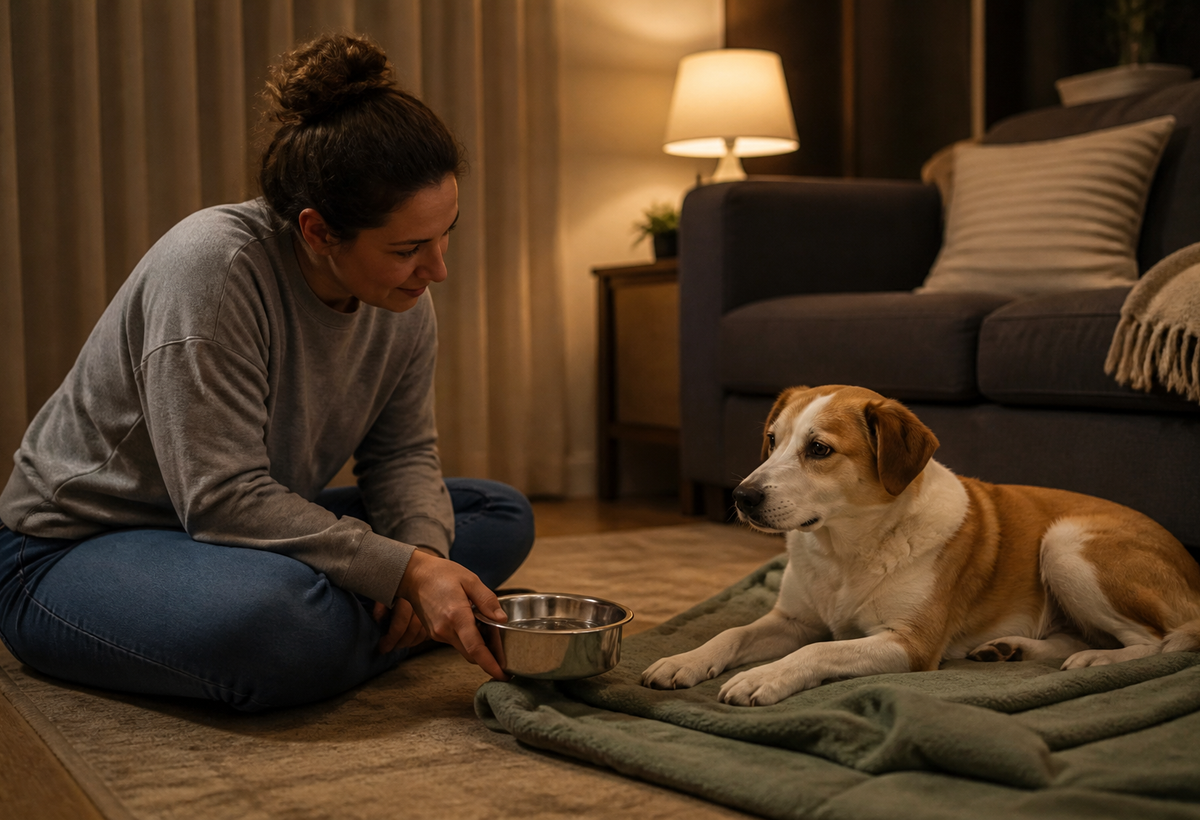
Write down what happened while the details are fresh: start time, signs, where the pet tried to go, what helped and how long recovery took. This is useful evidence for your vet before the next event.
Long-Term Help Starts on a Quiet Day
Sound desensitisation and counter-conditioning can help some animals, but timing and technique matter. They should begin well away from an active fireworks night, at a level that does not provoke fear, and with professional guidance when the reaction is substantial.
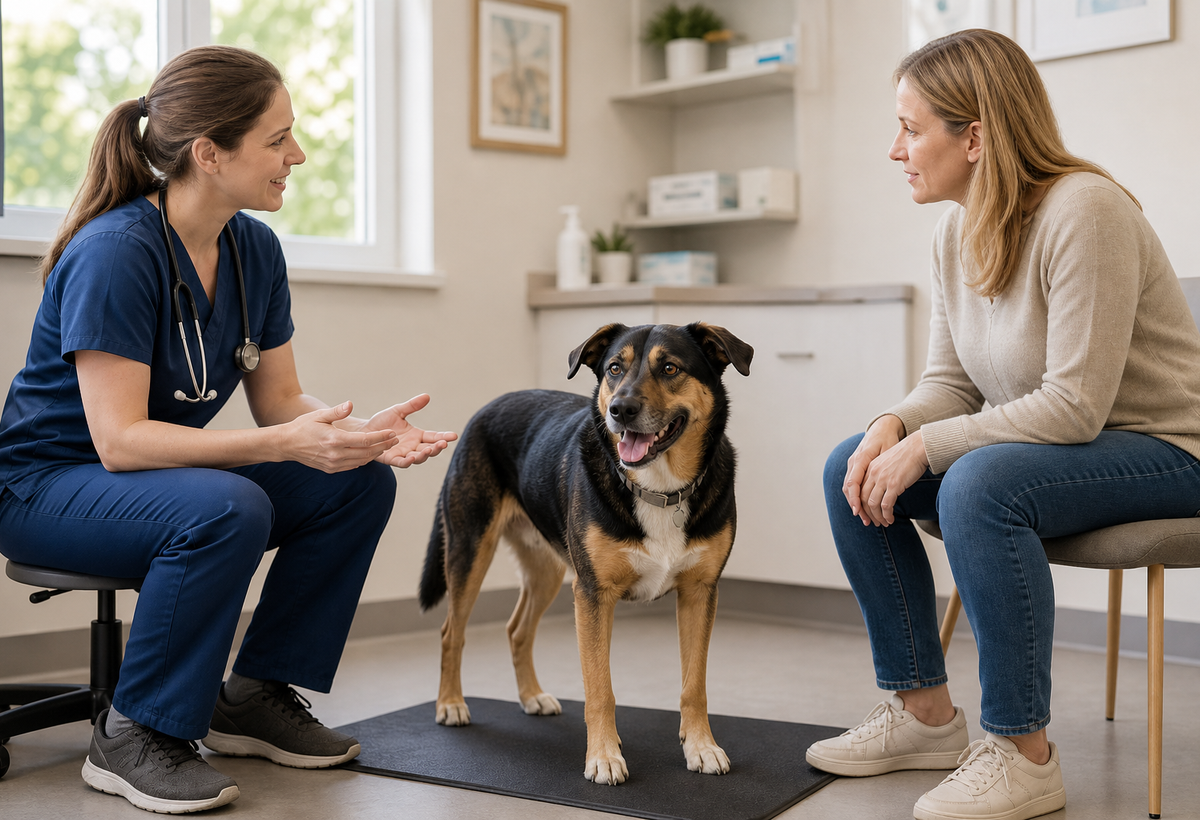
Medication can be appropriate for some pets. That decision belongs with a vet who knows the animal’s health, history and likely exposure. Do not give leftover prescriptions, human medicine or a product recommended for another pet.
If the fear is intense, worsening or causing escape attempts and injury, do not wait until Bonfire Night afternoon. Early veterinary advice creates more options. A referral to a qualified clinical animal behaviourist may be part of the plan.
The same preparation habit helps with other household disruptions. CloudyAww’s calm visitor plan focuses on choice, safe spaces and reducing pressure before the doorbell starts its shift.
The CloudyAww Read
A good fireworks plan does not ask a frightened pet to be brave on command.
Prepare the refuge early. Secure the house. Move walks and care before dark. Let animals hide, seek company or pace without punishment, and watch for species-specific signs that the night is becoming a health concern.
Then use what you learned. Call the vet early, not at the loudest possible moment, when fear is significant. The goal is not a perfect evening. It is a safer one with fewer surprises and more choices.
Browse more warm, practical pet logic in the Aww Articles library.
Sources and Further Reading
- British Veterinary Association: Prepare now for fireworks phobia
- RSPCA: Keeping dogs, cats and small pets safe during fireworks
- PDSA: Pets and fireworks
- PDSA: Small pets and fireworks
- British Veterinary Association: Fireworks and animal welfare